
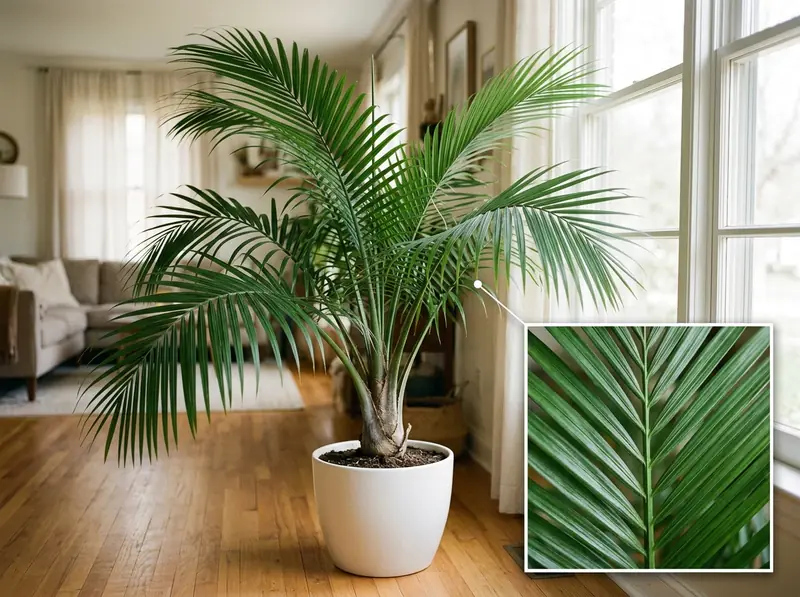
 AI-generated
Majesty Palm
Ravenea rivularis
Also known as Majestic Palm
Majesty palm is a graceful feather-leaved palm that brings a tropical look to a bright room, but it is one of the fussier palms. It wants bright light, steady moisture and humid air, and it does best kept in one spot away from drafts and heaters.
Saving is free with a KinClub account, and it works here and in the KinClub app. Sign up free
Care profile
- Light
- Bright, indirect lightLow → direct sun
- Water
- Keep moistAbout every 5 days
- Difficulty
- ChallengingTricky → easy
- Coldest it tolerates
- 45°F
- Humidity
- High
- Mature size
- Tree-sizeSmall → tree-size
- Growth rate
- Slow to moderate
- How common
- Very commonRare → everywhere
- Plant family
- Arecaceae
Pets and toxicity
Non-toxic to cats
Listed as non-toxic to cats by the ASPCA.
Non-toxic to dogs
Listed as non-toxic to dogs by the ASPCA.
Source: ASPCA toxic and non-toxic plants. If a pet eats any houseplant, call your vet or an animal poison helpline.
How to care for Majesty Palm
Light
Give it bright light, ideally several hours near a south- or west-facing window, filtered by a sheer curtain in strong summer sun. It will decline slowly in dim rooms.
Watering
Keep the soil evenly damp but never soggy; water when the top inch feels barely dry, usually about every 4-6 days in summer. Water thoroughly until it drains, then empty the saucer, and water less in winter.
Soil
Use a peat-based, well-draining potting mix with a handful of perlite or coarse sand added. It should hold moisture but let excess water drain freely.
Feeding
Feed every 4 weeks in spring and summer with a balanced liquid fertilizer that includes magnesium and micronutrients, at half strength. Skip feeding in winter.
Repotting
Repot every 2-3 years in spring into a pot only 2 inches wider, handling the roots gently because palms resent disturbance. Use a pot with drainage holes.
Propagation
Home propagation is impractical; it is grown from seed, which is slow and needs warmth and patience. Buying a young plant is the usual route.
Common problems
- Brown leaf tips from dry air or inconsistent watering: mist or use a humidifier, and keep soil evenly moist.
- Spider mites cause fine webbing and speckled leaves: rinse fronds in the shower and treat with insecticidal soap weekly.
- Yellowing lower fronds can be normal aging, but widespread yellowing means overwatering or a magnesium shortage: check drainage and feed.
- Frond drop after moving: keep it in one spot away from drafts and heaters, and avoid frequent relocation.
Similar plants
Same light needs and difficulty.
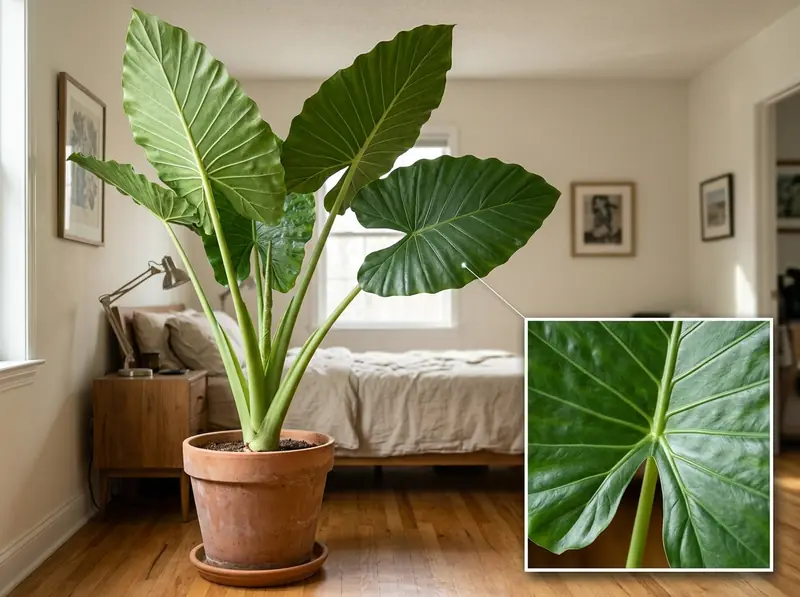 AI-generated
Robusta Alocasia
Alocasia robusta
- Bright, indirect light
- Moderate to moist watering
Toxic to cats and dogs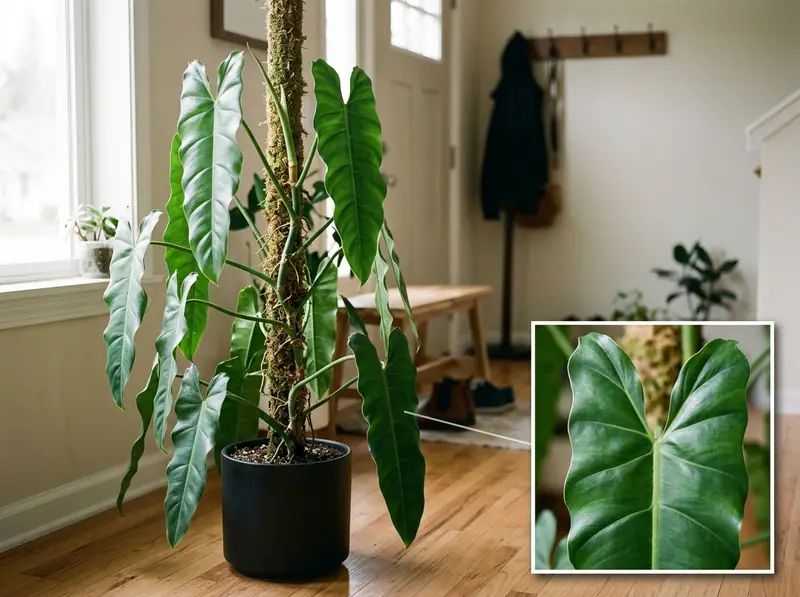 AI-generated
Spiritus Sancti Philodendron
Philodendron spiritus-sancti
- Bright, indirect light
- Moderate watering
Toxic to cats and dogs AI-generated
 AI-generated
Calathea Orbifolia
Goeppertia orbifolia
- Medium to bright, indirect light
- Keep moist
Pets: not yet checked