
 AI-generated
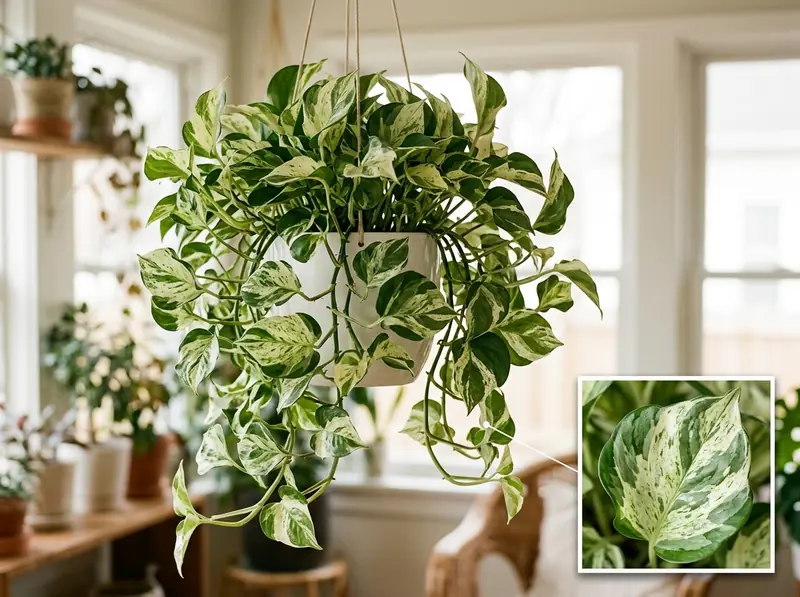
Manjula Pothos
Epipremnum aureum 'Manjula'
Manjula pothos is a variegated pothos with wavy, heart-shaped leaves splashed with white, cream, and silver-green. It grows more slowly than plain green pothos and needs brighter indirect light to hold its colour, but it is otherwise easy and forgiving. It looks good trailing from a shelf or hanging basket.
Saving is free with a KinClub account, and it works here and in the KinClub app. Sign up free
Care profile
- Light
- Bright, indirect lightLow → direct sun
- Water
- Dry to moderate wateringAbout every 10 days
- Difficulty
- EasyTricky → easy
- Coldest it tolerates
- 55°F
- Humidity
- Medium
- Mature size
- Medium to largeSmall → tree-size
- Growth rate
- Slow to moderate
- How common
- CommonRare → everywhere
- Plant family
- Araceae
Pets and toxicity
Toxic to cats
Keep away from cats. Call your vet or a pet poison helpline if a cat chews it.
Toxic to dogs
Keep away from dogs. Call your vet or a pet poison helpline if a dog chews it.
Source: ASPCA toxic and non-toxic plants. If a pet eats any houseplant, call your vet or an animal poison helpline.
How to care for Manjula Pothos
Light
Does best in bright indirect light, which keeps the white and cream variegation crisp. It tolerates medium light, though growth slows and variegation fades, and direct midday sun scorches the pale patches.
Watering
Water thoroughly when the top 1-2 inches of soil are dry, usually every 7-14 days in the growing season. Empty the saucer afterward and water less in winter.
Soil
Use a standard well-draining indoor potting mix. Adding a handful of perlite or bark per 2 quarts of mix improves drainage. The pot must have drainage holes.
Feeding
Feed every 4-6 weeks in spring and summer with a balanced liquid houseplant fertilizer diluted to half the label strength. Skip feeding in fall and winter.
Repotting
Repot every 1-2 years in spring, going up only 1-2 inches in pot diameter, when roots circle the pot or poke from the drainage holes.
Propagation
Cut a stem below a node with 3-4 leaves and place it in water or moist soil. Roots usually form in 2-4 weeks. Plant several cuttings together for a fuller pot.
Common problems
- Yellow leaves: usually overwatering, so let the soil dry more between waterings and check the drainage holes.
- Brown, crispy leaf edges: soil is drying out too much or the air is very dry, so water more regularly.
- Leggy growth with small, mostly green leaves: light is too low, so move closer to a bright window and trim stems back.
- Cottony white bugs or sticky residue: likely mealybugs or scale, so wipe with rubbing alcohol on a cotton swab and repeat weekly.
Similar plants
Same light needs and difficulty.
 AI-generated
 AI-generated
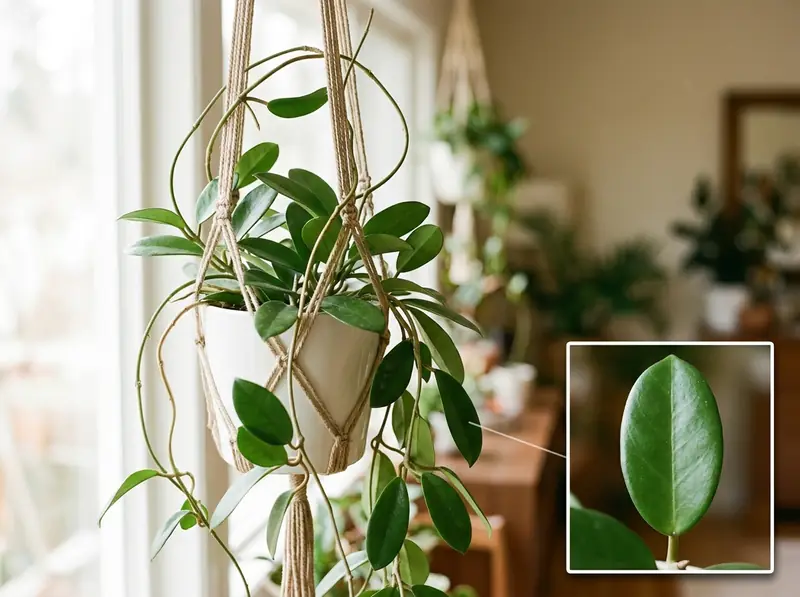
Diversifolia Hoya
Hoya diversifolia
- Bright, indirect light
- Dry to moderate watering
Pets: not yet checked AI-generated
Chinese Money Plant
Pilea peperomioides
- Bright, indirect light
- Dry to moderate watering
Pets: not yet checked AI-generated
Christmas Cactus
Schlumbergera × buckleyi
- Bright, indirect light
- Moderate watering
Pets: not yet checked