
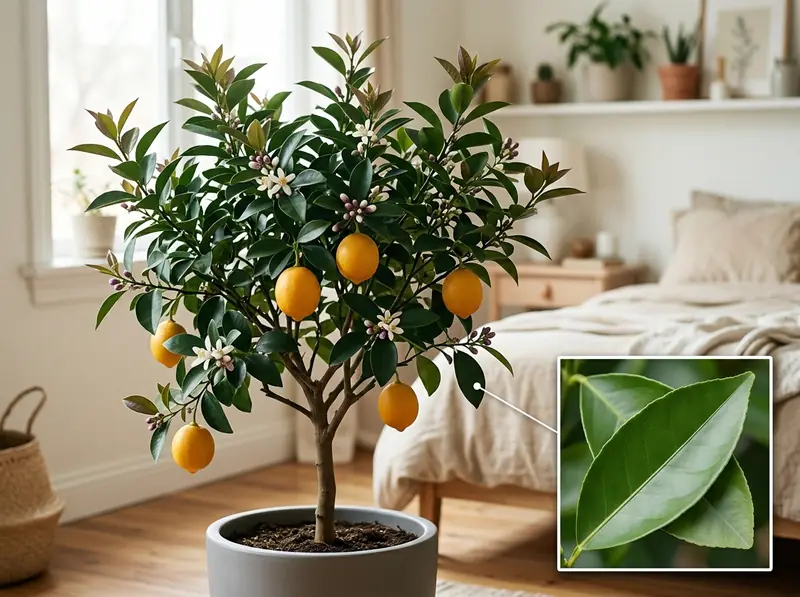
 AI-generated
Meyer Lemon
Citrus × meyeri
Also known as Lemon, Citrus limonia
Meyer lemon is a compact citrus that can produce fragrant white blossoms and lemons indoors. It needs a lot of direct sun, well-draining soil and steady watering. It does best in a sunny window or under a grow light, and in summer it can go outdoors.
Saving is free with a KinClub account, and it works here and in the KinClub app. Sign up free
Care profile
- Light
- Direct sunLow → direct sun
- Water
- Moderate wateringAbout every 7 days
- Difficulty
- ModerateTricky → easy
- Coldest it tolerates
- 40°F
- Humidity
- Medium to high
- Mature size
- LargeSmall → tree-size
- Growth rate
- Moderate
- How common
- Very commonRare → everywhere
- Plant family
- Rutaceae
Pets and toxicity
Toxic to cats
Keep away from cats. Call your vet or a pet poison helpline if a cat chews it.
Toxic to dogs
Keep away from dogs. Call your vet or a pet poison helpline if a dog chews it.
Source: ASPCA toxic and non-toxic plants. If a pet eats any houseplant, call your vet or an animal poison helpline.
How to care for Meyer Lemon
Light
Give it 6 to 8 hours of direct sun daily, ideally in a south-facing window. In winter, add a full-spectrum grow light for 10 to 12 hours if the window is dim.
Watering
Water thoroughly when the top 1 to 2 inches of soil feel dry, until water runs out the drainage holes, then empty the saucer. Expect roughly weekly watering in summer and less often in winter.
Soil
Use a well-draining potting mix, such as a citrus mix or standard mix with about 25% perlite or coarse bark added. The pot must have drainage holes.
Feeding
Feed every 2 to 4 weeks in spring and summer with a citrus fertilizer that includes micronutrients such as iron, magnesium and zinc. Reduce to once every 6 to 8 weeks in winter or stop.
Repotting
Repot every 2 to 3 years in spring into a pot only 2 inches wider, or refresh the top few inches of soil. Move up gradually because a pot that is too large holds excess water.
Propagation
Take 4 to 6 inch semi-hardwood cuttings in spring or summer, dip in rooting hormone and keep them warm and humid. Rooting takes several weeks and is slower than with many houseplants. Most plants are sold grafted.
Common problems
- Yellow leaves with green veins mean iron or other nutrient deficiency; feed with a citrus fertilizer with micronutrients and check that the soil isn't waterlogged.
- Leaf drop after moving indoors or changing spot is common; acclimate gradually over 1 to 2 weeks and keep it in steady conditions.
- Flowers fall without fruit set; hand-pollinate with a soft brush and keep the plant evenly watered.
- Sticky leaves or small bumps on stems indicate scale or aphids; wipe with soapy water or rubbing alcohol on a cloth and repeat weekly.
- Webbing and stippled leaves indicate spider mites; rinse the plant and raise humidity, and treat with insecticidal soap.
Similar plants
Same light needs and difficulty.
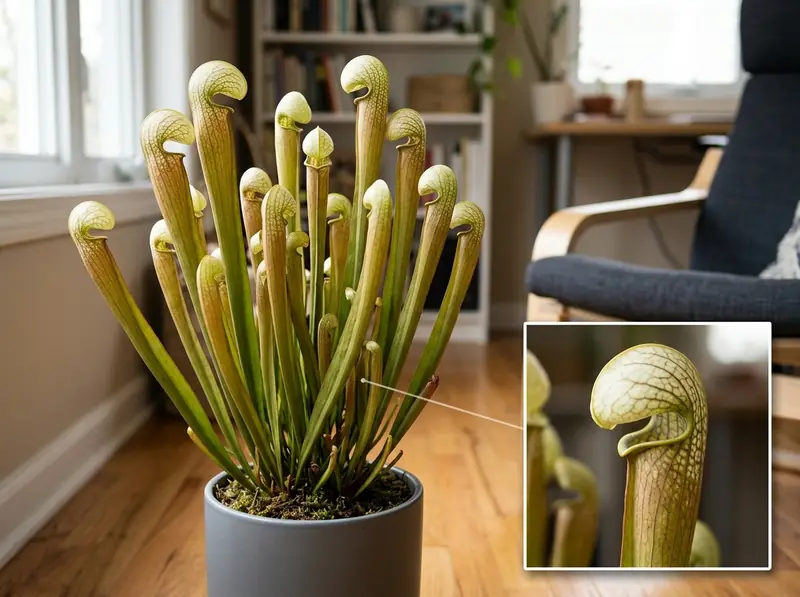 AI-generated
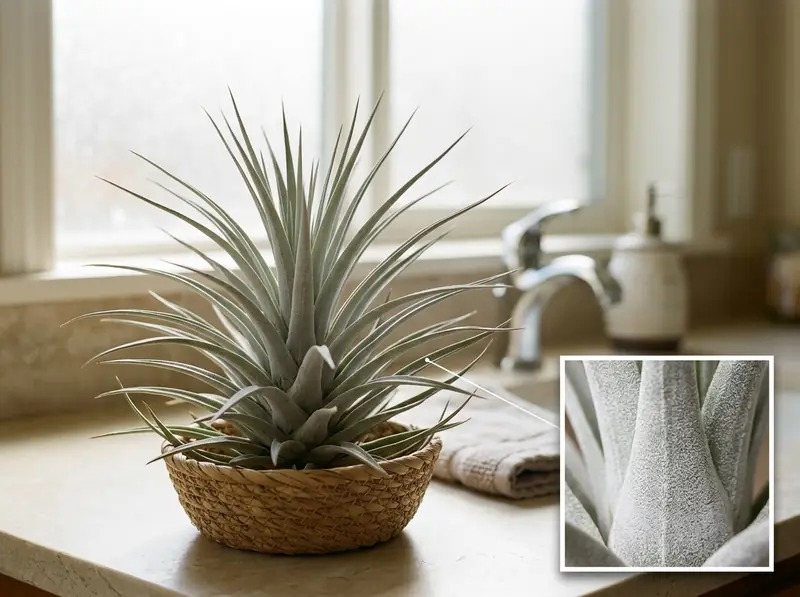 AI-generated
Paleacea Air Plant
Tillandsia paleacea
- Bright, indirect to direct sun
- Let it dry out
Pets: not yet checked AI-generated
 AI-generated