
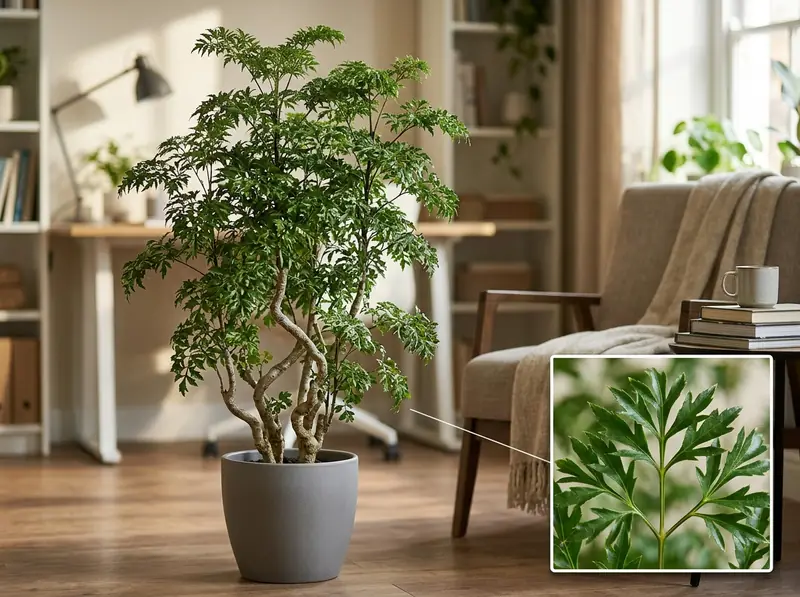
 AI-generated
Ming Aralia
Polyscias fruticosa
Ming aralia is an elegant, upright shrub with finely divided, lacy foliage and woody, twisting stems that can look like a miniature tree. It is fussy: it wants steady bright light, even moisture, good humidity and no moving or drafts. Given those, it makes a striking floor or tabletop plant.
Saving is free with a KinClub account, and it works here and in the KinClub app. Sign up free
Care profile
- Light
- Bright, indirect lightLow → direct sun
- Water
- Moderate wateringAbout every 7 days
- Difficulty
- Moderate to challengingTricky → easy
- Coldest it tolerates
- 55°F
- Humidity
- High
- Mature size
- Large to tree-sizeSmall → tree-size
- Growth rate
- Slow to moderate
- How common
- Very commonRare → everywhere
- Plant family
- Araliaceae
Pets and toxicity
Cats and dogs: not yet checked
Not yet checked against ASPCA — don't assume it's safe for pets.
No toxicity source on record for this plant yet. If a pet eats any houseplant, call your vet or an animal poison helpline.
How to care for Ming Aralia
Light
Give it bright, indirect light, such as a spot near an east or lightly shaded south or west window. A few hours of gentle morning sun is fine, but avoid hot midday sun.
Watering
Water when the top inch of soil feels dry, usually about once a week in the growing season. Water thoroughly until it drains, empty the saucer, and never let the root ball dry out completely or sit in water.
Soil
Use a well-draining, peat- or coir-based potting mix with some perlite or bark added. The pot must have drainage holes.
Feeding
Feed every 2 to 4 weeks from spring through summer with a balanced liquid houseplant fertilizer at half the label strength. Stop or cut back in fall and winter.
Repotting
Repot every 2 to 3 years in spring, going up only 1 to 2 inches in pot diameter, as it does well slightly root-bound. Handle the roots gently.
Propagation
Take 4 to 6 inch semi-hardwood stem cuttings in spring or summer, dip in rooting hormone, and plant in moist perlite and peat mix. Keep warm and humid; rooting can be slow and unreliable.
Common problems
- Leaf drop after moving or a draft: keep it in a steady, warm spot away from vents and doors, and it will usually regrow.
- Dry, crispy leaf edges from low humidity: group plants, use a pebble tray or humidifier, and avoid heating vents.
- Spider mites cause fine webbing and stippled leaves: rinse the foliage and treat with insecticidal soap weekly until clear.
- Yellowing leaves and soft stems from overwatering: let the soil dry more between waterings and check that the pot drains.
- Leggy, sparse growth: move to brighter light and prune stem tips in spring to encourage branching.
Similar plants
Same light needs and difficulty.
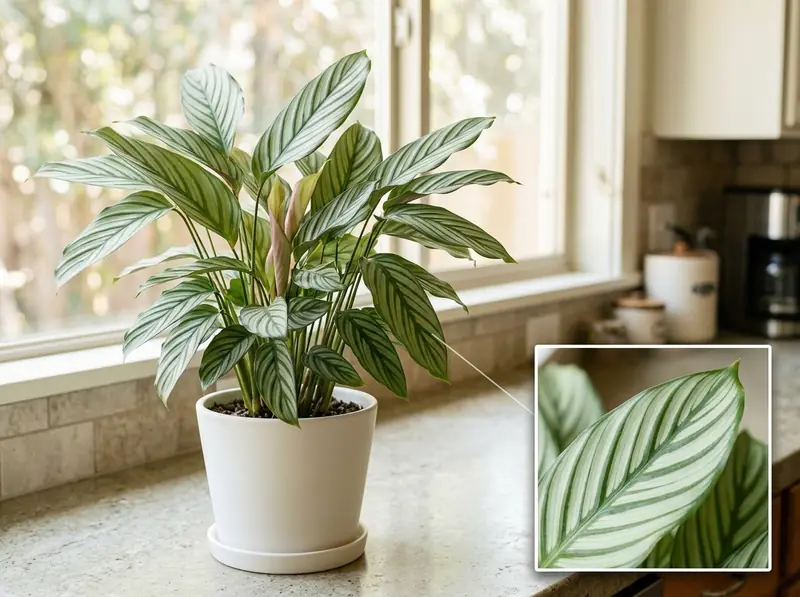 AI-generated
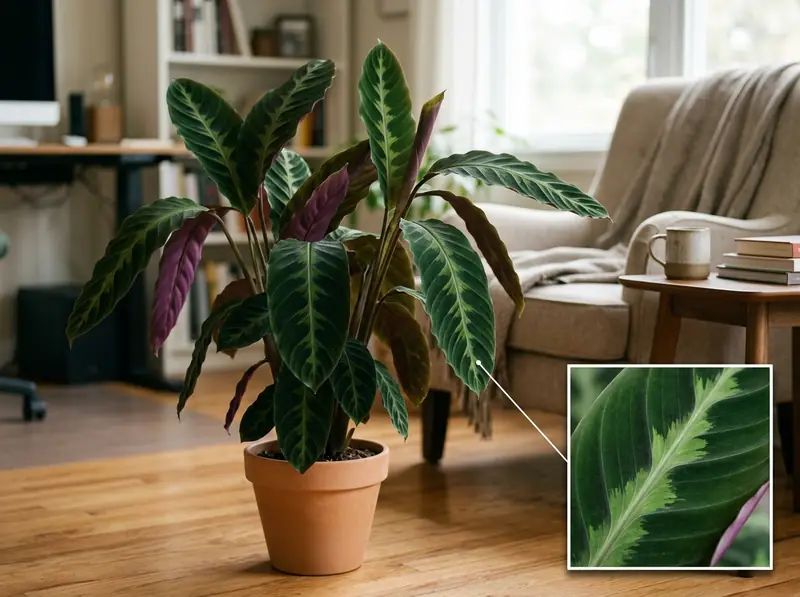 AI-generated
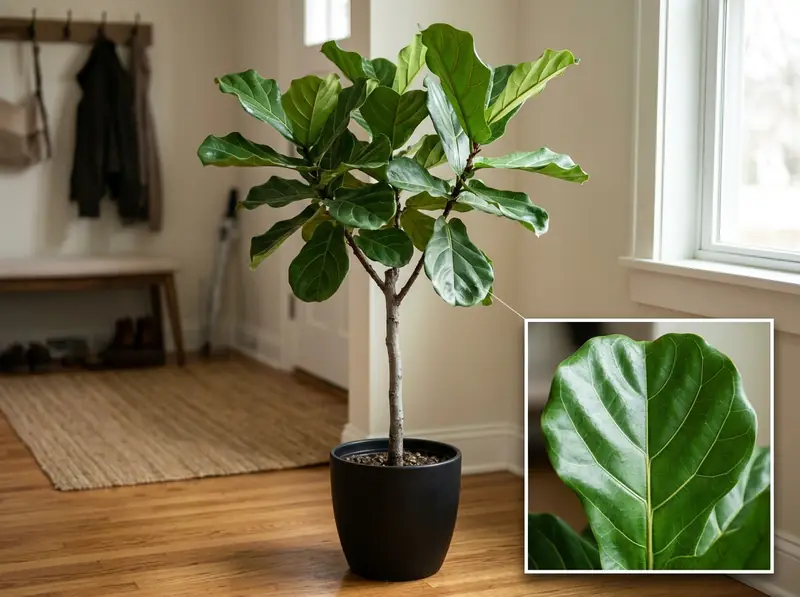 AI-generated
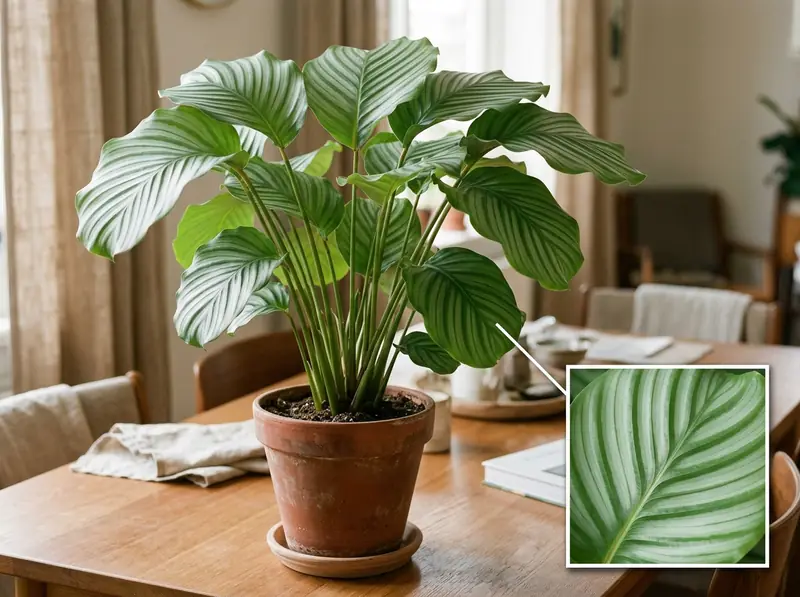 AI-generated
Calathea Orbifolia
Goeppertia orbifolia
- Medium to bright, indirect light
- Keep moist
Pets: not yet checked