
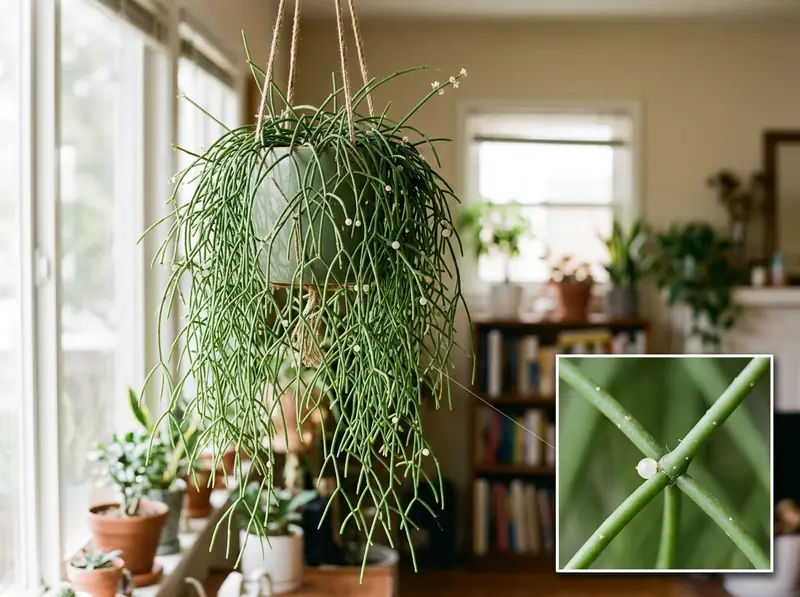
 AI-generated
Mistletoe Cactus
Rhipsalis baccifera
Also known as Rhipsalis cassutha
Mistletoe cactus is a jungle cactus with thin, pencil-like green stems that cascade in soft, tangled strands. It is easy to grow in bright, indirect light with modest watering, and it looks best in a hanging basket or on a high shelf. It is slow to fuss and rewards you with tiny white flowers and small white berries.
Saving is free with a KinClub account, and it works here and in the KinClub app. Sign up free
Care profile
- Light
- Bright, indirect lightLow → direct sun
- Water
- Moderate wateringAbout every 10 days
- Difficulty
- EasyTricky → easy
- Coldest it tolerates
- 50°F
- Humidity
- Medium to high
- Mature size
- MediumSmall → tree-size
- Growth rate
- Moderate
- How common
- CommonRare → everywhere
- Plant family
- Cactaceae
Pets and toxicity
Non-toxic to cats
Listed as non-toxic to cats by the ASPCA.
Non-toxic to dogs
Listed as non-toxic to dogs by the ASPCA.
Source: ASPCA toxic and non-toxic plants. If a pet eats any houseplant, call your vet or an animal poison helpline.
How to care for Mistletoe Cactus
Light
Give it bright, indirect light, such as a spot near an east or shaded south window. It tolerates some gentle morning sun, but avoid hot midday sun, which bleaches the stems.
Watering
Water thoroughly when the top 1-2 inches of mix feel dry, usually every 7-14 days in the growing season, and let excess drain away. Water less in winter, roughly every 2-4 weeks.
Soil
Use a very free-draining mix, such as cactus mix with extra orchid bark or perlite (about 1 part bark or perlite to 2 parts mix). It is a jungle-dwelling epiphyte, so roots need air.
Feeding
Feed with a half-strength balanced houseplant fertilizer about once a month from spring through summer. Skip feeding in fall and winter.
Repotting
Repot only every 2-3 years, in spring, when roots fill the pot. Choose a pot only one size larger, with drainage holes, since it likes being slightly snug.
Propagation
Take 3-6 inch stem cuttings, let the cut ends dry for a few days, then press them into barely damp, gritty mix. They usually root within a few weeks.
Common problems
- Mushy, translucent stems at the base mean root rot: cut off healthy stems, let them dry, and replant in fresh gritty mix.
- Shriveled, wrinkled stems usually mean the plant is too dry: water deeply and check that the roots are healthy.
- White cottony clusters on stems are mealybugs: dab with rubbing alcohol on a cotton swab and repeat weekly.
- Leggy, pale growth means too little light: move to a brighter spot.
- Tiny brown bumps on stems are scale: scrape off gently or wipe with alcohol and repeat as needed.
Similar plants
Same light needs and difficulty.
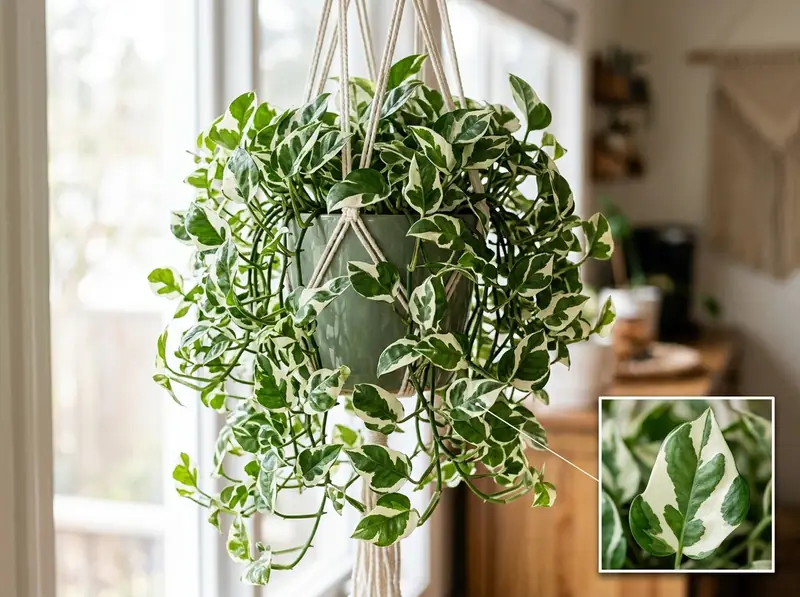 AI-generated
N'Joy Pothos
Epipremnum aureum 'N'Joy'
- Bright, indirect light
- Dry to moderate watering
Pets: not yet checked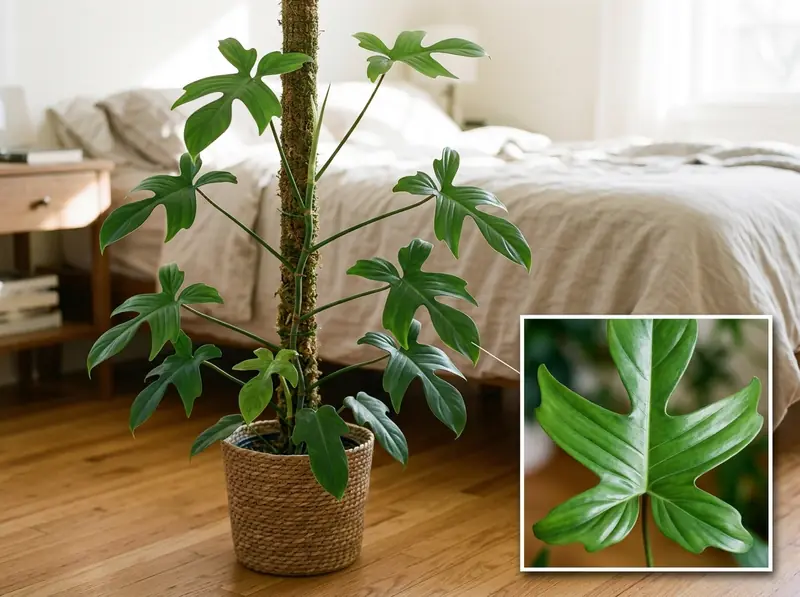 AI-generated
Oak Leaf Philodendron
Philodendron pedatum
- Bright, indirect light
- Moderate watering
Toxic to cats and dogs AI-generated
Chinese Money Plant
Pilea peperomioides
- Bright, indirect light
- Dry to moderate watering
Pets: not yet checked AI-generated
Christmas Cactus
Schlumbergera × buckleyi
- Bright, indirect light
- Moderate watering
Pets: not yet checked