AI-generated image, not a photograph of this plant. Real plants look different depending on light, soil, temperature and age.
MalvaceaeVery common in stores
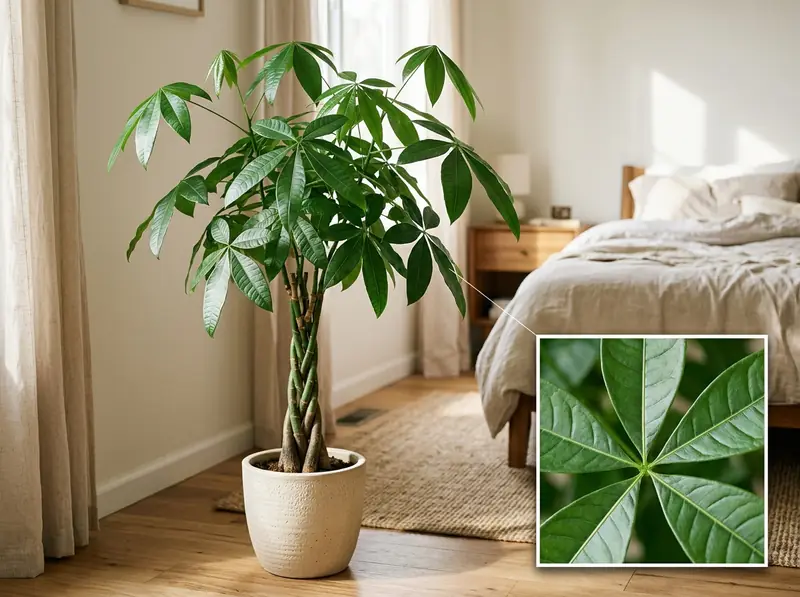
Money Tree
Pachira aquatica
Also known as Money Plant
The money tree is a popular, forgiving houseplant known for its braided trunk and glossy, hand-shaped leaves. It does best in bright, indirect light with a thorough watering only when the top couple of inches of soil have dried. Keep it away from drafts and avoid overwatering, which is its most common problem.
Non-toxic to cats and dogs
💡
Saving is free with a KinClub account, and it works here and in the KinClub app. Sign up free
Give it bright, indirect light, such as a spot a few feet from an east or south-facing window. It tolerates some gentle morning sun but can scorch in hot midday sun, and it will survive, though grow leggy, in medium light.
Watering
Water thoroughly when the top 2 inches of soil are dry, until water drains from the bottom, then empty the saucer. That is roughly every 10 to 14 days in the growing season, and less often in winter.
Soil
Use a well-draining potting mix, such as standard indoor mix with about a quarter perlite or coarse sand added. Always use a pot with drainage holes.
Feeding
Feed every 4 weeks in spring and summer with a balanced liquid houseplant fertilizer at half the label strength. Stop or reduce feeding in fall and winter.
Repotting
Repot every 2 to 3 years in spring into a pot only 1 to 2 inches wider, as it likes being slightly snug. Refresh the top few inches of soil in between if it stays in the same pot.
Propagation
Take 6-inch stem cuttings with a few leaves in spring, dip in rooting hormone, and plant in moist, light mix in a warm spot. Rooting can be slow, so keep them humid and be patient.
Common problems
Yellow leaves dropping: usually overwatering, so let the soil dry more between waterings and check that the pot drains.
Brown, crispy leaf tips: low humidity or irregular watering, so water more consistently and keep away from heaters and vents.
Soft, dark trunk base: root rot from waterlogging, so unpot, trim rotted roots and repot in fresh, dry mix, though severe cases are often fatal.
Leaf drop after moving: it dislikes sudden changes and drafts, so pick a stable spot away from cold windows and keep it there.
Sticky residue or webbing on leaves: scale, mealybugs or spider mites, so wipe leaves with soapy water or alcohol and treat repeatedly.

 AI-generated
 AI-generated
 AI-generated
 AI-generated
 AI-generated