AI-generated image, not a photograph of this plant. Real plants look different depending on light, soil, temperature and age.
CommelinaceaeVery common in stores
Moses-in-the-Cradle
Tradescantia spathacea
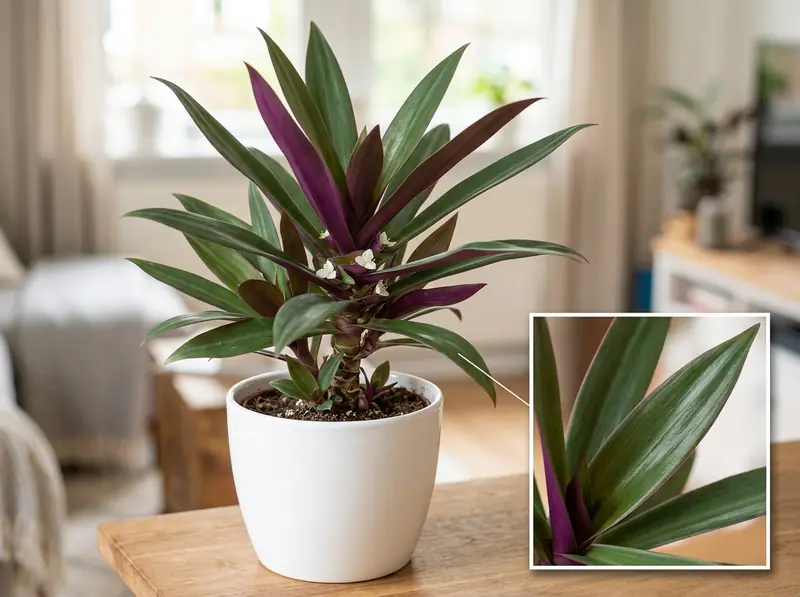
Moses-in-the-Cradle is a tough, easygoing rosette plant with sword-shaped leaves that are deep green above and purple underneath. It grows well in bright, indirect light and ordinary home temperatures, and it forgives occasional missed waterings. Over time it grows a short trunk, and it makes offsets that are easy to pot up.
Pets: not yet checked
💡
Saving is free with a KinClub account, and it works here and in the KinClub app. Sign up free
🪴 Care profile
Light
Bright, indirect lightLow → direct sun
Water
Moderate wateringAbout every 10 days
Difficulty
EasyTricky → easy
Coldest it tolerates
50°F
Humidity
Medium
Mature size
SmallSmall → tree-size
Growth rate
Moderate to fast
How common
Very commonRare → everywhere
Plant family
Commelinaceae
🐾 Pets and toxicity
Cats and dogs: not yet checked
Not yet checked against ASPCA — don't assume it's safe for pets.
No toxicity source on record for this plant yet. If a pet eats any houseplant, call your vet or an animal poison helpline.
🌿 How to care for Moses-in-the-Cradle
Light
Give it bright, indirect light, such as a spot near an east or bright west window. It tolerates a few hours of gentle direct sun, but hot midday sun scorches the leaves, and dim rooms make it stretch.
Watering
Water when the top 1–2 inches of soil feel dry, usually about every 7–14 days in the growing season. Water thoroughly until it drains, then empty the saucer; cut back in winter.
Soil
Use a well-draining general potting mix, ideally with about a quarter perlite or coarse sand added. The pot must have drainage holes.
Feeding
Feed monthly from spring through summer with a balanced liquid fertilizer diluted to half strength. Skip feeding in fall and winter.
Repotting
Repot every 2–3 years in spring, only when roots fill the pot or the plant is top-heavy. Go up just one pot size, about 1–2 inches wider.
Propagation
Root stem-top cuttings 3–4 inches long in water or moist soil, or separate the small offsets that form at the base. Roots usually form within 2–3 weeks.
Common problems
Brown leaf tips: caused by dry air, fluoride in tap water, or irregular watering; use filtered water and water more consistently.
Leggy, floppy growth: light is too low; move to brighter light and cut back the tall stem, rooting the top.
Yellow, soft lower leaves: overwatering; let the soil dry out more and check the drainage.
Fine webbing and speckled leaves: spider mites; wipe the leaves, rinse the plant, and raise humidity.

 AI-generated
 AI-generated
 AI-generated
 AI-generated
 AI-generated