
 AI-generated
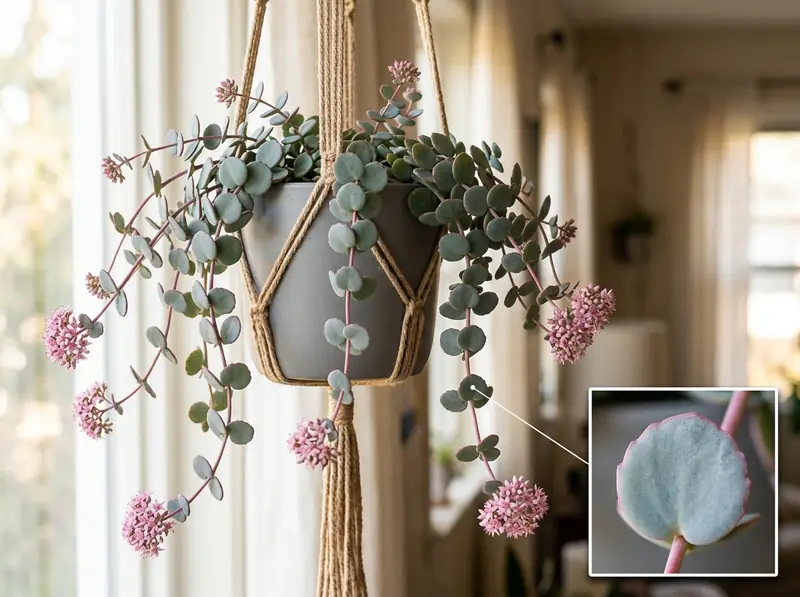
October Daphne
Sedum sieboldii
October Daphne is a small, trailing succulent with blue-gray, red-edged leaves and clusters of pink flowers in autumn. It suits a sunny windowsill or hanging pot and is forgiving if you water sparingly. It grows best with a cool, dry winter rest.
Saving is free with a KinClub account, and it works here and in the KinClub app. Sign up free
Care profile
- Light
- Direct sunLow → direct sun
- Water
- Let it dry outAbout every 14 days
- Difficulty
- EasyTricky → easy
- Coldest it tolerates
- 30°F
- Humidity
- Low
- Mature size
- SmallSmall → tree-size
- Growth rate
- Moderate
- How common
- CommonRare → everywhere
- Plant family
- Crassulaceae
Pets and toxicity
Cats and dogs: not yet checked
Not yet checked against ASPCA — don't assume it's safe for pets.
No toxicity source on record for this plant yet. If a pet eats any houseplant, call your vet or an animal poison helpline.
How to care for October Daphne
Light
Give it several hours of direct sun, such as a south or west window, or bright light from a sunny windowsill. Bright light keeps the growth compact and brings out the red leaf edges.
Watering
Water thoroughly, then let the soil dry out almost completely before watering again, roughly every 2 weeks in summer. In winter, water only a few times or not at all while it is resting and cool.
Soil
Use a gritty cactus or succulent mix, or ordinary potting mix with about one-third perlite or coarse sand. A pot with drainage holes is essential.
Feeding
Feed lightly, about once a month in spring and summer, with a diluted (half-strength) balanced or cactus fertilizer. Do not feed in autumn and winter.
Repotting
Repot every 2-3 years in spring into a slightly larger shallow pot, only when the stems crowd the container. Let the roots dry for a few days before watering afterward.
Propagation
Take 2-3 inch stem cuttings or pull off single leaves in spring or summer. Let them dry for a day or two, then lay on or insert into gritty mix and water sparingly until roots form.
Common problems
- Leggy, stretched stems with pale leaves: move to a sunnier spot and trim back the stems in spring.
- Soft, translucent leaves or black stem bases: overwatering and rot; cut away healthy tops, let them dry, and replant in dry gritty mix.
- Cottony white clusters on stems: mealybugs; dab with rubbing alcohol on a cotton swab and repeat weekly.
- No flowers in autumn: usually too little light or no cool winter rest; provide more sun and cooler winter temperatures.
Similar plants
Same light needs and difficulty.
 AI-generated
 AI-generated
 AI-generated
 AI-generated