
 AI-generated
Ornamental Pepper
Capsicum annuum
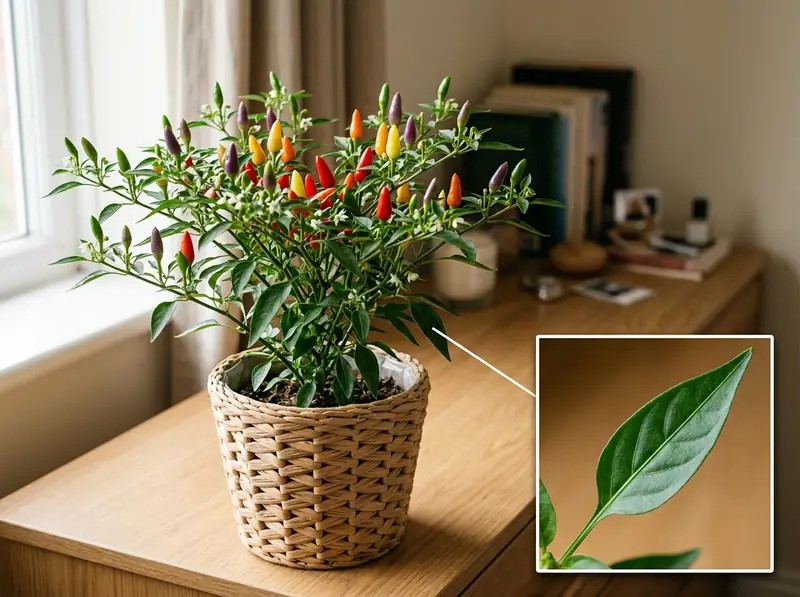
Ornamental pepper is a compact, bushy plant grown for its glossy little peppers that ripen from green through yellow, orange and purple to red. It needs a very sunny window and steady watering to keep its fruit, and it is often treated as a seasonal plant, lasting a year or two indoors. The fruits are ornamental and very hot, so don't count on them for cooking.
Saving is free with a KinClub account, and it works here and in the KinClub app. Sign up free
Care profile
- Light
- Direct sunLow → direct sun
- Water
- Moderate wateringAbout every 4 days
- Difficulty
- Easy to moderateTricky → easy
- Coldest it tolerates
- 50°F
- Humidity
- Medium
- Mature size
- SmallSmall → tree-size
- Growth rate
- Moderate to fast
- How common
- Very commonRare → everywhere
- Plant family
- Solanaceae
Pets and toxicity
Cats and dogs: not yet checked
Not yet checked against ASPCA — don't assume it's safe for pets.
No toxicity source on record for this plant yet. If a pet eats any houseplant, call your vet or an animal poison helpline.
How to care for Ornamental Pepper
Light
Give it at least 6 hours of direct sun a day, such as a south- or west-facing window. In winter, supplement with a grow light if the window is weak.
Watering
Water thoroughly when the top inch of soil feels dry, until water drains out, and empty the saucer. In a sunny window this is often every 3 to 5 days; never let it wilt repeatedly, as stress makes fruit drop.
Soil
Use a well-draining, peat- or coco-based potting mix with some perlite added. Choose a pot with drainage holes.
Feeding
Feed every 2 weeks in spring and summer with a balanced liquid fertilizer at half strength, switching to one higher in potassium once flowers appear. Stop feeding in winter.
Repotting
Repot only when roots fill the pot, usually once a year in spring, moving up one pot size (1 to 2 inches wider). Many people grow it as a short-lived plant and replace it.
Propagation
Usually grown from seed started indoors 8 to 10 weeks before the last frost, at 75 to 85°F soil temperature. Cuttings root poorly and are unreliable.
Common problems
- Fruit or flowers dropping: caused by low light, dry spells or sudden temperature changes, so move to a sunnier, steady spot and water evenly.
- Sticky leaves and curled new growth: aphids or whiteflies; rinse the plant off and spray with insecticidal soap weekly until clear.
- Fine webbing and speckled leaves: spider mites in dry air; wash leaves and raise humidity.
- Leggy growth with no fruit: too little light; move it to a south-facing window or add a grow light.
- Plant declining after fruiting: peppers are often short-lived as houseplants; prune back lightly in late winter or replace it.
Similar plants
Same light needs and difficulty.
 AI-generated
 AI-generated
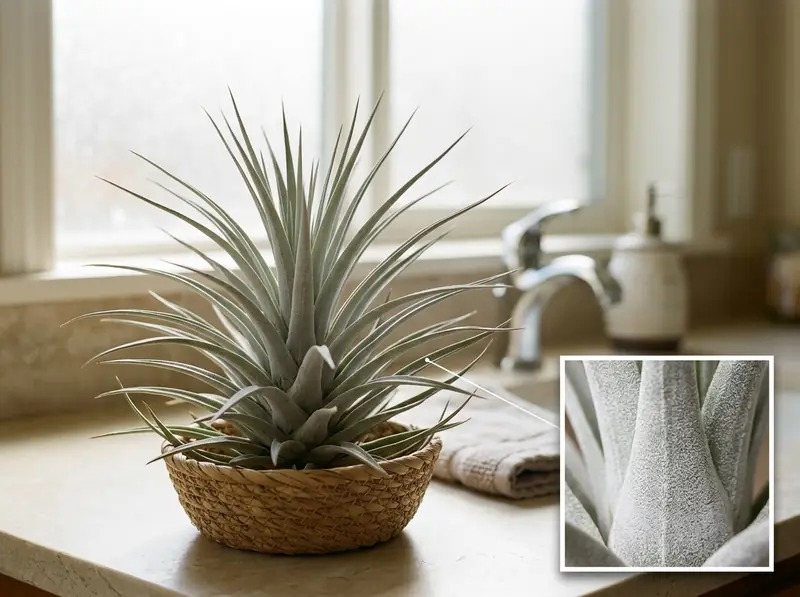
Paleacea Air Plant
Tillandsia paleacea
- Bright, indirect to direct sun
- Let it dry out
Pets: not yet checked AI-generated
 AI-generated