
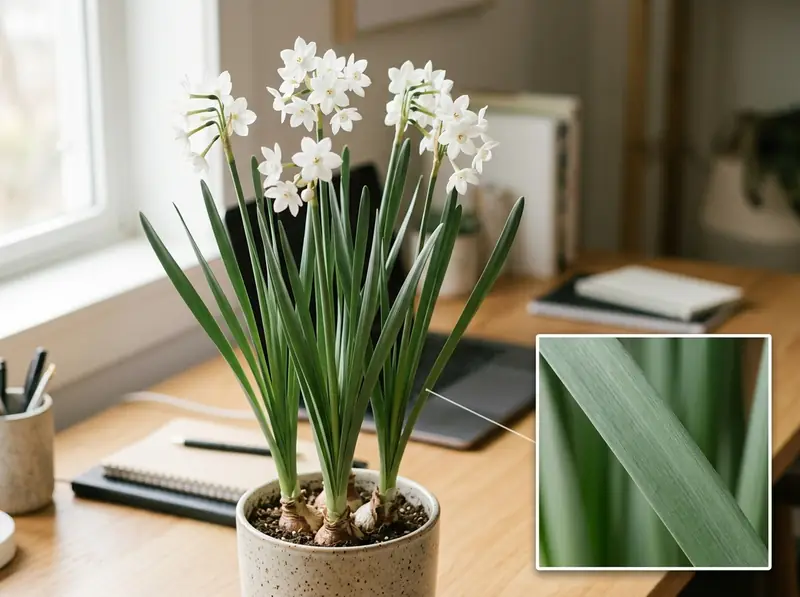
 AI-generated
Paperwhite Narcissus
Narcissus tazetta
Also known as Narcissus bifrons, Narcissus canariensis, Narcissus floribundus, Narcissus italicus, Narcissus latifolius, Narcissus linnaeanus, Narcissus multiflorus, Narcissus tinei, Narcissus trewianus
Paperwhite narcissus is a winter-flowering bulb that blooms in about 4-6 weeks after planting, with clusters of small white, strongly scented flowers. It is easy to grow in pebbles and water or in soil. Keep it cool and bright for sturdy stems and longer-lasting blooms, and expect to enjoy it for one season.
Saving is free with a KinClub account, and it works here and in the KinClub app. Sign up free
Care profile
- Light
- Bright, indirect lightLow → direct sun
- Water
- Moderate to moist wateringAbout every 5 days
- Difficulty
- EasyTricky → easy
- Coldest it tolerates
- 50°F
- Humidity
- Low to medium
- Mature size
- SmallSmall → tree-size
- Growth rate
- Fast
- How common
- Very commonRare → everywhere
- Plant family
- Amaryllidaceae
Pets and toxicity
Toxic to cats
Keep away from cats. Call your vet or a pet poison helpline if a cat chews it.
Toxic to dogs
Keep away from dogs. Call your vet or a pet poison helpline if a dog chews it.
Source: ASPCA toxic and non-toxic plants. If a pet eats any houseplant, call your vet or an animal poison helpline.
How to care for Paperwhite Narcissus
Light
Give bright, indirect light once shoots are up; a few hours of gentle sun is fine. Start new bulbs in a cooler, dimmer spot for the first week or so, then move them into brighter light.
Watering
In soil, water when the top inch is dry, about every 4-7 days, and never let the pot sit in water. In pebbles and water, keep the water level just below the base of the bulbs so only the roots are submerged.
Soil
Use an ordinary well-draining potting mix in a pot with drainage holes, with the top third of the bulb above the surface. Alternatively, anchor bulbs in a bowl of pebbles with water.
Feeding
No feeding is needed for forced bulbs, as the bulb holds the energy for flowering. If you grow them in soil, do not bother fertilizing, since paperwhites rarely rebloom indoors.
Repotting
Plant bulbs close together, nearly touching, in a pot 6 inches wide and at least 4-6 inches deep. Do not repot afterward; they are usually composted after blooming.
Propagation
Bulbs slowly form small offsets, but they are not reliable indoors. Most people buy fresh bulbs each year; in mild climates (zones 8-10), they can be planted outdoors after flowering.
Common problems
- Tall, floppy stems: too warm or too dim, so move to a cool, bright spot and stake or tie loosely with twine.
- Rotting bulbs: water is touching the bulb base or the soil is soggy, so lower the water level or let the soil dry more between waterings.
- Flowers fade quickly: heat and direct sun shorten bloom life, so keep the plant in a cool room out of hot sun.
- Bulbs do not sprout: they may be too warm or too dry, or dud bulbs, so check for firmness and keep in a cool, bright spot with roots in moisture.
Similar plants
Same light needs and difficulty.
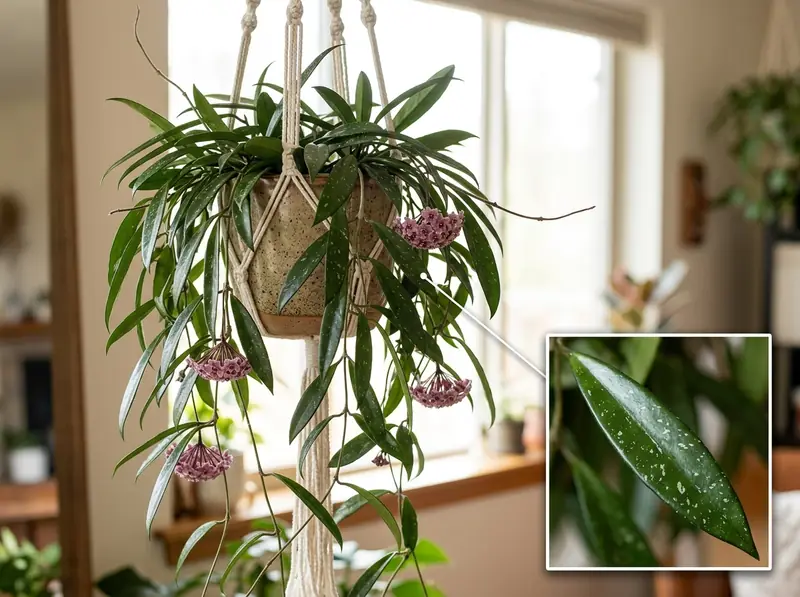 AI-generated
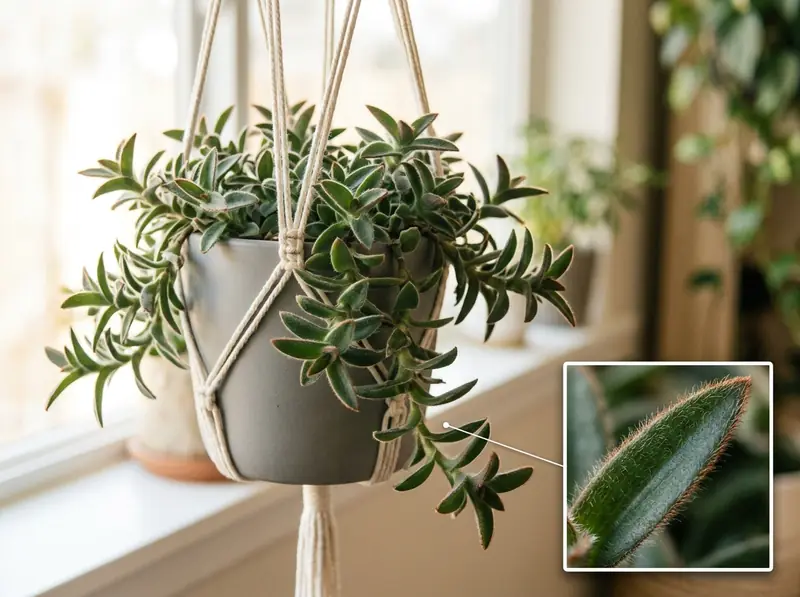 AI-generated
 AI-generated
Chinese Money Plant
Pilea peperomioides
- Bright, indirect light
- Dry to moderate watering
Pets: not yet checked AI-generated
Christmas Cactus
Schlumbergera × buckleyi
- Bright, indirect light
- Moderate watering
Pets: not yet checked