
 AI-generated
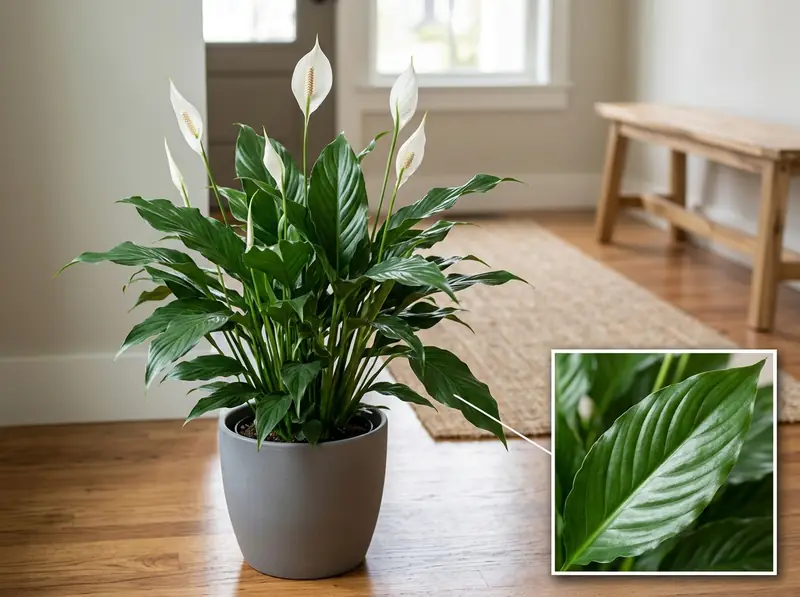
Peace Lily
Spathiphyllum wallisii
Peace lily is a forgiving, glossy-leaved plant that tolerates low light and tells you clearly when it needs water by drooping. It produces white spathe flowers best in bright indirect light. Keep the soil evenly moist but not soggy, and avoid cold drafts.
Saving is free with a KinClub account, and it works here and in the KinClub app. Sign up free
Care profile
- Light
- Low to medium lightLow → direct sun
- Water
- Moderate to moist wateringAbout every 7 days
- Difficulty
- EasyTricky → easy
- Coldest it tolerates
- 55°F
- Humidity
- Medium to high
- Mature size
- MediumSmall → tree-size
- Growth rate
- Moderate
- How common
- EverywhereRare → everywhere
- Plant family
- Araceae
Pets and toxicity
Toxic to cats
Keep away from cats. Call your vet or a pet poison helpline if a cat chews it.
Toxic to dogs
Keep away from dogs. Call your vet or a pet poison helpline if a dog chews it.
Source: ASPCA toxic and non-toxic plants. If a pet eats any houseplant, call your vet or an animal poison helpline.
How to care for Peace Lily
Light
Bright indirect light is best for flowering, but it tolerates low light and a dim room. Keep it out of direct midday sun, which scorches the leaves.
Watering
Water when the top inch of soil feels dry, about once a week, until water runs out the drainage holes. Empty the saucer afterward; use room-temperature water and let tap water sit out overnight if your tap is heavily treated.
Soil
Use a loose, well-draining peat- or coir-based potting mix with some perlite or bark added. The mix should hold some moisture but never stay soggy.
Feeding
Feed every 6 to 8 weeks in spring and summer with a balanced houseplant fertilizer diluted to half strength. Skip feeding in winter.
Repotting
Repot every 1 to 2 years in spring when roots fill the pot or circle the drainage holes. Move up only 1 to 2 inches in pot diameter.
Propagation
Divide the clump in spring when repotting. Separate sections that each have several leaves and healthy roots, and pot them individually in fresh mix.
Common problems
- Brown leaf tips: caused by dry air, fluoride or salts in water, or irregular watering. Use filtered water, flush the soil monthly, and trim the brown tips.
- Yellow leaves: often overwatering or old leaf aging. Let the soil dry slightly, check drainage, and remove yellow leaves at the base.
- No flowers: usually too little light. Move to brighter indirect light and feed lightly in spring.
- Spider mites or mealybugs: wipe leaves with a damp cloth and treat with insecticidal soap every 7 days until clear.
- Drooping despite moist soil: check for root rot. Trim mushy brown roots and repot in fresh mix.
Similar plants
Same light needs and difficulty.
 AI-generated
 AI-generated
 AI-generated
 AI-generated
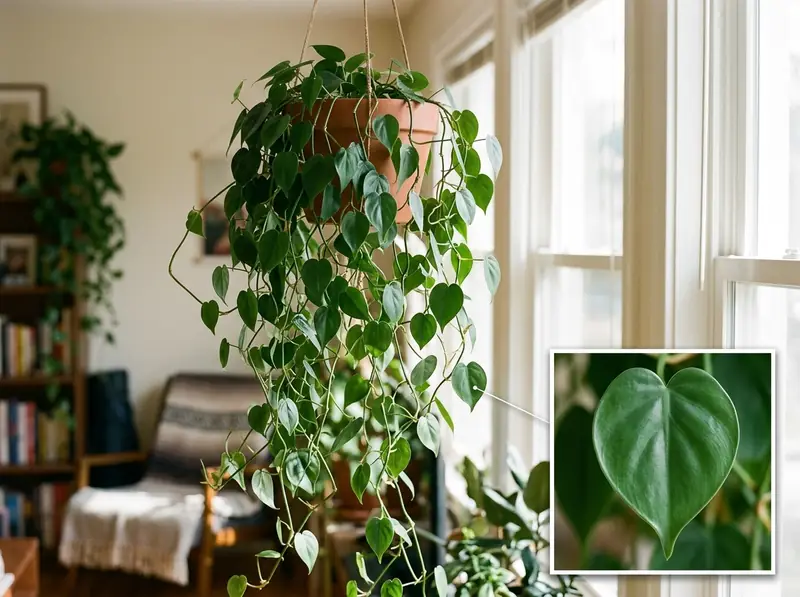
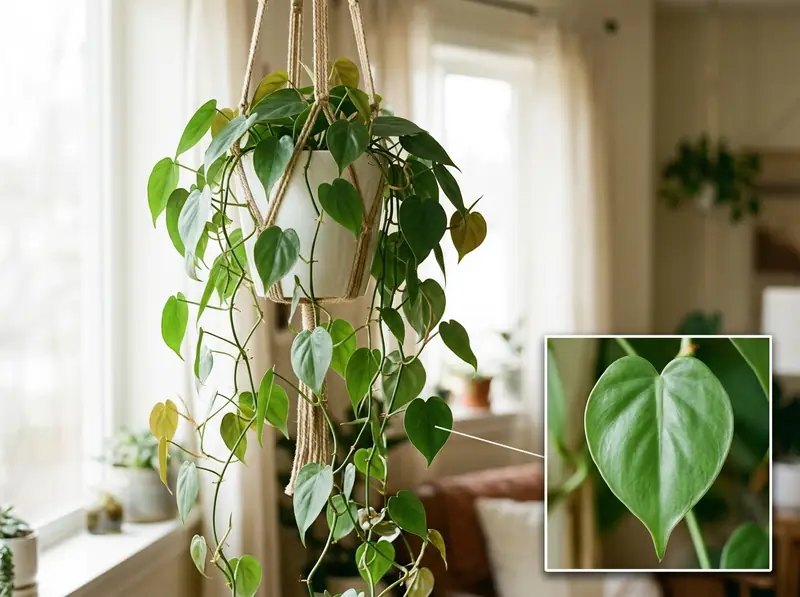
Heartleaf Philodendron
Philodendron hederaceum
- Low to medium light
- Moderate watering
Toxic to cats and dogs