
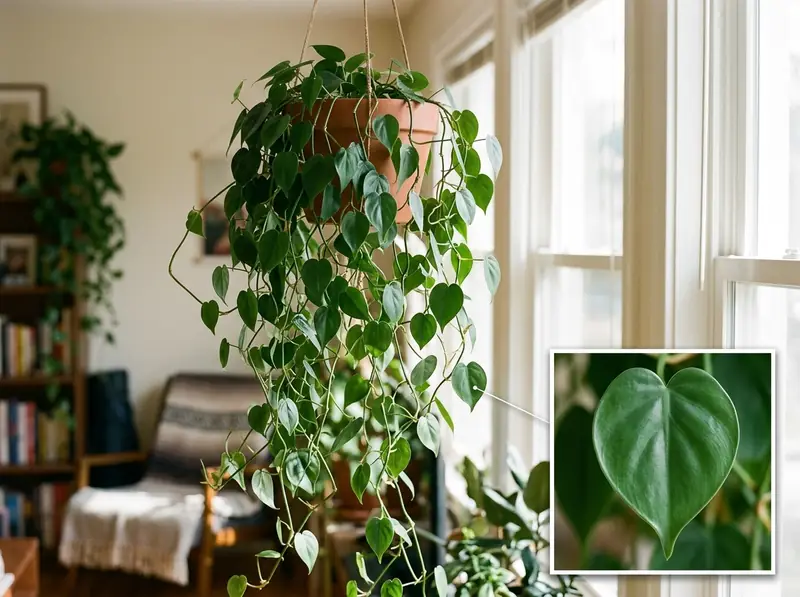
 AI-generated
Sweetheart Vine
Philodendron scandens
Also known as Heartleaf Philodendron, Cordatum, Sweetheart Plant
Sweetheart vine is a fast-growing trailing plant with glossy heart-shaped leaves, and it is one of the easiest houseplants to keep alive. It suits a hanging basket, shelf edge or trellis and tolerates average home conditions and some neglect. Give it medium to bright indirect light and water when the top inch or two of soil is dry.
Saving is free with a KinClub account, and it works here and in the KinClub app. Sign up free
Care profile
- Light
- Low to medium lightLow → direct sun
- Water
- Moderate wateringAbout every 8 days
- Difficulty
- EasyTricky → easy
- Coldest it tolerates
- 55°F
- Humidity
- Medium
- Mature size
- LargeSmall → tree-size
- Growth rate
- Fast
- How common
- Very commonRare → everywhere
- Plant family
- Araceae
Pets and toxicity
Toxic to cats
Keep away from cats. Call your vet or a pet poison helpline if a cat chews it.
Toxic to dogs
Keep away from dogs. Call your vet or a pet poison helpline if a dog chews it.
Source: ASPCA toxic and non-toxic plants. If a pet eats any houseplant, call your vet or an animal poison helpline.
How to care for Sweetheart Vine
Light
Give it medium to bright indirect light, such as a few feet from an east or north window. It tolerates lower light but grows slowly and leggy there, and direct sun scorches the leaves.
Watering
Water when the top 1-2 inches of soil feel dry, about every 7-10 days in spring and summer. Water thoroughly until it drains from the holes, then empty the saucer. Water less often in winter.
Soil
Use a standard well-draining indoor potting mix. Adding a handful of perlite or orchid bark per few quarts improves drainage. Pick a pot with drainage holes.
Feeding
Feed every 4 weeks in spring and summer with a balanced liquid houseplant fertilizer at half the label strength. Stop feeding in fall and winter.
Repotting
Repot every 1-2 years in spring, or when roots circle the pot or poke out of the drainage holes. Move up only 1-2 inches in pot diameter.
Propagation
Cut a stem below a node with 2-3 leaves and put it in water or moist potting mix. Roots usually form in 2-4 weeks in a warm, bright spot. Plant several cuttings in one pot for a fuller look.
Common problems
- Yellow leaves: usually overwatering or soggy soil. Let the top inch or two dry between waterings and check the pot drains.
- Long bare stems with small leaves: not enough light. Move it brighter and trim the vines back to encourage branching.
- Brown crispy leaf edges: dry soil, very dry air, or a heat vent nearby. Water more regularly and move it away from vents.
- Sticky residue or cottony white spots: mealybugs or scale. Wipe with rubbing alcohol on a cotton swab and repeat weekly until gone.
- Fine webbing and stippled leaves: spider mites. Rinse the leaves in the shower and wipe them, then use insecticidal soap weekly.
Similar plants
Same light needs and difficulty.
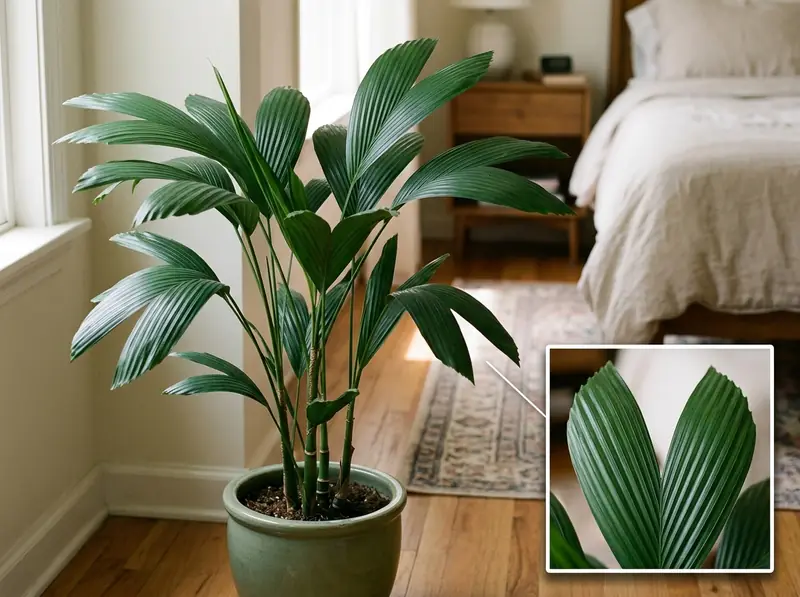 AI-generated
Ernest Augustus Palm
Chamaedorea ernesti-augusti
- Low to medium light
- Moderate watering
Pets: not yet checked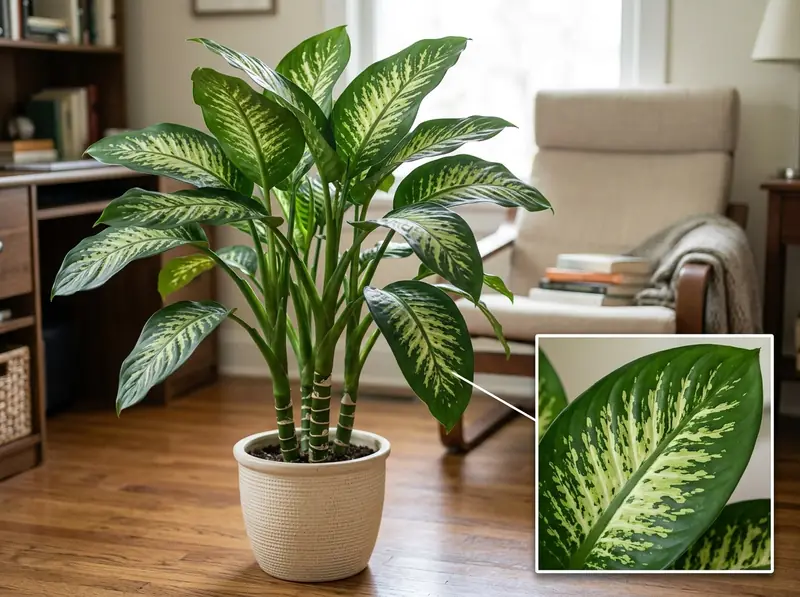 AI-generated
Giant Dumb Cane
Dieffenbachia amoena
- Medium to bright, indirect light
- Moderate watering
Toxic to cats and dogs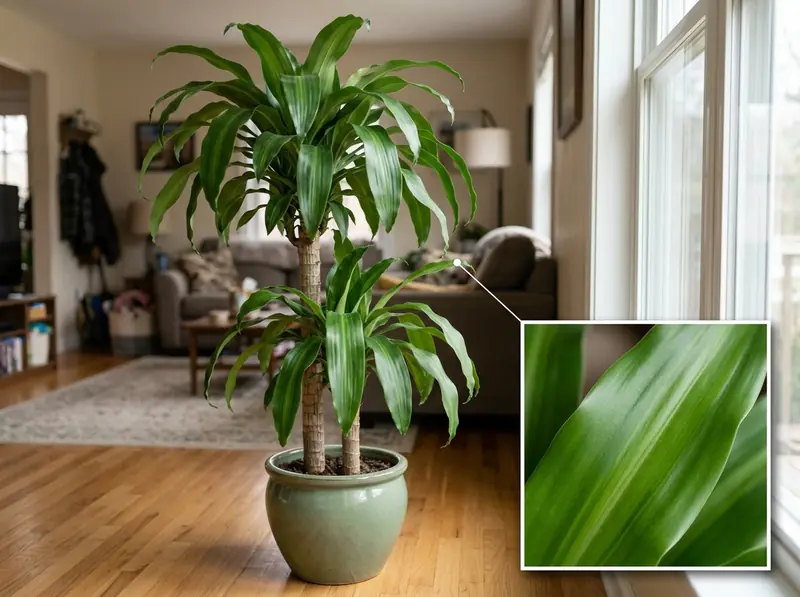 AI-generated
 AI-generated