
 AI-generated
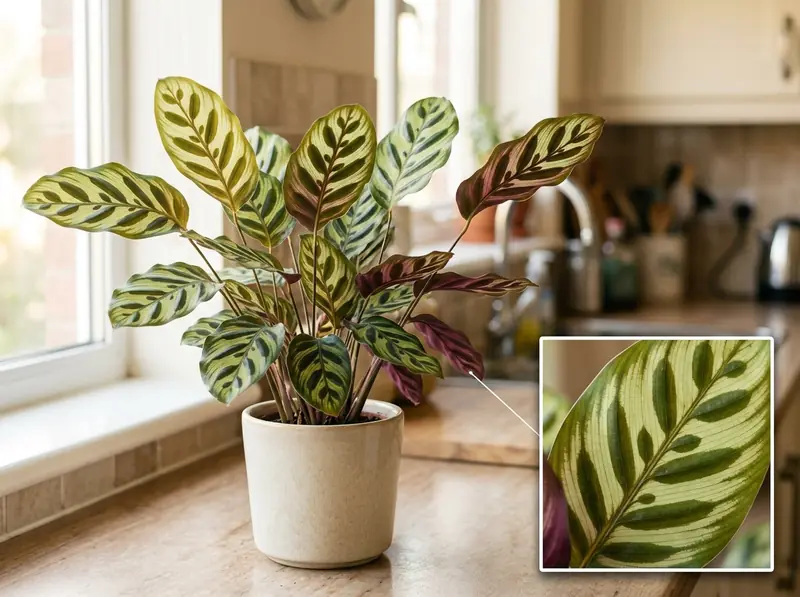
Peacock Plant
Goeppertia makoyana
Also known as Calathea makoyana, Calathea olivaris
Peacock Plant is grown for its oval leaves, which have dark green feather-like markings above and purple undersides. It is fussy: it needs steady moisture, high humidity, warmth and gentle indirect light. Filtered water and a humidifier or a grouping of plants help keep the leaf edges from browning.
Saving is free with a KinClub account, and it works here and in the KinClub app. Sign up free
Care profile
- Light
- Medium to bright, indirect lightLow → direct sun
- Water
- Keep moistAbout every 7 days
- Difficulty
- ChallengingTricky → easy
- Coldest it tolerates
- 60°F
- Humidity
- High
- Mature size
- MediumSmall → tree-size
- Growth rate
- Moderate
- How common
- Very commonRare → everywhere
- Plant family
- Marantaceae
Pets and toxicity
Cats and dogs: not yet checked
Not yet checked against ASPCA — don't assume it's safe for pets.
Source: ASPCA toxic and non-toxic plants. If a pet eats any houseplant, call your vet or an animal poison helpline.
How to care for Peacock Plant
Light
Give it medium to bright-indirect light, such as a spot a few feet back from an east window. Avoid direct sun, which fades and scorches the leaves.
Watering
Keep the soil lightly and evenly damp but never soggy, usually about once a week in the growing season. Let only the top half inch dry out, and use room-temperature distilled, rain or filtered water.
Soil
Use a light, airy, well-draining peat-based potting mix with some perlite or orchid bark added. Choose a pot with drainage holes.
Feeding
Feed every 4 weeks in spring and summer with a balanced liquid fertilizer diluted to half strength. Skip feeding in winter.
Repotting
Repot every 1-2 years in spring into a pot only 1-2 inches wider. Divide the plant at the same time if it has become crowded.
Propagation
Divide the clump at repotting, making sure each section has roots and several leaves. Keep the divisions warm and humid until they settle in.
Common problems
- Crispy brown leaf edges: usually dry air or mineral-heavy tap water. Raise humidity to 50% or more with a humidifier and switch to filtered or distilled water.
- Leaves curling and drooping: the soil has dried out too much. Water thoroughly and keep the soil evenly damp from then on.
- Fine webbing and speckled, dull leaves: spider mites. Rinse the leaves, including undersides, and treat with insecticidal soap every 5-7 days for several weeks.
- Yellowing leaves with soggy soil: overwatering or poor drainage. Let the top half inch dry, empty the saucer and repot into fresh mix if the roots look brown and mushy.
- Faded leaf patterns: too much direct light. Move the plant back from the window into filtered light.
Similar plants
Same light needs and difficulty.
 AI-generated
 AI-generated
 AI-generated
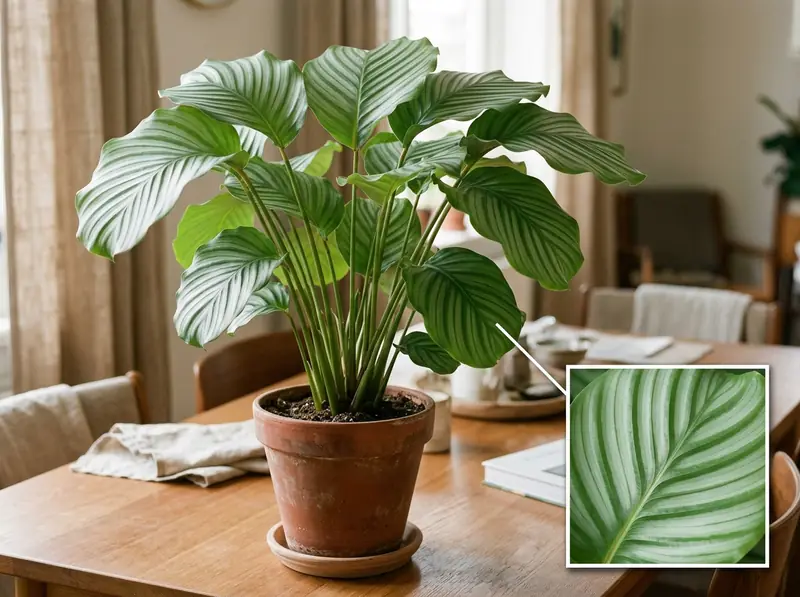
Calathea Orbifolia
Goeppertia orbifolia
- Medium to bright, indirect light
- Keep moist
Pets: not yet checked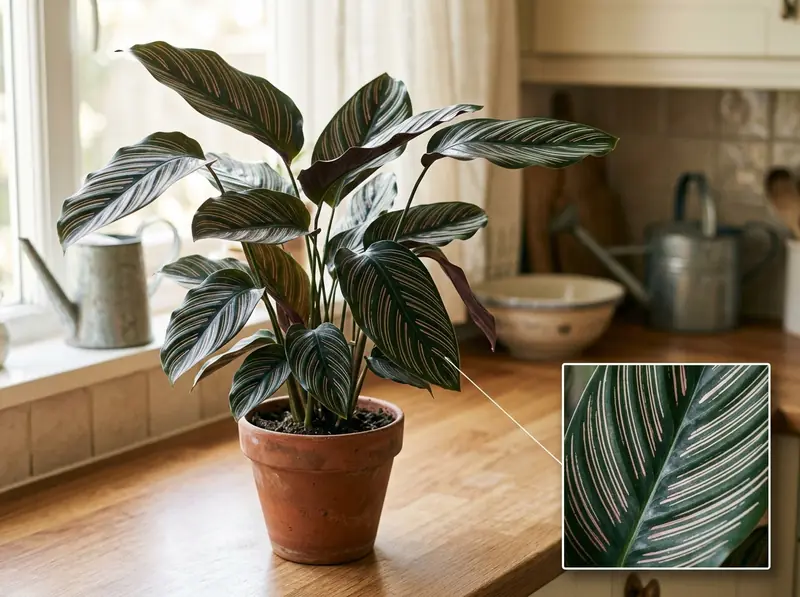 AI-generated