
 AI-generated
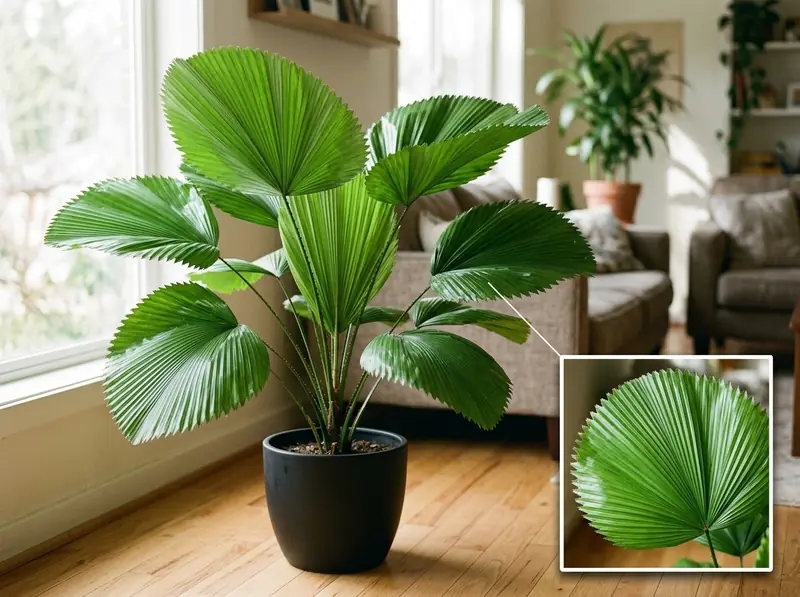
Ruffled Fan Palm
Licuala grandis
Ruffled fan palm is a slow-growing palm with striking round, pleated leaves that look like folded fans. It needs steady warmth, high humidity, and evenly moist soil, so it suits owners willing to give it some attention. Protect it from drafts and direct sun and it will slowly build a lush clump.
Saving is free with a KinClub account, and it works here and in the KinClub app. Sign up free
Care profile
- Light
- Medium to bright, indirect lightLow → direct sun
- Water
- Keep moistAbout every 5 days
- Difficulty
- Moderate to challengingTricky → easy
- Coldest it tolerates
- 55°F
- Humidity
- High
- Mature size
- LargeSmall → tree-size
- Growth rate
- Slow
- How common
- CommonRare → everywhere
- Plant family
- Arecaceae
Pets and toxicity
Cats and dogs: not yet checked
Not yet checked against ASPCA — don't assume it's safe for pets.
No toxicity source on record for this plant yet. If a pet eats any houseplant, call your vet or an animal poison helpline.
How to care for Ruffled Fan Palm
Light
Give bright filtered light or a spot with gentle morning sun; it is an understory palm. Avoid direct midday sun, which scorches the pleated fans.
Watering
Keep the soil evenly damp but never soggy, usually watering when the top half inch feels barely dry, about every 4-7 days in summer. Water less in winter, and use filtered or rainwater if your tap water is hard.
Soil
Use a rich, airy, well-draining mix, such as potting soil with about one-third perlite or fine bark and some peat or coco coir. The pot must have drainage holes.
Feeding
Feed monthly in spring and summer with a balanced liquid palm fertilizer at half strength. Skip feeding in winter.
Repotting
Repot only every 2-3 years when roots fill the pot, moving up one pot size in spring. Palms resent root disturbance, so handle the root ball gently.
Propagation
Mostly grown from seed, which is slow and needs steady warmth of about 80°F. Mature clumps can rarely be divided, but this is risky and best left to experienced growers.
Common problems
- Brown leaf tips: caused by dry air or mineral buildup. Raise humidity with a humidifier and flush the soil with filtered water.
- Spider mites: fine webbing and stippled leaves in dry air. Wipe the leaves, rinse them, and spray with insecticidal soap weekly.
- Yellowing fronds: often from overwatering or cold. Let the top of the soil dry slightly and keep the plant above 60°F.
- Torn or split pleats: from drafts or bumps. Move the plant to a sheltered spot; damaged fans will not heal.
Similar plants
Same light needs and difficulty.
 AI-generated
Calathea Orbifolia
Goeppertia orbifolia
- Medium to bright, indirect light
- Keep moist
Pets: not yet checked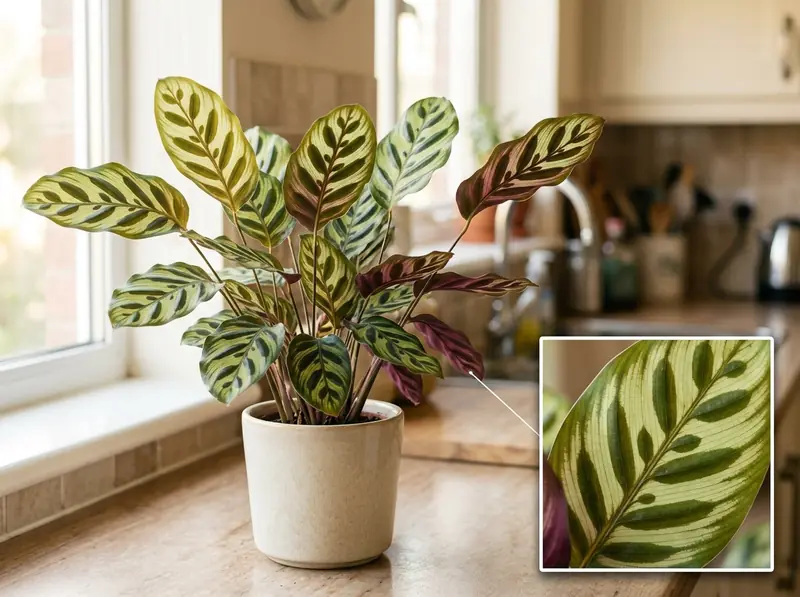 AI-generated
 AI-generated
 AI-generated
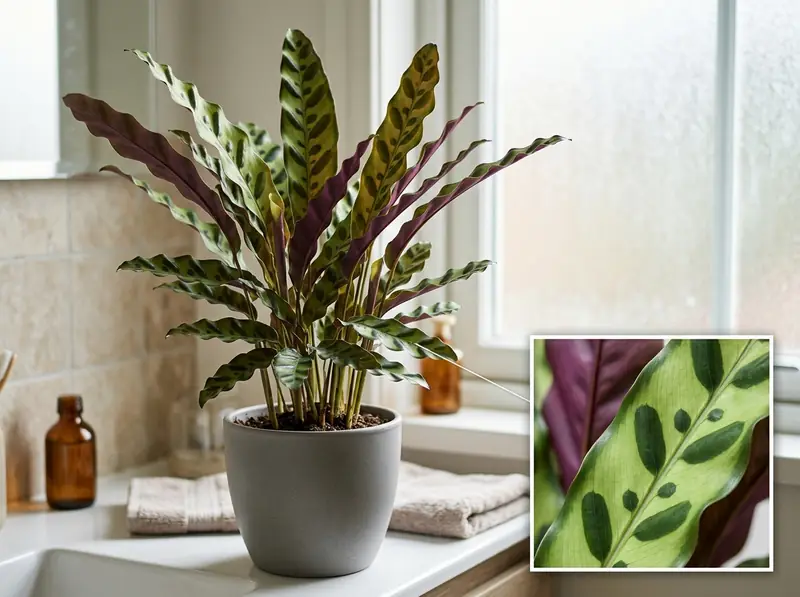
Rattlesnake Plant
Goeppertia insignis
- Medium to bright, indirect light
- Keep moist
Non-toxic to cats and dogs