
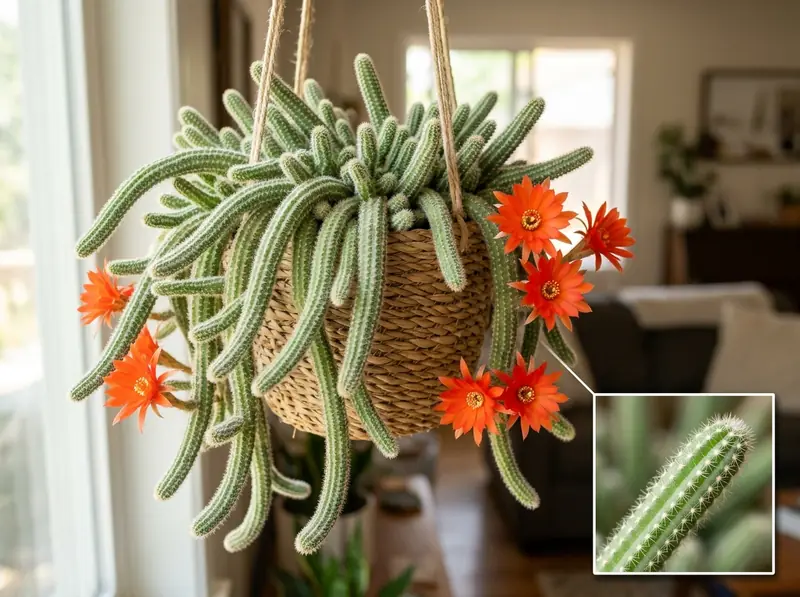
 AI-generated
Peanut Cactus
Echinopsis chamaecereus
Peanut cactus is a small, clustering cactus with soft, finger-like stems covered in short white spines. It is easy to grow in a sunny window and gets large, bright orange-red flowers in spring if given a cool winter rest. Stems break off and root readily, so it is simple to share.
Saving is free with a KinClub account, and it works here and in the KinClub app. Sign up free
Care profile
- Light
- Direct sunLow → direct sun
- Water
- Let it dry outAbout every 14 days
- Difficulty
- EasyTricky → easy
- Coldest it tolerates
- 35°F
- Humidity
- Low
- Mature size
- SmallSmall → tree-size
- Growth rate
- Moderate to fast
- How common
- CommonRare → everywhere
- Plant family
- Cactaceae
Pets and toxicity
Cats and dogs: not yet checked
Not yet checked against ASPCA — don't assume it's safe for pets.
No toxicity source on record for this plant yet. If a pet eats any houseplant, call your vet or an animal poison helpline.
How to care for Peanut Cactus
Light
Give it several hours of bright light, including direct sun, from a south or west window. In midsummer, protect it from harsh midday sun through hot glass, and turn the pot occasionally.
Watering
In spring and summer, water thoroughly when the soil is completely dry, about every 2 weeks. In winter, water very little, about once a month or not at all, while it is kept cool.
Soil
Use a gritty cactus mix, ideally with extra perlite or pumice added, in a pot with drainage holes. Terracotta helps the soil dry out faster.
Feeding
Feed with a low-nitrogen, high-potash cactus or tomato fertilizer at half strength about once a month from spring to late summer. Do not feed in autumn or winter.
Repotting
Repot every 2-3 years in spring into a shallow pot only slightly wider than the last one. Let the plant sit dry for a few days before repotting, and handle it with tongs or folded newspaper.
Propagation
Twist or cut off a stem section 2-3 in long and let the end callus dry for about a week. Lay it on or press it shallowly into dry cactus mix, and water lightly once roots form.
Common problems
- No flowers: usually caused by too little light or no cool, dry winter rest. Provide full sun and 40-50°F with minimal water from November to February.
- Mushy stems at the base: root or stem rot from overwatering. Cut back to clean, firm green tissue, let it callus and re-root it in fresh dry mix.
- Cottony white clusters between stems: mealybugs. Dab with cotton swabs dipped in rubbing alcohol and repeat weekly until gone.
- Fine webbing and pale stippling: spider mites in hot, dry conditions. Rinse the plant and treat with insecticidal soap.
Similar plants
Same light needs and difficulty.
 AI-generated
 AI-generated
 AI-generated
 AI-generated