
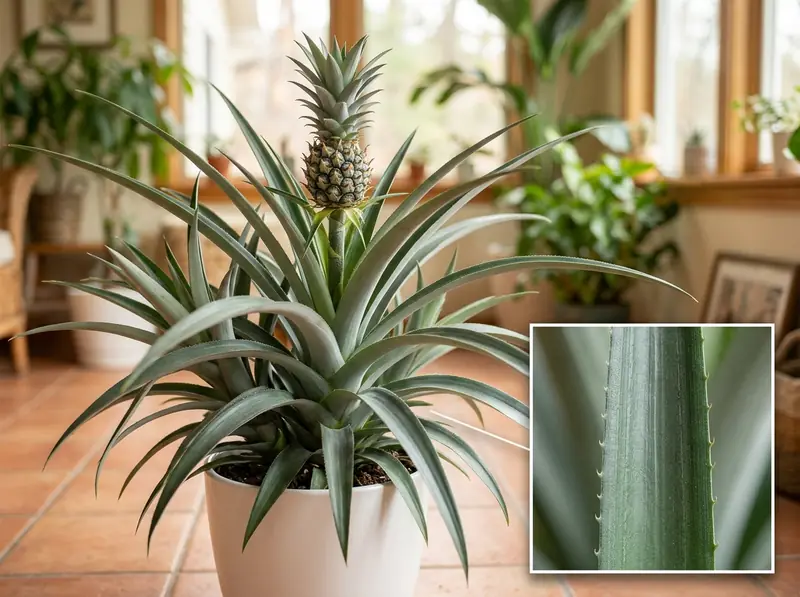
 AI-generated
Pineapple
Ananas comosus
Pineapple is a bold, spiky bromeliad that forms a rosette of stiff, sword-like leaves. It needs lots of sun and a fast-draining mix, and it is easy to start from the crown of a store-bought fruit. With good light and careful watering, a mature plant may produce a small fruit after a few years.
Saving is free with a KinClub account, and it works here and in the KinClub app. Sign up free
Care profile
- Light
- Direct sunLow → direct sun
- Water
- Dry to moderate wateringAbout every 10 days
- Difficulty
- Easy to moderateTricky → easy
- Coldest it tolerates
- 50°F
- Humidity
- Medium
- Mature size
- MediumSmall → tree-size
- Growth rate
- Slow
- How common
- CommonRare → everywhere
- Plant family
- Bromeliaceae
Pets and toxicity
Cats and dogs: not yet checked
Not yet checked against ASPCA — don't assume it's safe for pets.
No toxicity source on record for this plant yet. If a pet eats any houseplant, call your vet or an animal poison helpline.
How to care for Pineapple
Light
Give it as much bright light as possible, ideally 6 or more hours of direct sun from a south- or west-facing window. In dim rooms it survives but grows weakly and will not fruit.
Watering
Water thoroughly every 7 to 14 days in summer, when the top 2 inches of soil are dry, and let excess drain away. In winter water only every 3 to 4 weeks. Keep a little water in the central cup only in warm weather, and empty it in cool months.
Soil
Use a fast-draining mix such as cactus and succulent soil with extra perlite or bark, about 1 part grit to 2 parts mix. A terracotta pot with a drainage hole helps the soil dry evenly.
Feeding
Feed every 4 to 6 weeks in spring and summer with a balanced fertilizer at half the label strength. Do not feed in winter.
Repotting
Repot only every 2 to 3 years, in spring, when roots fill the pot. Choose a pot only 1 to 2 inches wider, since the root system is small and shallow.
Propagation
Twist off the leafy crown from a store-bought fruit, let the base dry for 2 to 3 days, strip the lowest leaves, and root in gritty mix. Pups that form at the base can be removed when about a third the size of the parent.
Common problems
- Root or crown rot from too much water: stop watering, repot into dry gritty mix, and cut away any mushy tissue.
- Mealybugs in leaf bases: dab with cotton swabs dipped in rubbing alcohol and repeat weekly until gone.
- Brown leaf tips from dry soil or dry air: water deeply when the soil dries and keep away from heating vents.
- Plant will not flower: it needs to be mature (2 to 3 years old) and in strong light; try the ripe-apple bag trick.
Similar plants
Same light needs and difficulty.
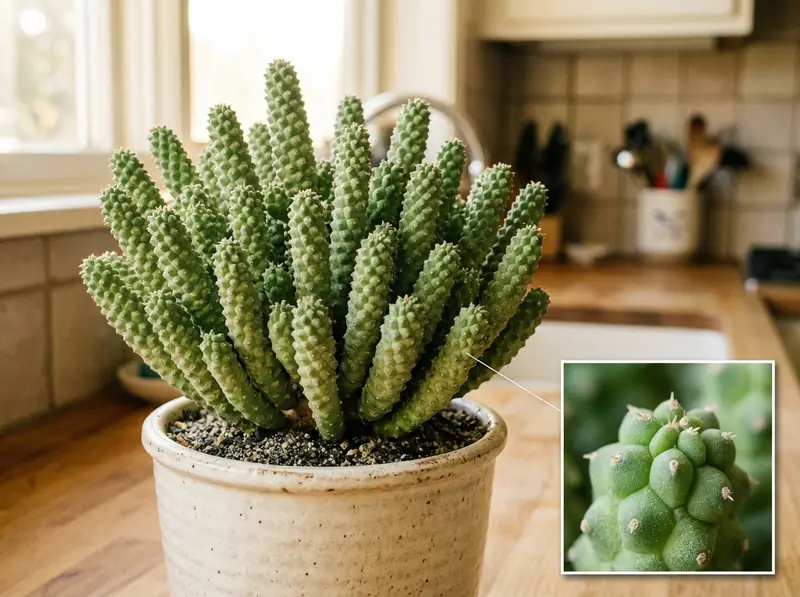 AI-generated
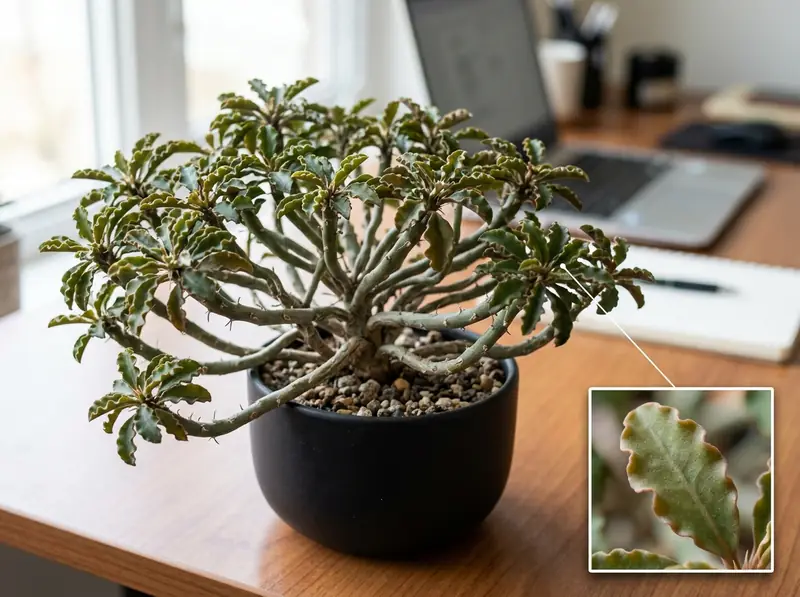 AI-generated
 AI-generated
 AI-generated