
 AI-generated
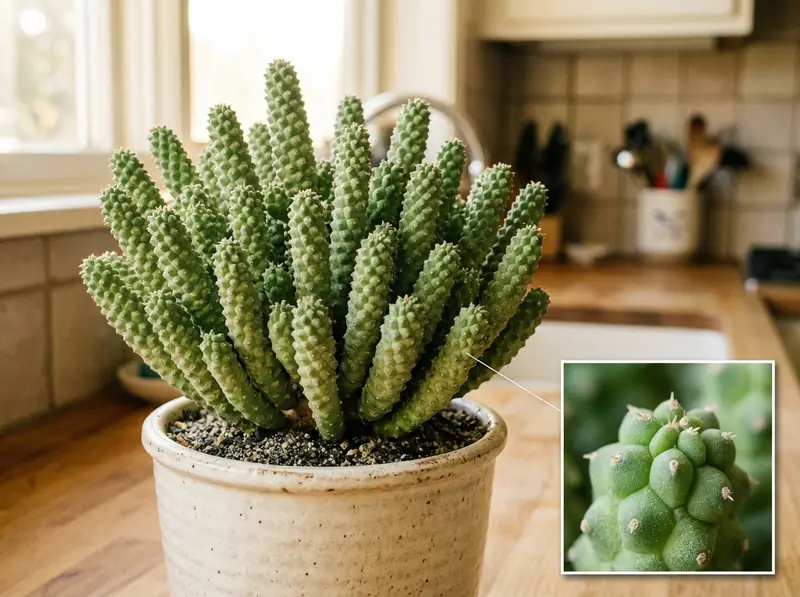
Corn Cob Cactus
Euphorbia mammillaris
Corn cob cactus is a small, clumping spurge whose stacked, knobby stems look like tiny corn cobs. It is slow-growing and compact, and fits on a sunny windowsill if you keep it on the dry side.
Saving is free with a KinClub account, and it works here and in the KinClub app. Sign up free
Care profile
- Light
- Direct sunLow → direct sun
- Water
- Let it dry outAbout every 21 days
- Difficulty
- Easy to moderateTricky → easy
- Coldest it tolerates
- 50°F
- Humidity
- Low
- Mature size
- SmallSmall → tree-size
- Growth rate
- Slow
- How common
- EnthusiastRare → everywhere
- Plant family
- Euphorbiaceae
Pets and toxicity
Cats and dogs: not yet checked
Not yet checked against ASPCA — don't assume it's safe for pets.
No toxicity source on record for this plant yet. If a pet eats any houseplant, call your vet or an animal poison helpline.
How to care for Corn Cob Cactus
Light
Put it in your brightest window with a few hours of direct sun daily. It stays compact and develops its distinct corn-cob texture in strong light.
Watering
Water deeply, then let the mix dry out completely, roughly every 3 weeks in summer. In winter water very sparingly or not at all.
Soil
Use a very gritty cactus mix with plenty of pumice or sand, in a shallow pot with a drainage hole.
Feeding
Feed with diluted cactus fertilizer once or twice in spring and summer. It is not a heavy feeder.
Repotting
Repot every 2 to 3 years only when the clump fills the pot. Wear gloves because the milky sap irritates skin.
Propagation
Break off or cut a small side stem, let the end callus for a week or two, and set it on dry gritty mix until roots form.
Common problems
- Rot from overwatering: cut away soft stems, let the healthy ones callus, and repot into dry mix.
- Mealybugs in crevices: treat with rubbing alcohol on a swab and repeat weekly.
- Stretching and pale color means too little light: move to a sunnier spot.
Similar plants
Same light needs and difficulty.
 AI-generated
 AI-generated
 AI-generated
 AI-generated