
 AI-generated
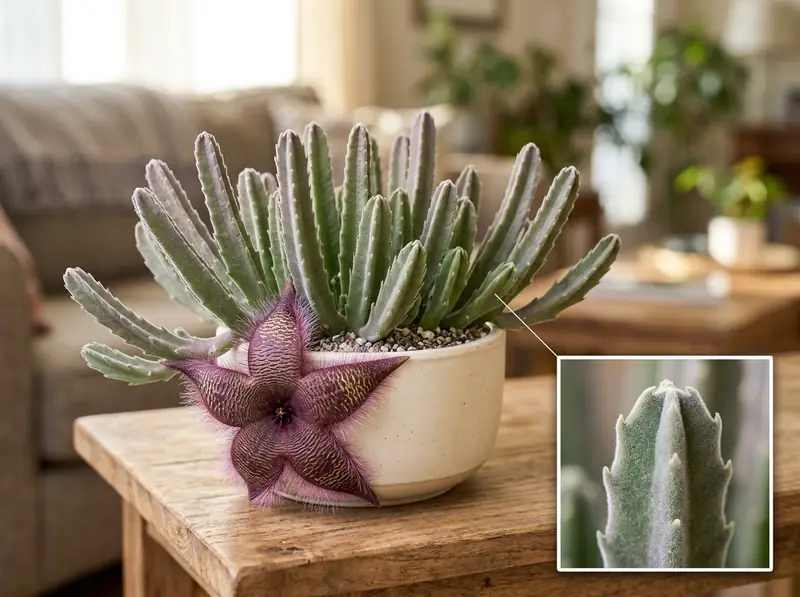
Hairy Toad Plant
Stapelia hirsuta
Hairy toad plant is a low, clumping succulent with soft, hairy, square-edged grey-green stems. In late summer it produces large, hairy, starfish-shaped flowers with a fleshy, speckled look. It is easy if given lots of sun, gritty soil and very sparing water, especially in winter.
Saving is free with a KinClub account, and it works here and in the KinClub app. Sign up free
Care profile
- Light
- Direct sunLow → direct sun
- Water
- Let it dry outAbout every 21 days
- Difficulty
- Easy to moderateTricky → easy
- Coldest it tolerates
- 50°F
- Humidity
- Low
- Mature size
- SmallSmall → tree-size
- Growth rate
- Moderate
- How common
- EnthusiastRare → everywhere
- Plant family
- Apocynaceae
Pets and toxicity
Cats and dogs: not yet checked
Not yet checked against ASPCA — don't assume it's safe for pets.
No toxicity source on record for this plant yet. If a pet eats any houseplant, call your vet or an animal poison helpline.
How to care for Hairy Toad Plant
Light
Give it at least 4 hours of direct sun, such as a south or west window, or very bright light. Acclimate it gradually to stronger sun to avoid sunburn.
Watering
Water thoroughly, then let the soil dry out completely, about every 3 weeks in summer. In winter water only about once a month or less, just enough to stop the stems shriveling.
Soil
Use a gritty cactus or succulent mix, ideally with extra perlite or pumice (about half by volume). Use a pot with drainage holes, preferably unglazed clay.
Feeding
Feed with a diluted cactus fertilizer at half strength once a month in spring and summer. Do not feed in autumn and winter.
Repotting
Repot every 2-3 years in spring when the clump fills the pot, moving up only one pot size. Let the roots dry for a few days before watering afterwards.
Propagation
Cut a healthy stem at the base and let the cut end callus for several days to a week. Then set it on dry gritty mix, and water lightly once roots form after a few weeks.
Common problems
- Soft, mushy stems from rot: cut back to firm, healthy tissue, let it callus, and replant in dry gritty mix.
- Shriveled stems: water deeply if the soil is completely dry, and check the roots if it persists.
- No flowers: give more direct sun in summer and a cool, dry winter rest.
- White cottony mealybugs in stem crevices: dab with rubbing alcohol on a cotton swab and repeat weekly.
Similar plants
Same light needs and difficulty.
 AI-generated
 AI-generated
 AI-generated
 AI-generated
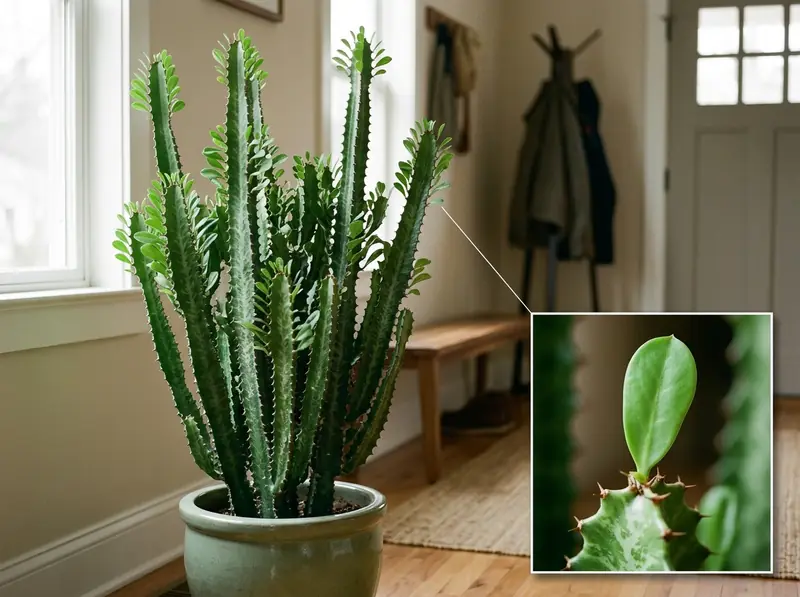
African Milk Tree
Euphorbia trigona
- Bright, indirect to direct sun
- Let it dry out
Pets: not yet checked