
 AI-generated
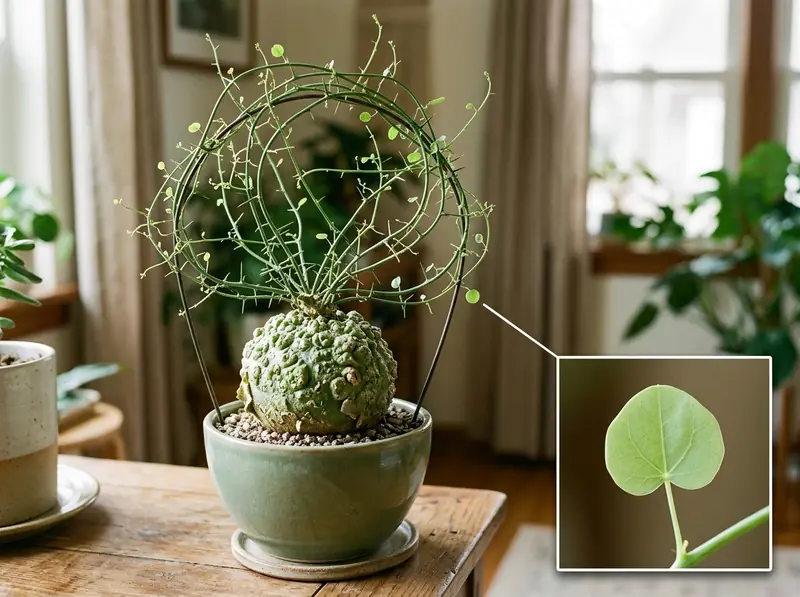
Globosa Adenia
Adenia globosa
Globosa adenia is a caudex-forming succulent vine from East Africa, with a swollen, green, bumpy base and thin climbing stems. It wants strong sun, warmth and very sharp drainage, and it goes leafless and dry in winter. It is slow-growing and best for owners who can resist overwatering.
Saving is free with a KinClub account, and it works here and in the KinClub app. Sign up free
Care profile
- Light
- Direct sunLow → direct sun
- Water
- Let it dry outAbout every 14 days
- Difficulty
- Moderate to challengingTricky → easy
- Coldest it tolerates
- 55°F
- Humidity
- Low
- Mature size
- MediumSmall → tree-size
- Growth rate
- Slow
- How common
- EnthusiastRare → everywhere
- Plant family
- Passifloraceae
Pets and toxicity
Cats and dogs: not yet checked
Not yet checked against ASPCA — don't assume it's safe for pets.
No toxicity source on record for this plant yet. If a pet eats any houseplant, call your vet or an animal poison helpline.
How to care for Globosa Adenia
Light
Give it several hours of direct sun, such as a south or west window, or a strong grow light. Introduce it to full sun gradually to avoid scorching the leaves and caudex.
Watering
In spring and summer, soak thoroughly only when the soil is completely dry, about every 10 to 14 days, and empty the saucer. When it drops its leaves in autumn or winter, stop watering or give only a tiny splash once a month.
Soil
Use a very gritty, fast-draining cactus mix with extra pumice or perlite, about 50 to 70 percent mineral grit. A shallow, unglazed clay pot helps the soil dry quickly.
Feeding
Feed with a half-strength cactus or balanced fertilizer about once a month during active growth in spring and summer. Do not feed when dormant or leafless.
Repotting
Repot every 2 to 3 years in spring, just as growth starts, into a pot only slightly wider than the caudex. Keep the caudex at or above soil level and let the roots dry a few days before watering.
Propagation
Mostly grown from fresh seed sown in gritty mix with bottom heat around 75 to 85°F, which is slow. Cuttings are unreliable and usually fail, so most owners buy an established plant.
Common problems
- Caudex rot from wet soil, especially in winter: unpot, cut away soft tissue, let it dry for a week or more, then repot in dry gritty mix.
- Leaf drop in autumn is normal dormancy: stop watering and keep it warm until new growth appears in spring.
- Stretched, pale vines from low light: move to a sunnier window or add a grow light.
- Mealybugs in leaf joints and on the caudex: dab with rubbing alcohol on a cotton swab and repeat weekly.
Similar plants
Same light needs and difficulty.
 AI-generated
 AI-generated
 AI-generated
 AI-generated