
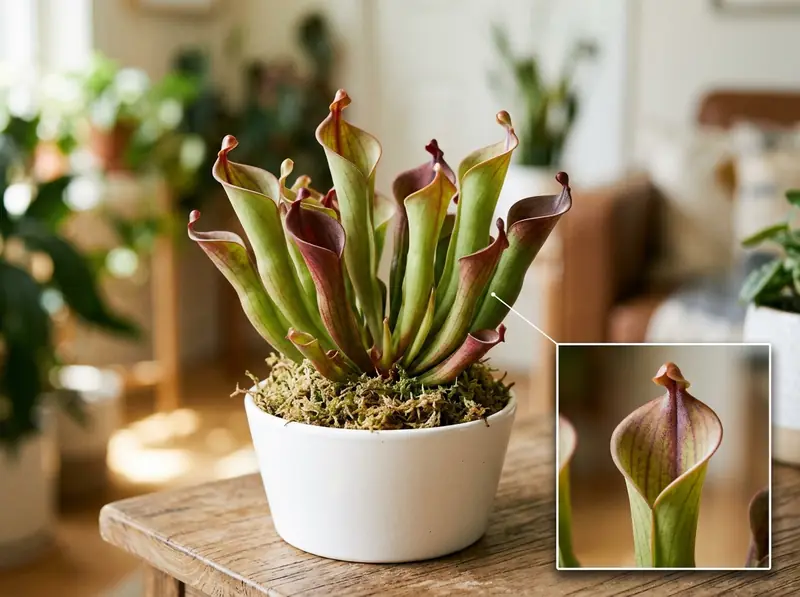
 AI-generated
Sun Pitcher
Heliamphora nutans
Sun pitcher (Heliamphora nutans) is a carnivorous plant from the cool mountain tops of Venezuela, with funnel-shaped pitchers that collect rainwater. It is a specialist plant, best for growers who can offer cool nights, high humidity, and pure water.
Saving is free with a KinClub account, and it works here and in the KinClub app. Sign up free
Care profile
- Light
- Direct sunLow → direct sun
- Water
- Keep moistAbout every 3 days
- Difficulty
- ChallengingTricky → easy
- Coldest it tolerates
- 40°F
- Humidity
- High
- Mature size
- SmallSmall → tree-size
- Growth rate
- Slow
- How common
- EnthusiastRare → everywhere
- Plant family
- Sarraceniaceae
Pets and toxicity
Cats and dogs: not yet checked
Not yet checked against ASPCA — don't assume it's safe for pets.
No toxicity source on record for this plant yet. If a pet eats any houseplant, call your vet or an animal poison helpline.
How to care for Sun Pitcher
Light
Needs very bright light: a few hours of direct morning sun in a cool window, or a strong grow light for 12-14 hours. Hot afternoon sun through glass overheats the plant, so protect it from heat rather than from light.
Watering
Keep the pot in a tray of 1 inch of water all the time, and use only rain, distilled, or reverse-osmosis water, since minerals build up in the soil. Flush the pot occasionally with fresh pure water.
Soil
Use a nutrient-free mix of 2 parts long-fiber sphagnum moss to 1 part perlite, or sphagnum and peat with perlite. Do not use regular potting soil, which contains fertilizer.
Feeding
Do not fertilize the soil. Let it catch the occasional insect, or put a few drops of very dilute orchid fertilizer into a pitcher once in a while.
Repotting
Repot every 2 years in spring when it crowds the container, using fresh sphagnum mix in a plastic or glazed pot. Handle the roots gently, since they are fine and brittle.
Propagation
Divide mature clumps in spring into pieces with their own roots and growth points. Seed is very slow, so most growers rely on division.
Common problems
- Brown, shriveled pitchers often come from warm nights or dry air: keep nights below about 65F and add humidity.
- Mineral burn on the leaf tips comes from tap water: switch to rain, distilled, or reverse-osmosis water.
- Pale, floppy new growth means too little light: add a strong grow light or a brighter window.
- Aphids on new growth: rinse with distilled water or use insecticidal soap.
Similar plants
Same light needs and difficulty.
 AI-generated
 AI-generated
 AI-generated
 AI-generated