
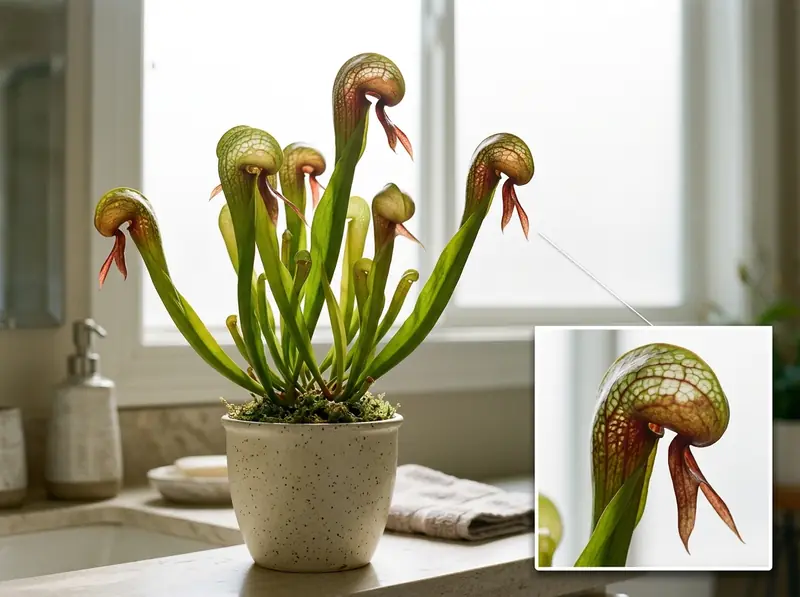
 AI-generated
Cobra Lily
Darlingtonia californica
Also known as California Pitcher Plant, Cobra Orchid, Cobra Plant, Chrysamphora
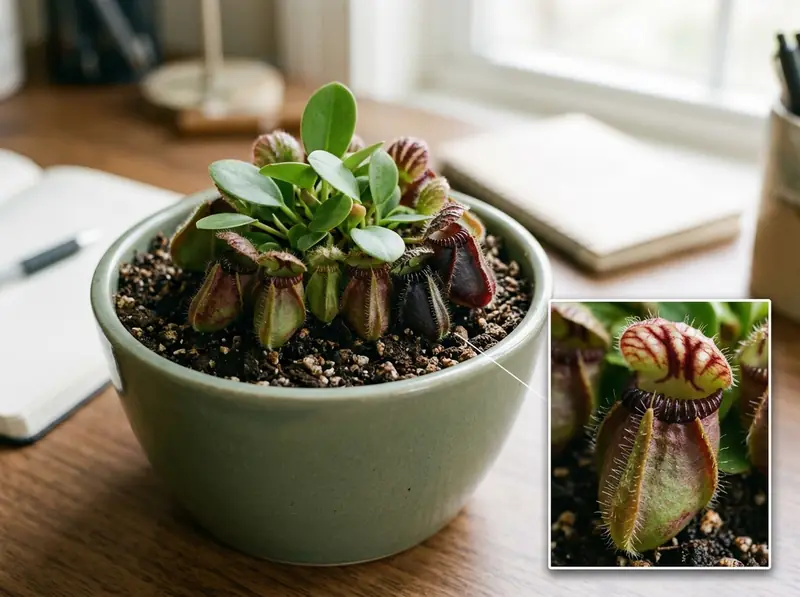
A carnivorous pitcher plant from the mountains of California and Oregon, with hooded, cobra-like pitchers topped by a forked tongue. It needs cold roots, pure water and a cool winter rest, which makes it a challenge indoors. Grow it only if you can provide a cool spot.
Saving is free with a KinClub account, and it works here and in the KinClub app. Sign up free
Care profile
- Light
- Direct sunLow → direct sun
- Water
- Keep moistAbout every 3 days
- Difficulty
- ChallengingTricky → easy
- Coldest it tolerates
- 20°F
- Humidity
- High
- Mature size
- MediumSmall → tree-size
- Growth rate
- Slow to moderate
- How common
- EnthusiastRare → everywhere
- Plant family
- Sarraceniaceae
Pets and toxicity
Non-toxic to cats
Listed as non-toxic to cats by the ASPCA.
Non-toxic to dogs
Listed as non-toxic to dogs by the ASPCA.
Source: ASPCA toxic and non-toxic plants. If a pet eats any houseplant, call your vet or an animal poison helpline.
How to care for Cobra Lily
Light
Needs bright light with at least 4 to 6 hours of direct sun for strong color. Under glass, it needs a cool site because heat is its main enemy.
Watering
Keep the soil constantly wet using only distilled, rain or reverse-osmosis water; tap water minerals damage the roots. Stand the pot in an inch or two of water and flush with fresh cold water in summer.
Soil
Use a mix of long-fiber sphagnum moss and perlite, roughly 1 to 1, with no fertilizer or compost.
Feeding
Never fertilize the soil. It catches its own insects and does best with no feeding at all.
Repotting
Repot every 2 to 3 years in winter dormancy, handling the roots lightly since they are sensitive.
Propagation
Divide the runner-like stolons in early spring or sow cold-treated seed on sphagnum moss. Seed takes years to mature.
Common problems
- Warm roots (above 80 degrees F) kill plants quickly. Keep the pot in cool water and use ice or cold water on hot days.
- Tap water or minerals cause blackened pitcher tips. Switch to distilled water and flush the pot.
- A winter rest at 35 to 50 degrees F is needed. Skipping it weakens the plant over time.
Similar plants
Same light needs and difficulty.
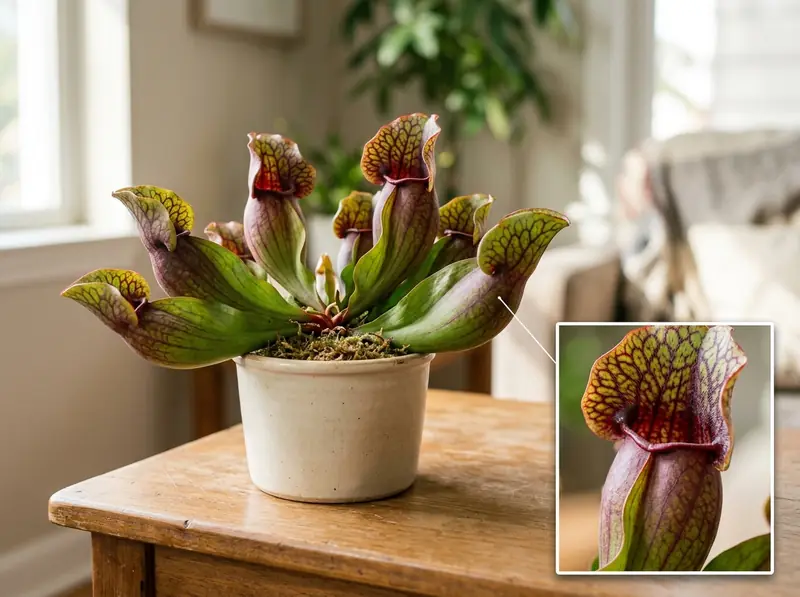 AI-generated
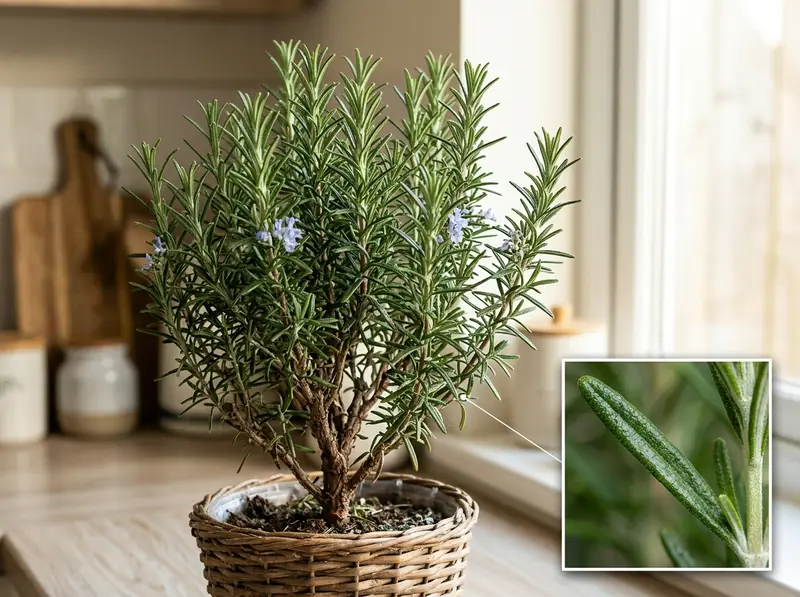 AI-generated
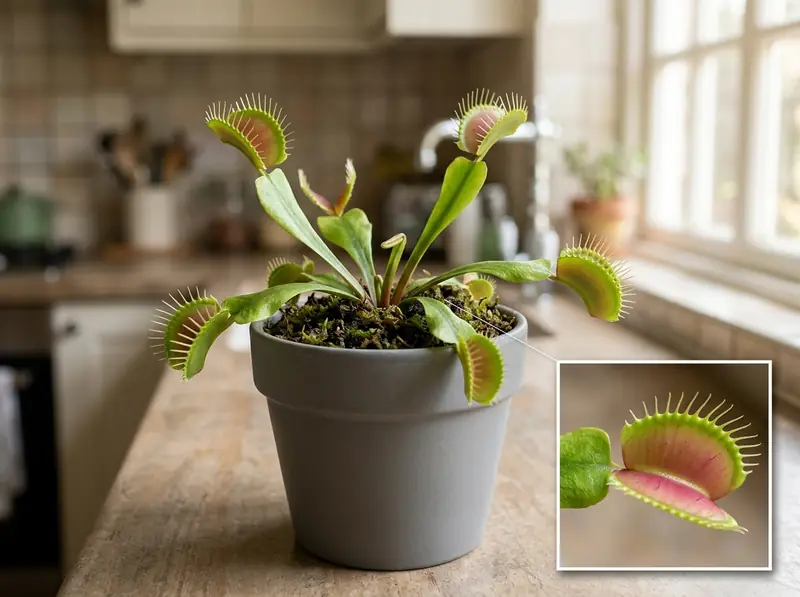 AI-generated
 AI-generated