
 AI-generated
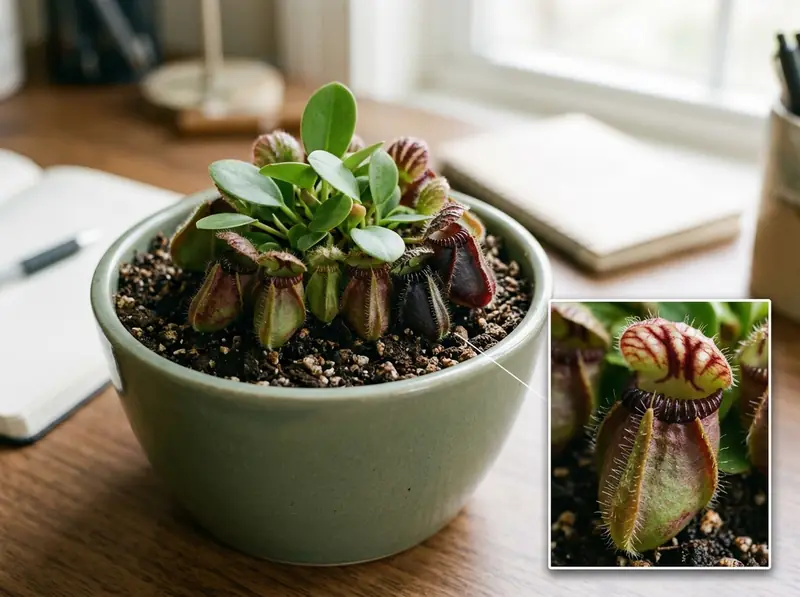
Albany Pitcher Plant
Cephalotus follicularis
The Albany pitcher plant is a small carnivorous plant from Western Australia that forms little mocassin-shaped pitchers close to the ground. It needs bright light, pure water, and a poor, peaty medium, and it does best with a cool winter rest, so it is a plant for growers ready to meet these needs.
Saving is free with a KinClub account, and it works here and in the KinClub app. Sign up free
Care profile
- Light
- Direct sunLow → direct sun
- Water
- Keep moistAbout every 3 days
- Difficulty
- ChallengingTricky → easy
- Coldest it tolerates
- 35°F
- Humidity
- Medium to high
- Mature size
- SmallSmall → tree-size
- Growth rate
- Slow
- How common
- CommonRare → everywhere
- Plant family
- Cephalotaceae
Pets and toxicity
Cats and dogs: not yet checked
Not yet checked against ASPCA — don't assume it's safe for pets.
No toxicity source on record for this plant yet. If a pet eats any houseplant, call your vet or an animal poison helpline.
How to care for Albany Pitcher Plant
Light
Give it several hours of bright light, including some direct sun from a south or west window, or a full-spectrum grow light for 12-14 hours a day. Strong light is what produces the colored, carnivorous pitchers.
Watering
Keep the medium constantly damp, standing the pot in a tray with about 1 inch of water during the growing season and letting the tray run dry briefly in winter. Use only rainwater, distilled or reverse-osmosis water, never tap water.
Soil
Use a nutrient-poor, airy mix such as 1 part peat (or coco-free sphagnum peat moss) to 1 part perlite or pure silica sand. Avoid ordinary potting soil and fertilizer-enriched mixes. Unglazed or plastic pots both work.
Feeding
No fertilizer in the soil. If desired, give an occasional small insect, such as a fruit fly or a bit of dried bloodworm, to a few pitchers, or skip feeding altogether.
Repotting
Repot every 1-2 years in late winter or early spring into fresh peat and perlite, using a pot only slightly larger because the roots are brittle. Handle them gently and do not bury the crown.
Propagation
Take leaf pulls or rhizome sections in spring and lay them on damp sphagnum in a humid, bright spot. Rooting takes weeks to months and is not always reliable; seed is slower still.
Common problems
- Pitchers don't form: increase light to several hours of direct sun or a strong grow light and keep humidity moderate.
- Black, dying leaves in winter: give a cool winter rest of about 40-50°F with reduced watering, and remove dead tissue to prevent mold.
- Brown leaf tips and poor growth: stop using tap water and flush the pot with distilled or rainwater.
- Aphids or mealybugs on new growth: wipe off or spray with insecticidal soap, avoiding pitcher openings.
Similar plants
Same light needs and difficulty.
 AI-generated
 AI-generated
 AI-generated
 AI-generated