
 AI-generated
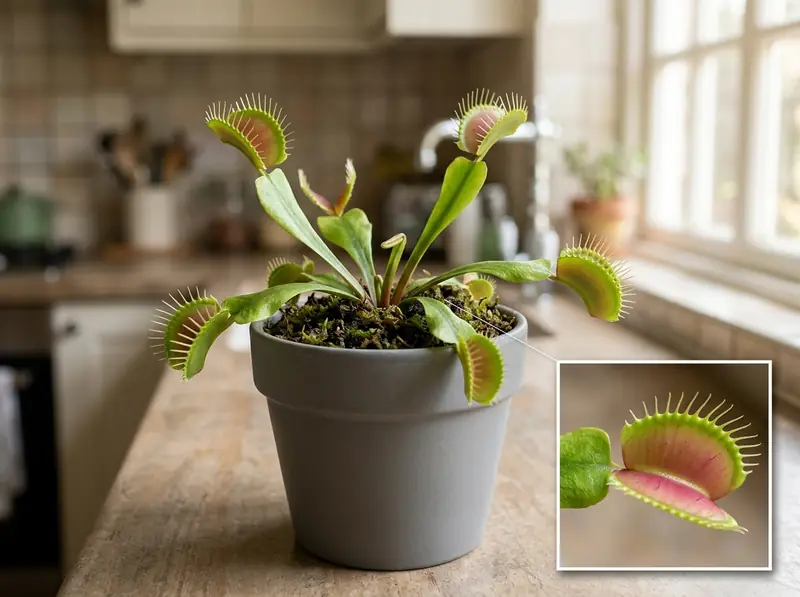
Venus Flytrap
Dionaea muscipula
Also known as Venus Fly Trap
A famous carnivorous plant with hinged, toothed traps that snap shut on insects. It is rewarding but picky, wanting very bright light, pure water, and a cold winter rest. Treat it as a short-term display plant unless you can meet those needs.
Saving is free with a KinClub account, and it works here and in the KinClub app. Sign up free
Care profile
- Light
- Direct sunLow → direct sun
- Water
- Keep moistAbout every 3 days
- Difficulty
- ChallengingTricky → easy
- Coldest it tolerates
- 35°F
- Humidity
- Medium to high
- Mature size
- SmallSmall → tree-size
- Growth rate
- Slow
- How common
- Very commonRare → everywhere
- Plant family
- Droseraceae
Pets and toxicity
Non-toxic to cats
Listed as non-toxic to cats by the ASPCA.
Non-toxic to dogs
Listed as non-toxic to dogs by the ASPCA.
Source: ASPCA toxic and non-toxic plants. If a pet eats any houseplant, call your vet or an animal poison helpline.
How to care for Venus Flytrap
Light
Needs 4 or more hours of direct sun daily, ideally a south window or a grow light 6-8 inches above the plant for 12-14 hours. Weak light means weak, green, floppy traps.
Watering
Keep the pot standing in about 1 inch of water in a saucer at all times during spring and summer. Use only rain, distilled, or reverse-osmosis water, since mineral-rich tap water slowly burns the roots.
Soil
Use a nutrient-free mix of 1 part peat moss to 1 part perlite or coarse sand. Never use regular potting soil, which contains added nutrients that burn the roots.
Feeding
Do not fertilize. The plant gets what it needs from catching insects, and fertilizer on the soil will damage the roots.
Repotting
Repot every year or two in late winter before growth starts, into fresh peat and perlite in a plastic or glazed pot at least 4 inches deep.
Propagation
Divide offsets in spring, or take a whole leaf with its white base and lay it on damp peat. Seed works but takes 4-5 years to reach full size.
Common problems
- Traps turn black after closing: normal for old traps, but if many blacken at once the plant is under stress. Remove the dead ones and check light and water quality.
- No winter dormancy leads to decline: from November to February, move it somewhere around 35-50F with bright light and slightly less water.
- Traps close on nothing: each trap only works a few times, so avoid triggering them for fun and never feed it hamburger or dead bugs larger than a third of the trap.
- White crust on the soil is mineral buildup from tap water: flush with distilled water and switch your water source.
Similar plants
Same light needs and difficulty.
 AI-generated
 AI-generated
 AI-generated
 AI-generated