
 AI-generated
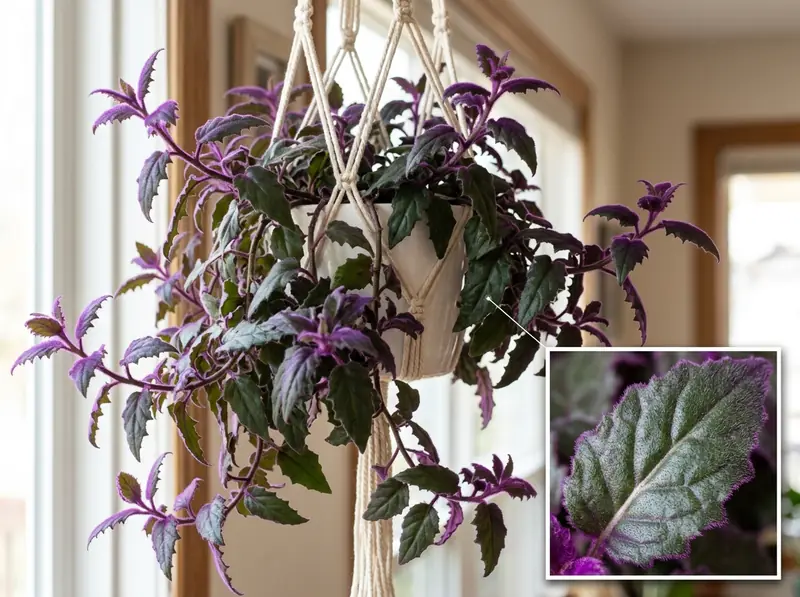
Purple Passion Plant
Gynura aurantiaca
Also known as Senecio blumeanus
Purple passion plant is a fast-growing, trailing plant with fuzzy, deep green leaves covered in vivid purple hairs. It is easy to grow in bright, indirect light and is simple to propagate from cuttings. Pinch it regularly to keep it bushy, and replace it with fresh cuttings every few years as it gets leggy.
Saving is free with a KinClub account, and it works here and in the KinClub app. Sign up free
Care profile
- Light
- Bright, indirect lightLow → direct sun
- Water
- Moderate to moist wateringAbout every 7 days
- Difficulty
- Easy to moderateTricky → easy
- Coldest it tolerates
- 55°F
- Humidity
- Medium to high
- Mature size
- Small to mediumSmall → tree-size
- Growth rate
- Fast
- How common
- Very commonRare → everywhere
- Plant family
- Asteraceae
Pets and toxicity
Toxic to cats
Keep away from cats. Call your vet or a pet poison helpline if a cat chews it.
Toxic to dogs
Keep away from dogs. Call your vet or a pet poison helpline if a dog chews it.
Source: ASPCA toxic and non-toxic plants. If a pet eats any houseplant, call your vet or an animal poison helpline.
How to care for Purple Passion Plant
Light
Give it bright, indirect light, such as a spot near an east or lightly shaded south window. A few hours of gentle morning sun deepens the purple color, but hot midday sun scorches the leaves.
Watering
Water when the top inch of soil feels dry, about once a week in summer. Water the soil rather than the leaves, and empty the saucer after 15 minutes. Water less often in winter.
Soil
Use a standard, well-draining potting mix. Adding a handful of perlite per quart of mix keeps it from staying soggy. The pot must have drainage holes.
Feeding
Feed every 3-4 weeks in spring and summer with a balanced liquid houseplant fertilizer at half the label strength. Stop feeding in winter.
Repotting
Repot every year or two in spring, going up one pot size (about 1-2 inches wider). The plant gets woody and leggy with age, so many growers replace it with fresh cuttings every 2-3 years.
Propagation
Take 4-6 inch stem cuttings just below a node and remove the lowest leaves. Root them in water or moist potting mix in 2-3 weeks. Plant 3-4 cuttings together for a fuller pot.
Common problems
- Leggy, stretched growth: move it to brighter light and pinch the stem tips to encourage branching.
- Fading purple color: the plant needs more light, so move it closer to a bright window.
- Brown crispy leaf edges: the soil is drying out too much or the air is very dry, so water more consistently.
- Sticky leaves or clustered bugs on new growth: aphids are likely, so rinse them off and use insecticidal soap weekly.
- Stem rot at the base: caused by overwatering, so take healthy cuttings and start again in fresh, drier mix.
- Unpleasant smell from the flowers: pinch off flower buds as they appear, since the plant is better looking without them.
Similar plants
Same light needs and difficulty.
 AI-generated
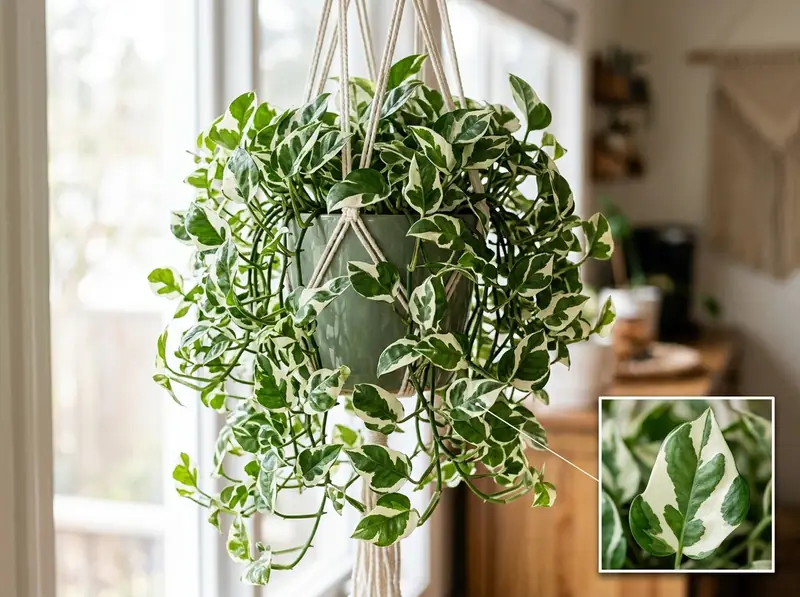
N'Joy Pothos
Epipremnum aureum 'N'Joy'
- Bright, indirect light
- Dry to moderate watering
Pets: not yet checked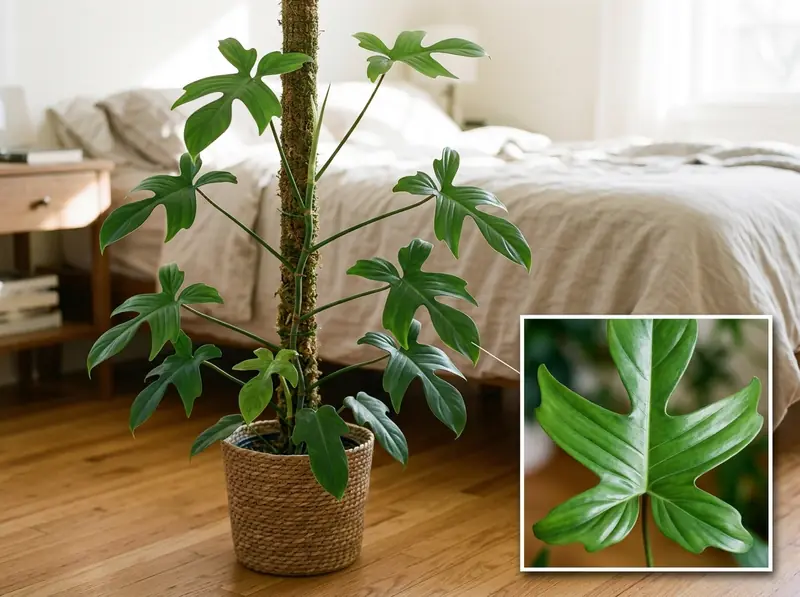 AI-generated
Oak Leaf Philodendron
Philodendron pedatum
- Bright, indirect light
- Moderate watering
Toxic to cats and dogs AI-generated
Chinese Money Plant
Pilea peperomioides
- Bright, indirect light
- Dry to moderate watering
Pets: not yet checked AI-generated
Christmas Cactus
Schlumbergera × buckleyi
- Bright, indirect light
- Moderate watering
Pets: not yet checked