
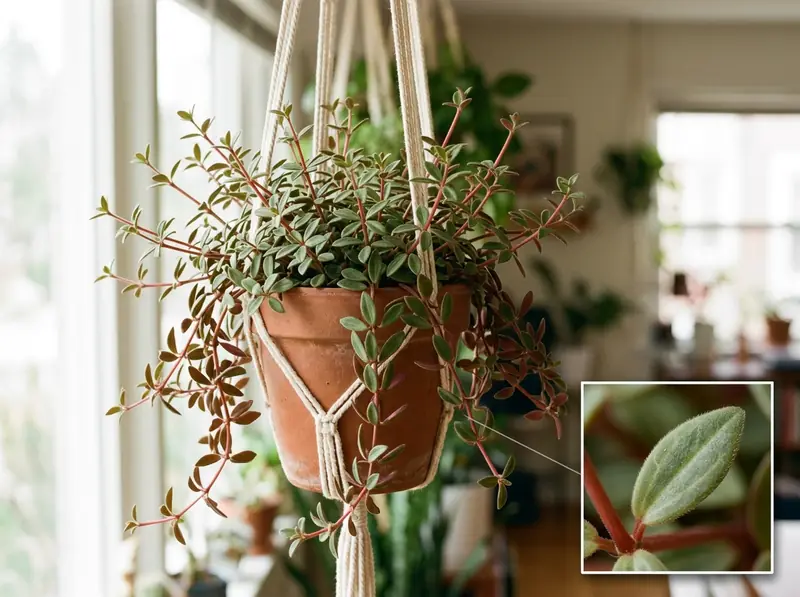
 AI-generated
Radiator Plant
Peperomia rubella
Radiator plant is a compact, trailing Peperomia from Brazil with small, olive-green leaves, red-brown undersides and red stems. It suits a shelf or hanging pot in bright, indirect light. Let the soil dry between waterings and it is an easy, forgiving plant.
Saving is free with a KinClub account, and it works here and in the KinClub app. Sign up free
Care profile
- Light
- Bright, indirect lightLow → direct sun
- Water
- Let it dry outAbout every 10 days
- Difficulty
- EasyTricky → easy
- Coldest it tolerates
- 50°F
- Humidity
- Medium
- Mature size
- SmallSmall → tree-size
- Growth rate
- Moderate
- How common
- CommonRare → everywhere
- Plant family
- Piperaceae
Pets and toxicity
Cats and dogs: not yet checked
Not yet checked against ASPCA — don't assume it's safe for pets.
No toxicity source on record for this plant yet. If a pet eats any houseplant, call your vet or an animal poison helpline.
How to care for Radiator Plant
Light
Give bright, indirect light, such as a spot near an east window or a few feet back from a south or west window. Gentle morning sun is fine, but avoid hot midday sun.
Watering
Water thoroughly when the top inch or two of soil feels dry, about every 7 to 14 days in the growing season. Empty the saucer after watering and water less in winter, because the small fleshy leaves store water.
Soil
Use a light, airy, well-draining mix, such as standard houseplant mix with about one-third perlite or orchid bark added. Always use a pot with drainage holes.
Feeding
Feed every 4 to 6 weeks in spring and summer with a balanced liquid houseplant fertilizer diluted to half strength. Skip feeding in fall and winter.
Repotting
Repot only every 2 to 3 years, in spring, when roots fill the pot. Move up just one pot size, since this plant has a small root system and prefers being slightly snug.
Propagation
Take 2 to 3 inch stem cuttings in spring or summer, remove the lowest leaves, and push them into damp, light mix or set in water. Roots usually form in 3 to 6 weeks.
Common problems
- Leggy, sparse growth: move to brighter light and pinch back the stem tips to encourage branching.
- Soft, blackened stems at the base: this is rot from overwatering, so cut off healthy tips to root and discard the rotted plant.
- Cottony white spots in leaf joints are mealybugs: dab them with rubbing alcohol on a cotton swab and repeat weekly.
- Dropping lower leaves: often from too little or too much water, so check soil moisture and adjust your schedule.
Similar plants
Same light needs and difficulty.
 AI-generated
Tricolor Air Plant
Tillandsia tricolor
- Bright, indirect light
- Dry to moderate watering
Pets: not yet checked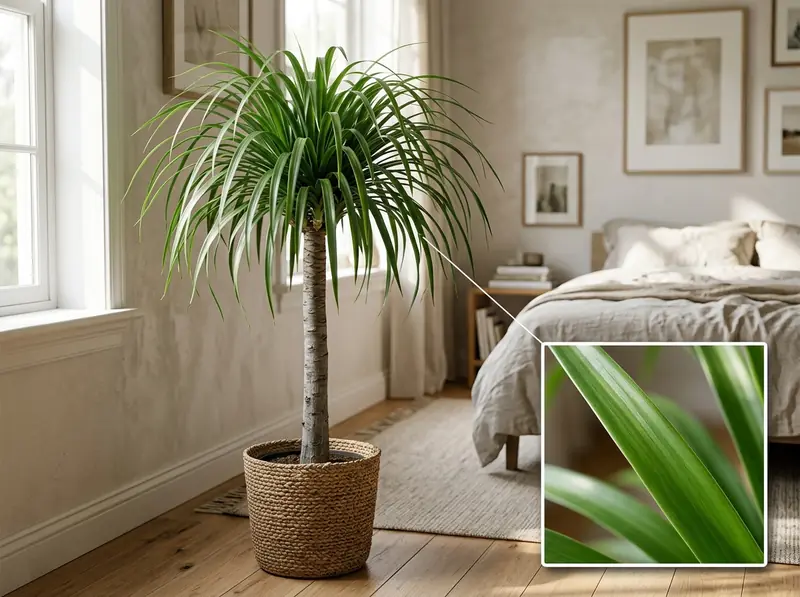 AI-generated
Umbrella Dracaena
Dracaena umbraculifera
- Medium to bright, indirect light
- Moderate watering
Toxic to cats and dogs AI-generated
Chinese Money Plant
Pilea peperomioides
- Bright, indirect light
- Dry to moderate watering
Pets: not yet checked AI-generated
Christmas Cactus
Schlumbergera × buckleyi
- Bright, indirect light
- Moderate watering
Pets: not yet checked