AI-generated image, not a photograph of this plant. Real plants look different depending on light, soil, temperature and age.
BromeliaceaeEnthusiast in stores
Seleriana Air Plant
Tillandsia seleriana
Tillandsia seleriana is a compact, silvery-gray air plant with a swollen, bulb-like base and a rosette of stiff, fuzzy, curving leaves. It grows on mounts or in open holders with no soil, and needs bright light, a weekly soak and good airflow. It grows slowly, may flush pink or red before flowering, and is usually sold at a low price.
Pets: not yet checked
💡
Saving is free with a KinClub account, and it works here and in the KinClub app. Sign up free
🪴 Care profile
Light
Bright, indirect lightLow → direct sun
Water
Let it dry outAbout every 7 days
Difficulty
Easy to moderateTricky → easy
Coldest it tolerates
45°F
Humidity
Low
Mature size
SmallSmall → tree-size
Growth rate
Slow
How common
EnthusiastRare → everywhere
Plant family
Bromeliaceae
🐾 Pets and toxicity
Cats and dogs: not yet checked
Not yet checked against ASPCA — don't assume it's safe for pets.
No toxicity source on record for this plant yet. If a pet eats any houseplant, call your vet or an animal poison helpline.
🌿 How to care for Seleriana Air Plant
Light
Give it bright, filtered light, such as a spot within a few feet of an east or south window. A little gentle direct morning sun is fine, but hot midday sun through glass can scorch it. Under grow lights, keep it about 6-12 inches from the tubes.
Watering
Soak in room-temperature water for 10-20 minutes about once a week, or every 10-14 days in winter or a humid home. Shake out the water and let it dry fully within about 4 hours. This species has thick silvery leaves that hold water, so it does better slightly dry than too wet.
Soil
It needs no soil, because it is an epiphyte. Mount it on driftwood, cork or a shelf, or set it loosely in a dish. Avoid holders that trap water around the base, and never plant it in potting mix.
Feeding
Feed once a month in the growing season with a bromeliad or air plant fertilizer at quarter strength. Add it to the soak water. Skip feeding in winter.
Repotting
It never needs repotting. If you mount it, use a non-copper wire or a dab of waterproof adhesive, and keep the base exposed. Reposition it only when it outgrows its mount or after it forms a clump.
Propagation
After flowering, it makes small pups at the base. Leave them attached until they are about one-third to half the size of the parent, then gently twist or cut them off. Alternatively, leave them to grow into a clump.
Common problems
Brown, mushy base: from trapped water. Remove any rotted leaves, dry the plant upside down, and soak less often.
Crispy brown leaf tips: from too little water or very dry air. Soak for longer, about 20-30 minutes, and move it away from heaters.
Green, thin-looking leaves and slow growth: from low light. Move it to a brighter spot.
White cottony spots or hard brown bumps: mealybugs or scale. Dab them with rubbing alcohol on a cotton swab and isolate the plant.

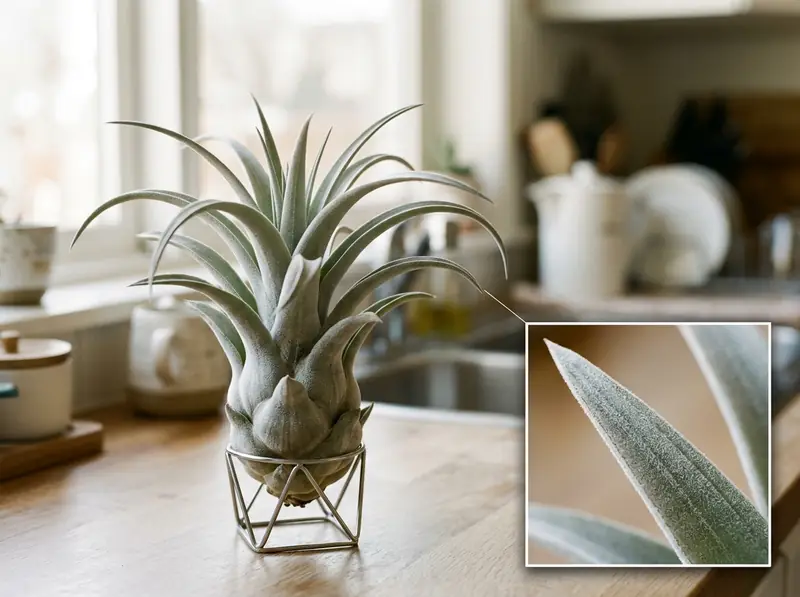 AI-generated
 AI-generated
 AI-generated
 AI-generated
 AI-generated