
 AI-generated
Silver Hechtia
Hechtia argentea
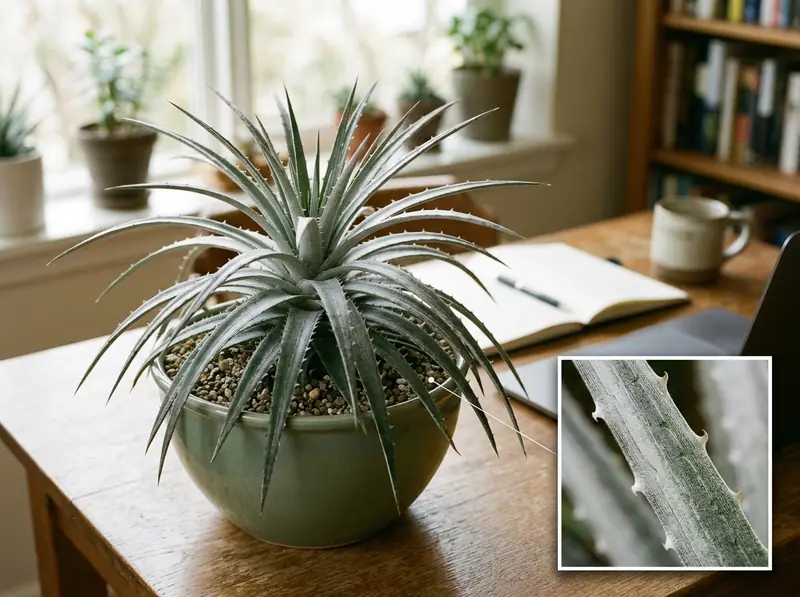
Silver hechtia is a stiff, spiny rosette of silvery-gray leaves from Mexico, related to pineapples and other bromeliads. It is a slow-growing, drought-tough accent for a sunny window, but it needs strong light and careful handling.
Saving is free with a KinClub account, and it works here and in the KinClub app. Sign up free
Care profile
- Light
- Direct sunLow → direct sun
- Water
- Let it dry outAbout every 21 days
- Difficulty
- ModerateTricky → easy
- Coldest it tolerates
- 35°F
- Humidity
- Low
- Mature size
- MediumSmall → tree-size
- Growth rate
- Slow
- How common
- EnthusiastRare → everywhere
- Plant family
- Bromeliaceae
Pets and toxicity
Cats and dogs: not yet checked
Not yet checked against ASPCA — don't assume it's safe for pets.
No toxicity source on record for this plant yet. If a pet eats any houseplant, call your vet or an animal poison helpline.
How to care for Silver Hechtia
Light
Needs 4-6 or more hours of direct sun, from a south or west window or a strong grow light. The silver-gray scales build up best in full sun, and low light makes the leaves green and weak.
Watering
Water deeply, then let the soil dry out fully, about every 3 weeks in summer and only once a month or less in winter. It stores water in the leaves, so it handles drought far better than overwatering.
Soil
Use a gritty, fast-draining mix of cactus soil with extra pumice, perlite, or coarse sand, in a heavy pot with a drainage hole. Avoid peat-heavy blends.
Feeding
Feed lightly in spring and summer, once every 4-6 weeks, with a half-strength balanced fertilizer. Do not feed in winter.
Repotting
Repot only every 2-3 years in spring, when it fills the pot. Use thick gloves, since the leaf edges are barbed, and pick a heavy pot that will not tip.
Propagation
Separate offsets from the base once they have a few roots, cut cleanly, and let the wound dry before potting in gritty mix. It is slow, and seed takes longer still.
Common problems
- A brown, mushy center is rot from water collecting in the rosette: water at the soil line and improve drainage.
- Green, loose growth points to too little light, so move to your sunniest window.
- Scale and mealybugs hide at the leaf bases: scrub with alcohol on a swab and repeat weekly.
- Crisp, curled leaf tips mean it needs a deeper, less frequent soak.
Similar plants
Same light needs and difficulty.
 AI-generated
 AI-generated
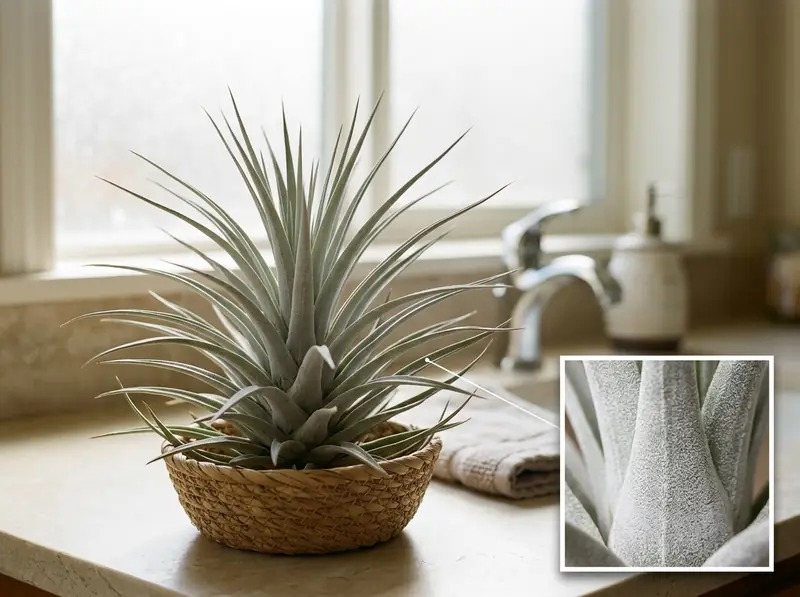
Paleacea Air Plant
Tillandsia paleacea
- Bright, indirect to direct sun
- Let it dry out
Pets: not yet checked AI-generated
 AI-generated