AI-generated image, not a photograph of this plant. Real plants look different depending on light, soil, temperature and age.
AsparagaceaeEverywhere in stores
Spider Plant
Chlorophytum comosum
Also known as Anthericum comosum, Ribbon Plant, Spider Ivy, Walking Anthericum
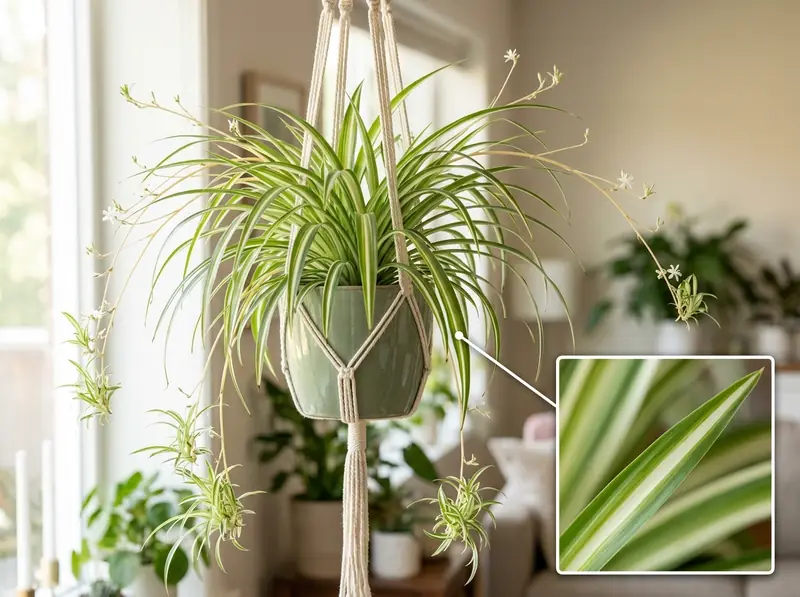
Spider plant is a fast-growing, forgiving houseplant with arching green or striped leaves, well suited to beginners. Give it bright, indirect light and water when the top inch or two of soil is dry. It produces baby plantlets on long stems that are easy to root for new plants.
Non-toxic to cats and dogs
💡
Saving is free with a KinClub account, and it works here and in the KinClub app. Sign up free
Bright, indirect light gives the best growth and the strongest leaf variegation. It tolerates medium light, but keep it out of direct midday sun, which can scorch the leaves and leave pale or brown patches.
Watering
Water when the top 1 to 2 inches of soil feel dry, usually about once a week in spring and summer and every 10 to 14 days in winter. Water until it drains from the bottom, then empty the saucer. The thick, fleshy roots store water, so it handles an occasional missed watering better than soggy soil.
Soil
Use a well-draining, peat- or coir-based potting mix. Adding a handful of perlite or coarse sand per quart of mix improves drainage. The pot must have drainage holes.
Feeding
Feed every 4 to 6 weeks in spring and summer with a balanced liquid houseplant fertilizer diluted to half strength. Skip feeding in fall and winter. Too much fertilizer can cause brown leaf tips.
Repotting
Repot every 1 to 2 years, or when thick white roots crowd the pot or push up out of the soil. Move up only one pot size, about 1 to 2 inches wider. Spring is the best time.
Propagation
Plantlets ("spiderettes") form on long arching stems. Snip one off, set its base in a small pot of moist mix, and keep it lightly damp until roots hold, in about 3 to 4 weeks. You can also divide a crowded mother plant at repotting.
Common problems
Brown leaf tips: often caused by fluoride or salts in tap water, too much fertilizer, or very dry air. Use filtered or rainwater, flush the soil with water every few months, and trim the tips.
Pale, faded, or washed-out stripes: usually too little light. Move it closer to a bright window, out of direct sun.
Mushy, yellowing leaves and a sour smell: overwatering or root rot. Let the soil dry, remove any rotted roots, and repot into fresh, well-draining mix.
No baby plantlets: the plant may be too young, in low light, or not root-bound. Give it brighter light and let it get a bit snug in its pot.
Scorched, tan patches: direct hot sun. Move it back from the window or filter the light with a sheer curtain.

 AI-generated
 AI-generated
 AI-generated
 AI-generated
 AI-generated