
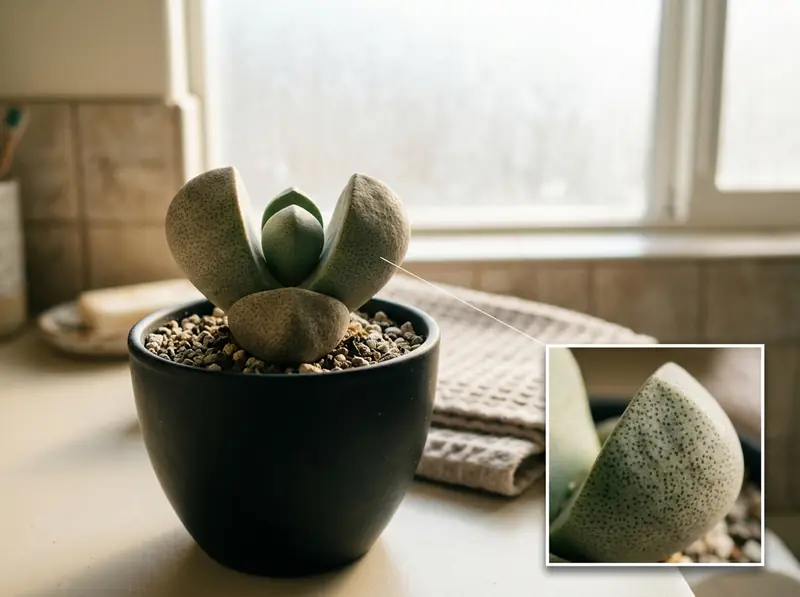
 AI-generated
Split Rock
Pleiospilos nelii
Split Rock is a small South African succulent that looks like a pair of grey-green stones, with a new leaf pair emerging from the split in the center. It needs lots of sun, gritty soil, and very little water. It grows slowly and is easy to lose to overwatering, so it suits growers who can hold back.
Saving is free with a KinClub account, and it works here and in the KinClub app. Sign up free
Care profile
- Light
- Direct sunLow → direct sun
- Water
- Let it dry outAbout every 21 days
- Difficulty
- ModerateTricky → easy
- Coldest it tolerates
- 40°F
- Humidity
- Low
- Mature size
- SmallSmall → tree-size
- Growth rate
- Slow
- How common
- EnthusiastRare → everywhere
- Plant family
- Aizoaceae
Pets and toxicity
Cats and dogs: not yet checked
Not yet checked against ASPCA — don't assume it's safe for pets.
No toxicity source on record for this plant yet. If a pet eats any houseplant, call your vet or an animal poison helpline.
How to care for Split Rock
Light
Give it 4-6 hours of direct sun daily, such as a south or west window. Introduce it gradually to stronger sun over a week or two to avoid scorching, and use a grow light if the window is weak.
Watering
Water lightly about every 3 weeks in spring and early fall while it is actively growing, soaking the soil and letting it dry out completely. Give almost no water in midsummer dormancy and in winter, and wait until the old leaf pair has shriveled before watering.
Soil
Use a very gritty cactus and succulent mix with extra pumice or coarse sand, about half mineral grit. A terracotta pot with a drainage hole helps the soil dry quickly.
Feeding
Feeding is optional. If you do, use a cactus fertilizer at quarter strength once or twice in the growing season, in spring or fall only.
Repotting
Repot only every 2-3 years, when the clump fills the pot, in spring or early fall. Use a shallow pot only slightly wider than the plant, and let the soil stay dry for a week afterward.
Propagation
Grow from seed sown on gritty mix in spring, kept lightly moist and warm, which is slow but reliable. Mature clumps can also be divided carefully, with each piece having its own roots, and left to callus for several days before potting.
Common problems
- Rotting base or mushy leaves from overwatering: stop watering; if the base is firm, cut away the rot, let it callus, and repot in dry gritty mix.
- Split leaves after watering: the plant took up water too quickly; water less and only during active growth.
- Stretched, pale growth: move to a sunnier spot or add a grow light.
- Mealybugs in the leaf crease: dab with a cotton swab dipped in rubbing alcohol and repeat weekly until gone.
Similar plants
Same light needs and difficulty.
 AI-generated
 AI-generated
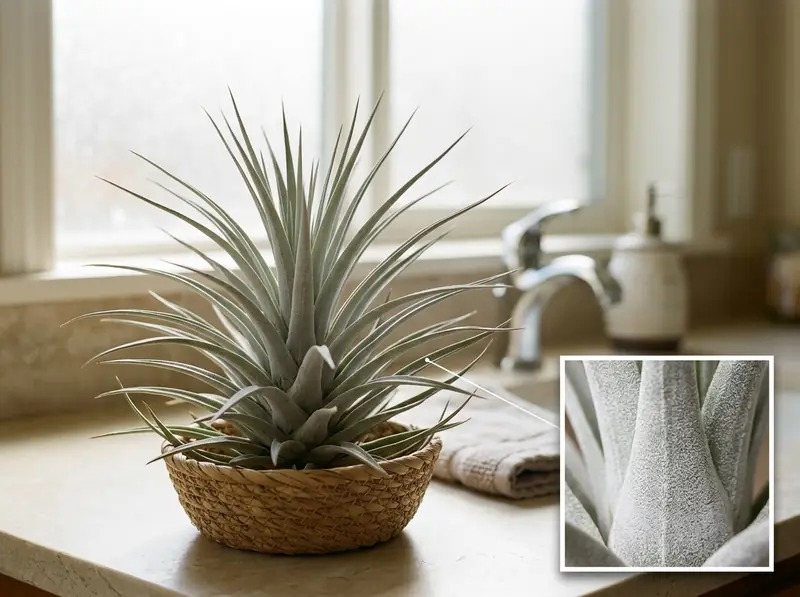
Paleacea Air Plant
Tillandsia paleacea
- Bright, indirect to direct sun
- Let it dry out
Pets: not yet checked AI-generated
 AI-generated