
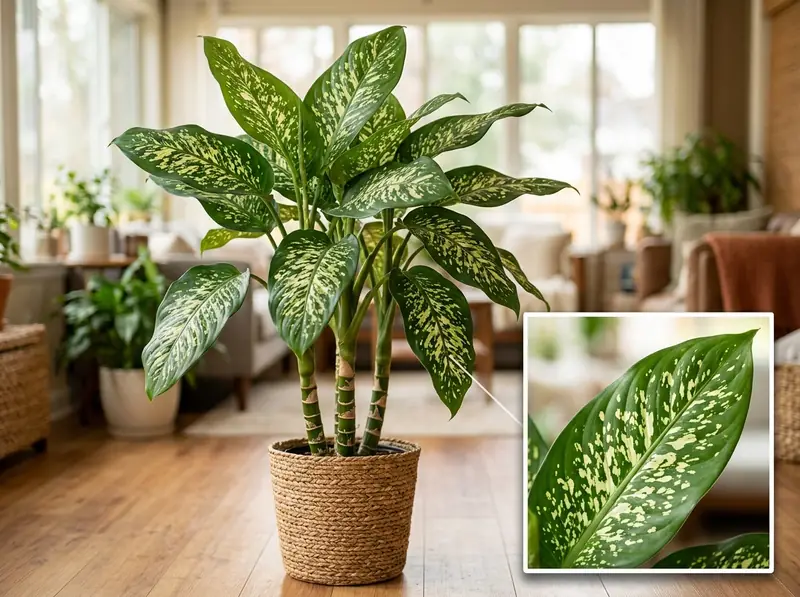
 AI-generated
Spotted Dumb Cane
Dieffenbachia maculata
Also known as Charming Dieffenbachia, Exotica, Giant Dumb Cane, Tropic Snow, Dumbcane, Exotica Perfection, Gold Dieffenbachia, Variable Dieffenbachia, Dieffenbachia amoena, Dieffenbachia picta
Spotted dumb cane is a bold, upright foliage plant with large green leaves splashed with cream and white. It is easy in bright, indirect light with even watering and ordinary home warmth. It can grow to 3-5 feet indoors and suits a floor pot or sturdy table.
Saving is free with a KinClub account, and it works here and in the KinClub app. Sign up free
Care profile
- Light
- Bright, indirect lightLow → direct sun
- Water
- Moderate wateringAbout every 8 days
- Difficulty
- EasyTricky → easy
- Coldest it tolerates
- 60°F
- Humidity
- Medium
- Mature size
- LargeSmall → tree-size
- Growth rate
- Moderate to fast
- How common
- CommonRare → everywhere
- Plant family
- Araceae
Pets and toxicity
Toxic to cats
Keep away from cats. Call your vet or a pet poison helpline if a cat chews it.
Toxic to dogs
Keep away from dogs. Call your vet or a pet poison helpline if a dog chews it.
Source: ASPCA toxic and non-toxic plants. If a pet eats any houseplant, call your vet or an animal poison helpline.
How to care for Spotted Dumb Cane
Light
Give it bright, indirect light, such as a few feet from an east or lightly shaded south or west window. It tolerates medium light but grows slower and loses some variegation. Avoid hot direct sun.
Watering
Water thoroughly when the top 1-2 inches of soil feel dry, about every 7-10 days in the growing season. Let excess drain away, and water less in winter so the soil does not stay soggy.
Soil
Use a chunky, well-draining potting mix, such as standard houseplant mix with about one-quarter perlite or orchid bark. The pot must have drainage holes.
Feeding
Feed monthly from spring to early autumn with a balanced liquid houseplant fertilizer at half strength. Do not feed in winter.
Repotting
Repot every 1-2 years in spring when roots fill the pot, going up just 1-2 inches in pot diameter. Wear gloves, because the sap can irritate skin.
Propagation
Cut the cane into sections 3-4 inches long, each with at least one node, and lay them horizontally on moist mix. Or root a stem-tip cutting in water or mix. Roots usually form in 3-6 weeks in a warm spot.
Common problems
- Yellowing lower leaves are often from overwatering or normal aging: let the soil dry more between waterings and remove old leaves.
- Brown leaf edges or tips come from dry air, underwatering, or fertilizer salts: water evenly and flush the soil occasionally.
- Leggy, bare lower stems happen with age or low light: move it somewhere brighter or cut back the cane to regrow.
- Webbing and speckled leaves mean spider mites: wash the leaves and treat with insecticidal soap weekly until clear.
- Cold drafts below 60°F cause drooping and blackened leaves: move it away from cold windows and doors.
Similar plants
Same light needs and difficulty.
 AI-generated
Tricolor Air Plant
Tillandsia tricolor
- Bright, indirect light
- Dry to moderate watering
Pets: not yet checked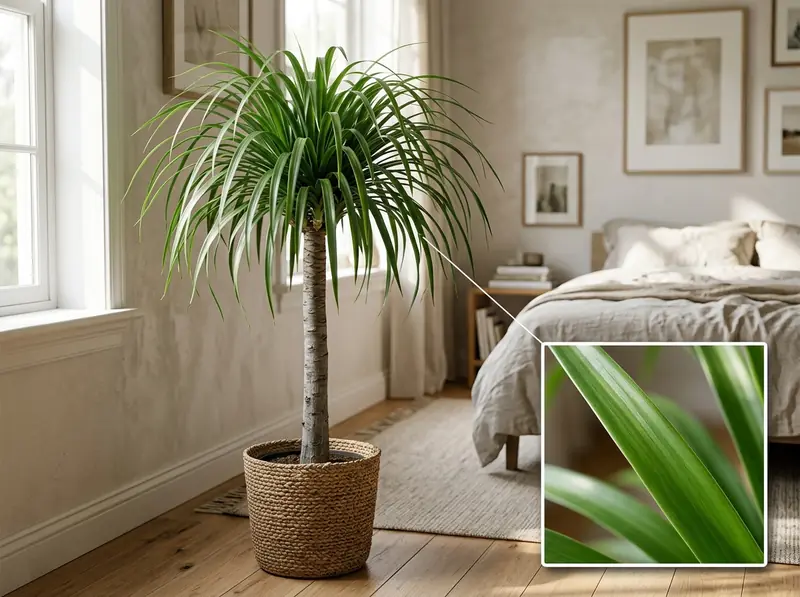 AI-generated
Umbrella Dracaena
Dracaena umbraculifera
- Medium to bright, indirect light
- Moderate watering
Toxic to cats and dogs AI-generated
Chinese Money Plant
Pilea peperomioides
- Bright, indirect light
- Dry to moderate watering
Pets: not yet checked AI-generated
Christmas Cactus
Schlumbergera × buckleyi
- Bright, indirect light
- Moderate watering
Pets: not yet checked