
 AI-generated
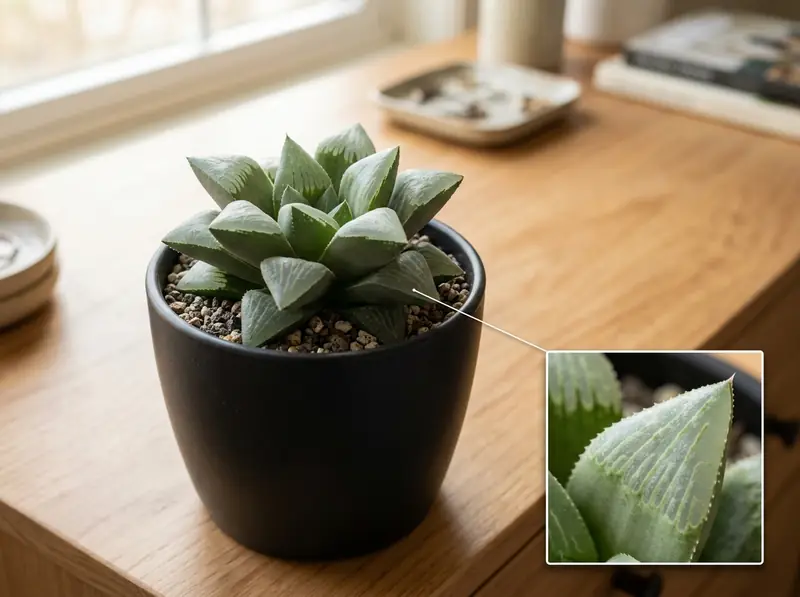
Star Window Plant
Haworthia retusa
Also known as Cushion Aloe, Aloe retusa
Star window plant (Haworthia retusa) is a compact rosette of thick, triangular leaves with flat, translucent tips that look like little windows. It grows slowly and suits a bright desk or sill with minimal watering.
Saving is free with a KinClub account, and it works here and in the KinClub app. Sign up free
Care profile
- Light
- Bright, indirect lightLow → direct sun
- Water
- Let it dry outAbout every 14 days
- Difficulty
- EasyTricky → easy
- Coldest it tolerates
- 40°F
- Humidity
- Low
- Mature size
- SmallSmall → tree-size
- Growth rate
- Slow
- How common
- EnthusiastRare → everywhere
- Plant family
- Asphodelaceae
Pets and toxicity
Non-toxic to cats
Listed as non-toxic to cats by the ASPCA.
Non-toxic to dogs
Listed as non-toxic to dogs by the ASPCA.
Source: ASPCA toxic and non-toxic plants. If a pet eats any houseplant, call your vet or an animal poison helpline.
How to care for Star Window Plant
Light
Give bright indirect light from an east or lightly shaded south window. Morning sun is fine, but strong afternoon sun browns the flat windowed leaf tips, so filter it with a sheer curtain.
Watering
Water thoroughly only when the soil is fully dry, about every 2 weeks in the growing season. In winter, water every 4-6 weeks or less, and keep drops out of the rosette center.
Soil
Use a gritty cactus mix with plenty of pumice or coarse sand, in a shallow terracotta pot with a drainage hole. Fast drainage matters more than richness.
Feeding
Feed once or twice a year, in spring and midsummer, with half-strength cactus fertilizer. It does not need more.
Repotting
Repot every 2-3 years in spring. The thick roots pull the plant down, so choose a pot deep enough for them but only slightly wider than the rosette.
Propagation
Remove offsets at the base in spring with some roots attached, let the wound dry a day, and pot in gritty mix. Seed and leaf cuttings are slow and unreliable.
Common problems
- A soft, dark base is rot from overwatering: unpot, cut away mushy tissue, and replant in dry gritty mix.
- Reddish-brown or bleached tips mean the sun is too strong: pull it back from the glass.
- Pale, stretched leaves mean too little light, so move to a brighter window.
- White cottony clumps in the leaf bases are mealybugs: remove with alcohol on a swab and repeat weekly.
Similar plants
Same light needs and difficulty.
 AI-generated
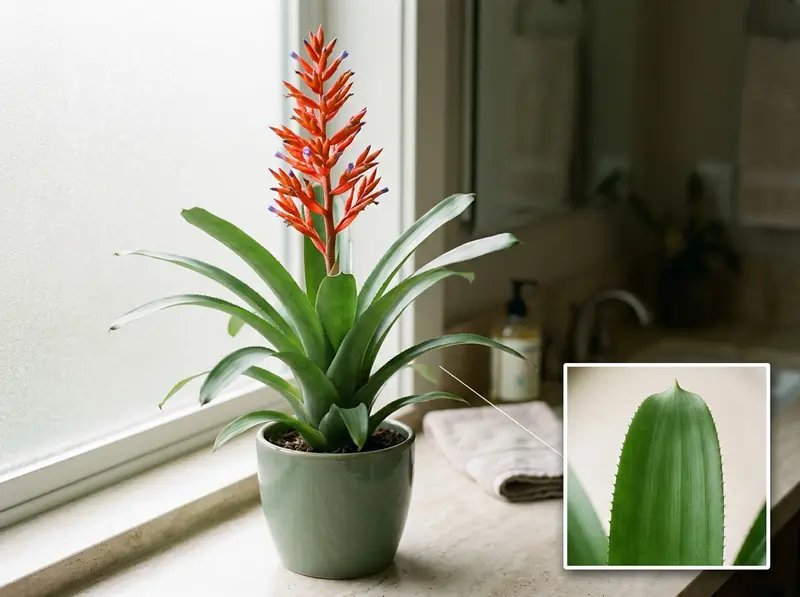
Miniata Bromeliad
Aechmea miniata
- Bright, indirect light
- Dry to moderate watering
Pets: not yet checked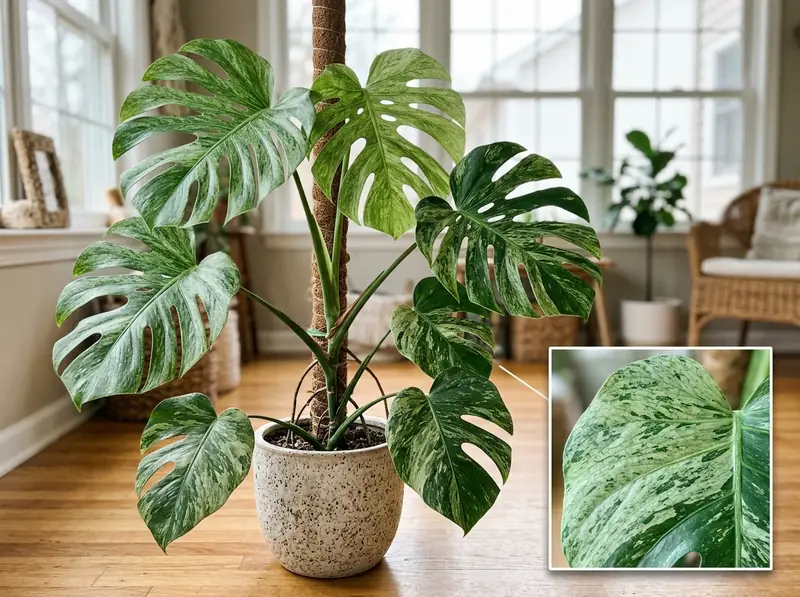 AI-generated
Mint Monstera
Monstera deliciosa 'Mint'
- Bright, indirect light
- Moderate watering
Toxic to cats and dogs AI-generated
Chinese Money Plant
Pilea peperomioides
- Bright, indirect light
- Dry to moderate watering
Pets: not yet checked AI-generated
Christmas Cactus
Schlumbergera × buckleyi
- Bright, indirect light
- Moderate watering
Pets: not yet checked