
 AI-generated
String of Bananas
Curio radicans
Also known as Senecio adenocalyx, Senecio gonocladus, Senecio radicans, Senecio rhopalodenia
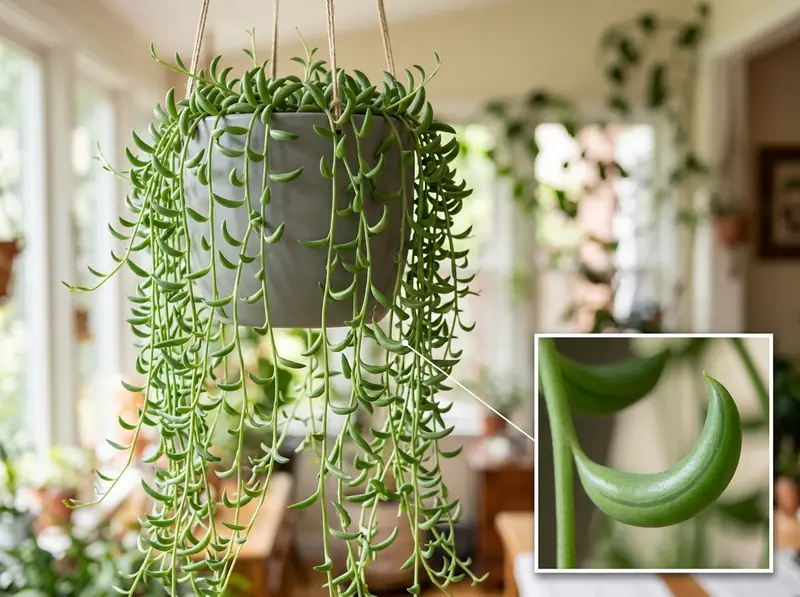
String of bananas is a fast-spreading trailing succulent with banana-shaped green beads on thin strands, well suited to hanging baskets or shelf edges. It needs bright light and a thorough soak only after the soil has dried out. It is easy to grow and easy to multiply from cuttings, and overwatering is the main risk.
Saving is free with a KinClub account, and it works here and in the KinClub app. Sign up free
Care profile
- Light
- Bright, indirect to direct sunLow → direct sun
- Water
- Let it dry outAbout every 14 days
- Difficulty
- EasyTricky → easy
- Coldest it tolerates
- 50°F
- Humidity
- Low
- Mature size
- MediumSmall → tree-size
- Growth rate
- Moderate to fast
- How common
- Very commonRare → everywhere
- Plant family
- Asteraceae
Pets and toxicity
Toxic to cats
Keep away from cats. Call your vet or a pet poison helpline if a cat chews it.
Toxic to dogs
Keep away from dogs. Call your vet or a pet poison helpline if a dog chews it.
Source: ASPCA toxic and non-toxic plants. If a pet eats any houseplant, call your vet or an animal poison helpline.
How to care for String of Bananas
Light
Give bright light, such as an east window or a spot a few feet back from a south or west window. A few hours of gentle morning sun is fine, but avoid hot midday sun through glass.
Watering
Soak thoroughly, then let the soil dry out almost completely before watering again, usually every 2 to 3 weeks in the growing season. Cut back to about once a month in winter.
Soil
Use a gritty, fast-draining mix, such as cactus and succulent soil with about a quarter added perlite or pumice. Use a pot with drainage holes; terracotta helps the soil dry faster.
Feeding
Feed with a balanced fertilizer diluted to half strength once a month in spring and summer. Do not feed in fall and winter.
Repotting
Repot only every 2 to 3 years, in spring, when roots fill the pot. Choose a shallow pot only 1 to 2 inches wider, since the roots are fine and shallow.
Propagation
Take 3 to 4 inch stem cuttings, let the cut end dry for a day, then lay them on or press them into barely damp gritty soil. They root in a few weeks; pinned strands also root where they touch soil.
Common problems
- Shriveled beads: the plant is thirsty, so give a deep soak and then return to letting it dry between waterings.
- Mushy yellow beads and dark stems: this is overwatering or poor drainage, so cut off rotted growth, repot into dry gritty mix and water much less.
- Bare, leggy strands: light is too low, so move to a brighter spot and trim back or root cuttings to fill the pot.
- White cottony clusters in leaf joints are mealybugs; dab them with rubbing alcohol on a cotton swab and repeat weekly.
- Sticky residue and tiny clustered insects are aphids; rinse them off gently and treat with insecticidal soap.
Similar plants
Same light needs and difficulty.
 AI-generated
Tricolor Air Plant
Tillandsia tricolor
- Bright, indirect light
- Dry to moderate watering
Pets: not yet checked AI-generated
Umbrella Dracaena
Dracaena umbraculifera
- Medium to bright, indirect light
- Moderate watering
Toxic to cats and dogs AI-generated
Chinese Money Plant
Pilea peperomioides
- Bright, indirect light
- Dry to moderate watering
Pets: not yet checked AI-generated
Christmas Cactus
Schlumbergera × buckleyi
- Bright, indirect light
- Moderate watering
Pets: not yet checked