
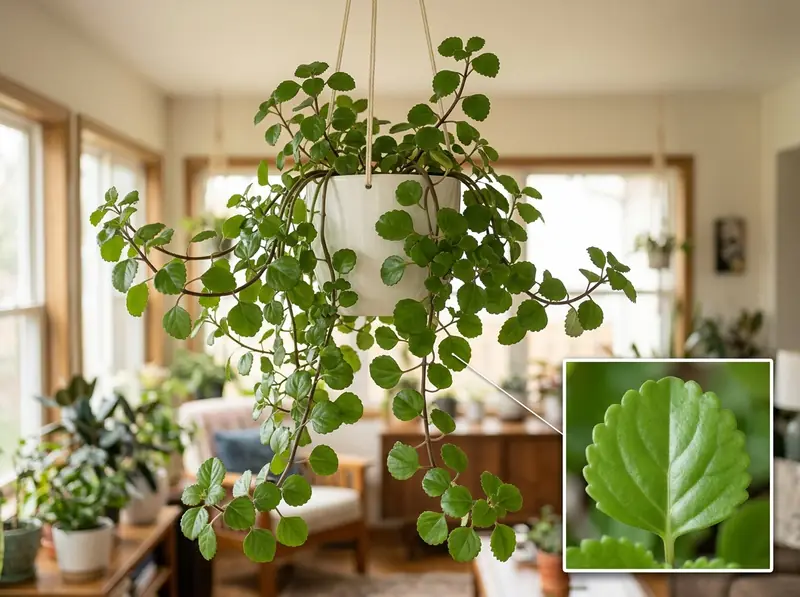
 AI-generated
Swedish Ivy
Plectranthus verticillatus
Swedish Ivy is a fast-growing trailing plant with rounded, scalloped, glossy green leaves, well suited to hanging baskets or high shelves. It is forgiving and easy to grow in bright, indirect light with regular watering. Trim it often to keep it full, and use the cuttings to make new plants.
Saving is free with a KinClub account, and it works here and in the KinClub app. Sign up free
Care profile
- Light
- Bright, indirect lightLow → direct sun
- Water
- Moderate wateringAbout every 7 days
- Difficulty
- EasyTricky → easy
- Coldest it tolerates
- 50°F
- Humidity
- Medium
- Mature size
- MediumSmall → tree-size
- Growth rate
- Fast
- How common
- Very commonRare → everywhere
- Plant family
- Lamiaceae
Pets and toxicity
Cats and dogs: not yet checked
Not yet checked against ASPCA — don't assume it's safe for pets.
No toxicity source on record for this plant yet. If a pet eats any houseplant, call your vet or an animal poison helpline.
How to care for Swedish Ivy
Light
Give it bright, indirect light, such as a spot near an east or north-facing window or a few feet back from a south window. It tolerates some gentle morning sun but scorches in strong midday sun.
Watering
Water thoroughly when the top inch of soil feels dry, usually about once a week in spring and summer. Empty the saucer afterward, and water less often in winter so the soil dries a bit deeper.
Soil
Use a standard well-draining potting mix, ideally with a handful of perlite added per few quarts for drainage. Make sure the pot has drainage holes.
Feeding
Feed every 2 to 4 weeks in spring and summer with a balanced liquid houseplant fertilizer diluted to half strength. Skip feeding in fall and winter.
Repotting
Repot every year or two in spring when roots fill the pot or circle the drainage holes. Move up only one pot size, about 1 to 2 inches wider.
Propagation
Take 4 to 6 inch stem cuttings just below a node and remove the lowest leaves. Root them in a glass of water or moist potting mix; roots usually appear in 1 to 3 weeks.
Common problems
- Leggy, sparse stems: move it to brighter light and pinch or trim back stems by a third to encourage branching.
- Yellow lower leaves: usually overwatering, so let the top inch dry out and check that the pot drains freely.
- Crispy brown leaf edges: caused by dry soil or very dry air, so water more consistently and keep it away from heat vents.
- Cottony white clusters or fine webbing: mealybugs or spider mites, so wipe with rubbing-alcohol-dampened cotton or spray with insecticidal soap weekly until clear.
Similar plants
Same light needs and difficulty.
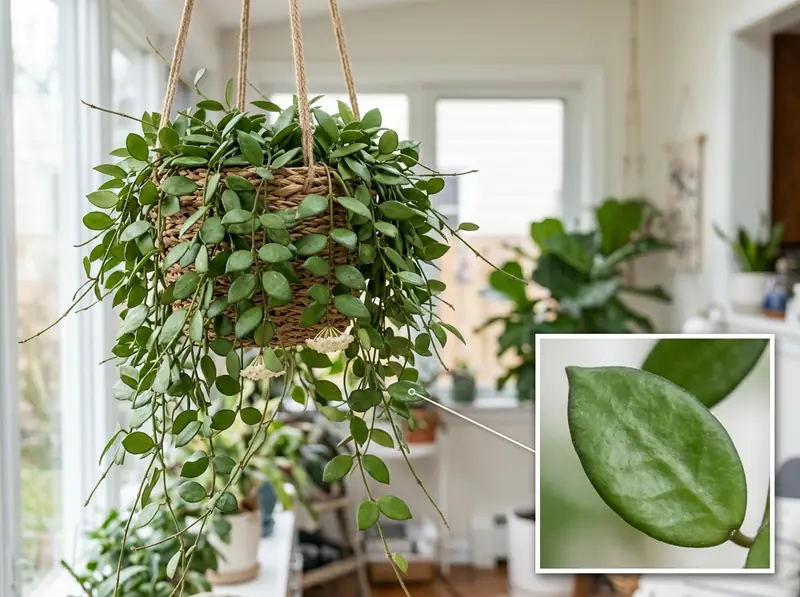 AI-generated
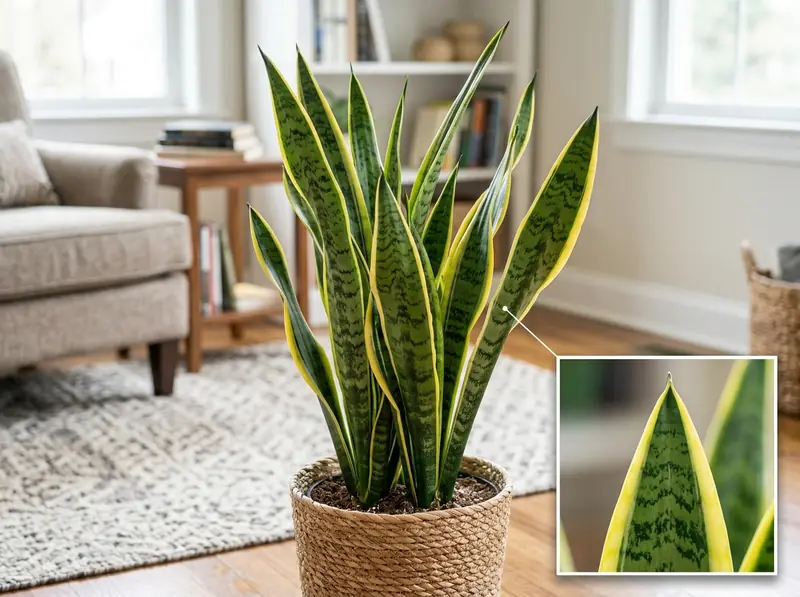 AI-generated
Laurentii Snake Plant
Dracaena trifasciata 'Laurentii'
- Medium to bright, indirect light
- Let it dry out
Toxic to cats and dogs AI-generated
Chinese Money Plant
Pilea peperomioides
- Bright, indirect light
- Dry to moderate watering
Pets: not yet checked AI-generated
Christmas Cactus
Schlumbergera × buckleyi
- Bright, indirect light
- Moderate watering
Pets: not yet checked