AI-generated image, not a photograph of this plant. Real plants look different depending on light, soil, temperature and age.
AsphodelaceaeCommon in stores
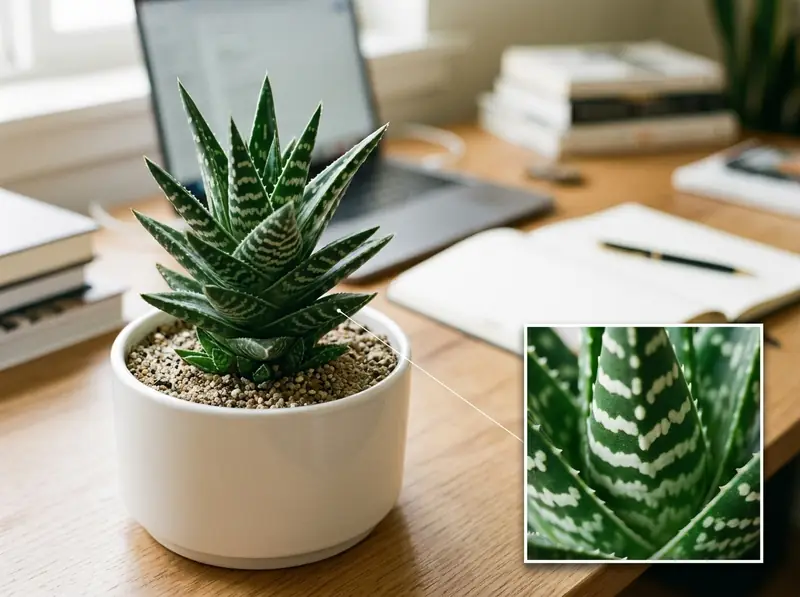
Tiger Aloe
Aloe variegata
Tiger aloe is a compact, slow-growing succulent with dark green leaves banded in white, forming a small spiral rosette. It is easy and forgiving as long as it has bright light and gritty, fast-draining soil, and it is best watered sparingly. Mature plants produce offsets and may bloom with orange-pink flowers in spring.
Pets: not yet checked
💡
Saving is free with a KinClub account, and it works here and in the KinClub app. Sign up free
🪴 Care profile
Light
Bright, indirect to direct sunLow → direct sun
Water
Let it dry outAbout every 14 days
Difficulty
EasyTricky → easy
Coldest it tolerates
40°F
Humidity
Low
Mature size
SmallSmall → tree-size
Growth rate
Slow
How common
CommonRare → everywhere
Plant family
Asphodelaceae
🐾 Pets and toxicity
Cats and dogs: not yet checked
Not yet checked against ASPCA — don't assume it's safe for pets.
No toxicity source on record for this plant yet. If a pet eats any houseplant, call your vet or an animal poison helpline.
🌿 How to care for Tiger Aloe
Light
Give it bright light, such as an east or south window with a few hours of gentle morning sun. Avoid hot midday sun through glass, which can scorch the leaves, especially on a plant not used to it.
Watering
Soak the soil thoroughly, then let it dry out completely before watering again, usually every 2-3 weeks in summer. In winter water only about once a month, or less if the room is cool.
Soil
Use a gritty cactus or succulent mix, or add about one part perlite or coarse sand to one part potting mix. The pot must have drainage holes; terracotta helps the soil dry faster.
Feeding
Feed once or twice in spring and summer with a cactus fertilizer or a general houseplant fertilizer diluted to half strength. Do not feed in autumn or winter.
Repotting
Repot every 2-3 years in spring, or when pups crowd the pot. Choose a shallow pot only slightly wider than the plant, since the roots are small.
Propagation
Separate offsets (pups) with some roots attached in spring and pot them in gritty mix. If a pup has no roots, let the cut end dry for a few days first, then plant it and water sparingly.
Common problems
Mushy, collapsing leaves or a black base indicate root rot; unpot, cut away rotten tissue, let it dry for a few days, and repot in dry gritty mix.
Leaves that stretch and pale from low light need a brighter spot; move it gradually over a week or two.
Cottony white mealybugs in leaf bases can be dabbed with a cotton swab dipped in rubbing alcohol and repeated weekly until gone.
Wrinkled, thin leaves mean the plant is too dry; give a thorough soak and leaves should plump up within a week or so.

 AI-generated
 AI-generated
 AI-generated
 AI-generated
 AI-generated