
 AI-generated
Tongue Fern
Pyrrosia lingua
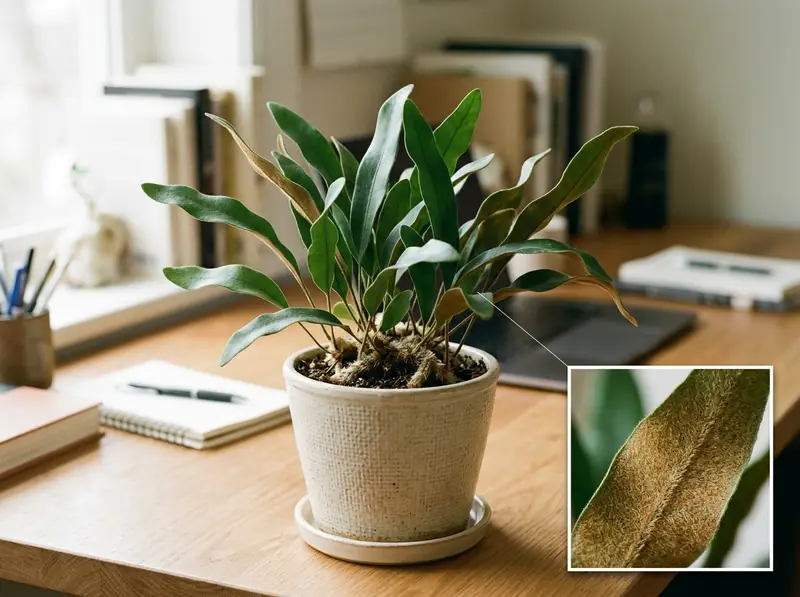
Tongue fern is a compact fern with thick, leathery, strap-shaped fronds that grow from a creeping rhizome. It handles average household humidity better than most ferns and tolerates some drying out between waterings. It suits a shelf, tabletop or hanging basket in bright indirect light.
Saving is free with a KinClub account, and it works here and in the KinClub app. Sign up free
Care profile
- Light
- Bright, indirect lightLow → direct sun
- Water
- Moderate wateringAbout every 10 days
- Difficulty
- Easy to moderateTricky → easy
- Coldest it tolerates
- 45°F
- Humidity
- Medium to high
- Mature size
- SmallSmall → tree-size
- Growth rate
- Slow to moderate
- How common
- CommonRare → everywhere
- Plant family
- Polypodiaceae
Pets and toxicity
Cats and dogs: not yet checked
Not yet checked against ASPCA — don't assume it's safe for pets.
No toxicity source on record for this plant yet. If a pet eats any houseplant, call your vet or an animal poison helpline.
How to care for Tongue Fern
Light
Give bright indirect light, such as a spot near an east window or a few feet back from a south or west window. Gentle morning sun is fine, but hot midday sun scorches the fronds.
Watering
Water when the top inch of mix is dry, about every 7 to 14 days, until water runs out the bottom. Reduce watering in winter and never leave the pot standing in water.
Soil
Use a light, airy, well-draining mix, such as standard potting mix with about one third orchid bark or perlite. The rhizomes sit on the surface and like good air flow.
Feeding
Feed every 4 to 6 weeks in spring and summer with a balanced liquid fertilizer diluted to half strength. Skip feeding in fall and winter.
Repotting
Repot only every 2 to 3 years, when rhizomes crowd the pot edge. Choose a shallow pot only slightly larger and keep the rhizomes on top of the soil, not buried.
Propagation
In spring, cut the creeping rhizome into sections with at least one frond and some roots. Pin each section on top of moist mix and keep it lightly damp until new growth appears.
Common problems
- Brown, dry frond tips: the air or soil is too dry, so water a bit more often and keep the plant away from heaters and vents.
- Yellowing fronds and soft rhizomes: overwatering or poor drainage, so let the mix dry out more and repot into a chunkier mix if needed.
- Small brown bumps on fronds or rhizomes: scale insects, so scrape them off or dab with rubbing alcohol on a cotton swab and repeat weekly.
- Brown dots on the underside of fronds are normal spore clusters, not a pest, so leave them alone.
Similar plants
Same light needs and difficulty.
 AI-generated
Tricolor Air Plant
Tillandsia tricolor
- Bright, indirect light
- Dry to moderate watering
Pets: not yet checked AI-generated
Umbrella Dracaena
Dracaena umbraculifera
- Medium to bright, indirect light
- Moderate watering
Toxic to cats and dogs AI-generated
Chinese Money Plant
Pilea peperomioides
- Bright, indirect light
- Dry to moderate watering
Pets: not yet checked AI-generated
Christmas Cactus
Schlumbergera × buckleyi
- Bright, indirect light
- Moderate watering
Pets: not yet checked