
 AI-generated
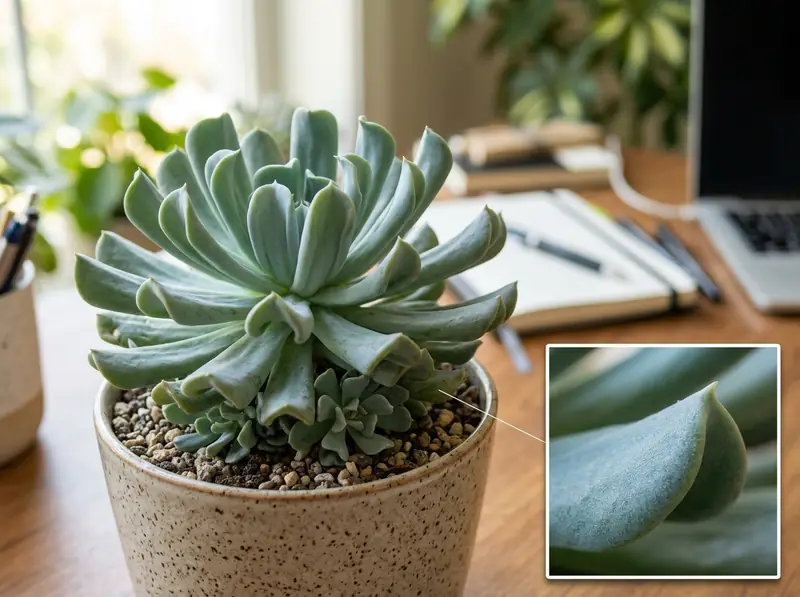
Topsy Turvy Echeveria
Echeveria 'Topsy Turvy'
Topsy Turvy is a slow-growing, blue-green echeveria with long leaves that fold and curl backward along the keel, making an unusual rosette. It needs lots of sun, gritty soil and infrequent watering. It is easy to grow and simple to propagate from leaves or offsets.
Saving is free with a KinClub account, and it works here and in the KinClub app. Sign up free
Care profile
- Light
- Direct sunLow → direct sun
- Water
- Let it dry outAbout every 14 days
- Difficulty
- EasyTricky → easy
- Coldest it tolerates
- 40°F
- Humidity
- Low
- Mature size
- SmallSmall → tree-size
- Growth rate
- Slow to moderate
- How common
- CommonRare → everywhere
Pets and toxicity
Cats and dogs: not yet checked
Not yet checked against ASPCA — don't assume it's safe for pets.
Source: ASPCA toxic and non-toxic plants. If a pet eats any houseplant, call your vet or an animal poison helpline.
How to care for Topsy Turvy Echeveria
Light
Give it at least 4-6 hours of bright light, ideally a south or west window with some direct sun. Move it into direct sun gradually to avoid sunburn.
Watering
Soak the soil thoroughly, then wait until it is completely dry before watering again, about every 2-3 weeks in summer. In winter, water only every 4-6 weeks or less.
Soil
Use a gritty cactus and succulent mix, or blend regular potting soil with about half perlite or pumice. Always use a pot with drainage holes.
Feeding
Feed with a cactus fertilizer diluted to half strength once a month in spring and summer. Do not feed in fall and winter.
Repotting
Repot every 2-3 years or when the rosette crowds the pot, in spring. Choose a pot only slightly wider than the plant, and let the soil stay dry for a few days afterward.
Propagation
Twist off a healthy leaf, let the cut end dry for a few days, then lay it on dry gritty soil and mist lightly when dry. Offsets (pups) can also be cut off and planted once calloused.
Common problems
- Stretching and pale color: the plant needs more light, so move it to a sunnier window.
- Soft, translucent or black leaves at the base: overwatering or rot; cut off healthy rosette tops, dry them and re-root.
- Cottony white bits between leaves: mealybugs; dab with cotton swab dipped in rubbing alcohol.
- Shriveled lower leaves: normal aging if few, but if many, soak the soil thoroughly.
Similar plants
Same light needs and difficulty.
 AI-generated
 AI-generated
 AI-generated
 AI-generated