
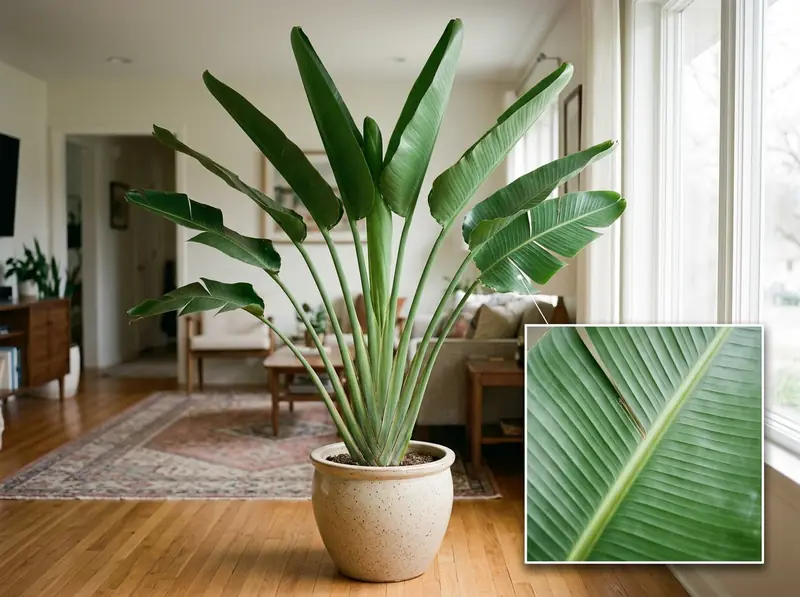
 AI-generated
Traveler's Palm
Ravenala madagascariensis
Traveler's palm is a bold, banana-like plant that grows into a huge fan of paddle-shaped leaves. Indoors it needs a lot of light, ideally some direct sun, plus a spacious spot and regular watering. It grows fast and can reach well over 6 feet, so give it plenty of room.
Saving is free with a KinClub account, and it works here and in the KinClub app. Sign up free
Care profile
- Light
- Direct sunLow → direct sun
- Water
- Moderate to moist wateringAbout every 7 days
- Difficulty
- Moderate to challengingTricky → easy
- Coldest it tolerates
- 50°F
- Humidity
- Medium to high
- Mature size
- Tree-sizeSmall → tree-size
- Growth rate
- Fast
- How common
- CommonRare → everywhere
- Plant family
- Strelitziaceae
Pets and toxicity
Cats and dogs: not yet checked
Not yet checked against ASPCA — don't assume it's safe for pets.
No toxicity source on record for this plant yet. If a pet eats any houseplant, call your vet or an animal poison helpline.
How to care for Traveler's Palm
Light
Give it the brightest spot you have, ideally a south or west window with several hours of direct sun. It survives in bright indirect light but grows slowly and leans toward the window.
Watering
In spring and summer, water thoroughly when the top 1-2 inches of soil are dry, usually about once a week, until water drains out. In winter, let the top few inches dry and water every 10-14 days.
Soil
Use a rich, well-draining potting mix. A blend of about 2 parts standard potting soil to 1 part perlite or coarse bark works well. Use a heavy pot with drainage holes, because the plant gets top-heavy.
Feeding
Feed every 2-4 weeks from spring to early fall with a balanced liquid fertilizer at half strength, or use a slow-release granule in spring. Stop feeding in winter.
Repotting
Repot every 1-2 years in spring while it is young, moving up 2-3 inches in pot diameter. Once it is very large, refresh the top 2-3 inches of soil instead of repotting.
Propagation
Seed is slow and unreliable indoors. The practical method is to divide offsets (suckers) with their own roots from the base in spring, using a clean sharp knife. Keep them warm and moist until established.
Common problems
- Split or shredded leaves are natural, caused by the leaf structure and by wind or dry air; leave them alone and keep the plant out of drafts.
- Brown leaf tips and edges come from dry soil, dry air or salt buildup; water deeply and flush the pot with water every few months.
- Yellowing lower leaves usually mean overwatering or poor drainage; let the soil dry more and check the drainage holes.
- Fine webbing and stippled leaves point to spider mites; wipe leaves, rinse the plant, and use insecticidal soap weekly until they are gone.
- Leggy growth and small leaves mean too little light; move the plant to a sunnier window.
Similar plants
Same light needs and difficulty.
 AI-generated
 AI-generated
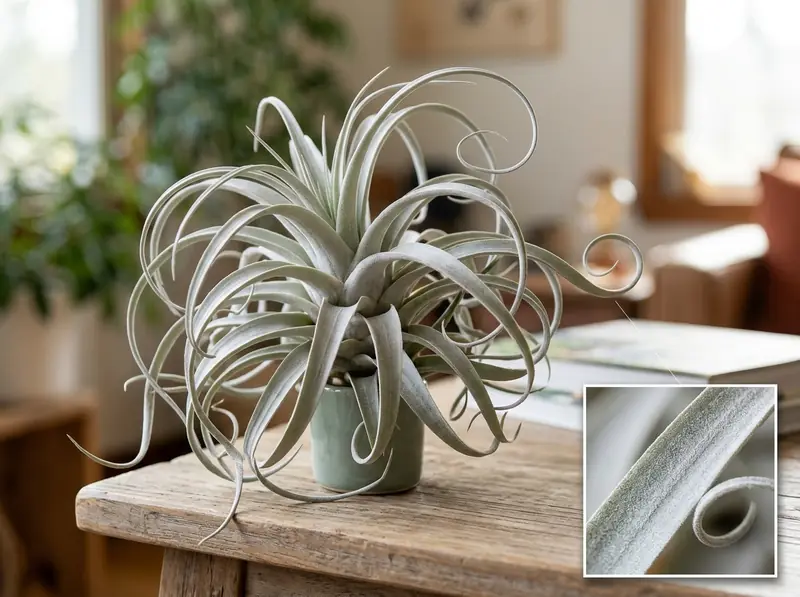
Duratii Air Plant
Tillandsia duratii
- Bright, indirect to direct sun
- Dry to moderate watering
Pets: not yet checked AI-generated
 AI-generated