
 AI-generated
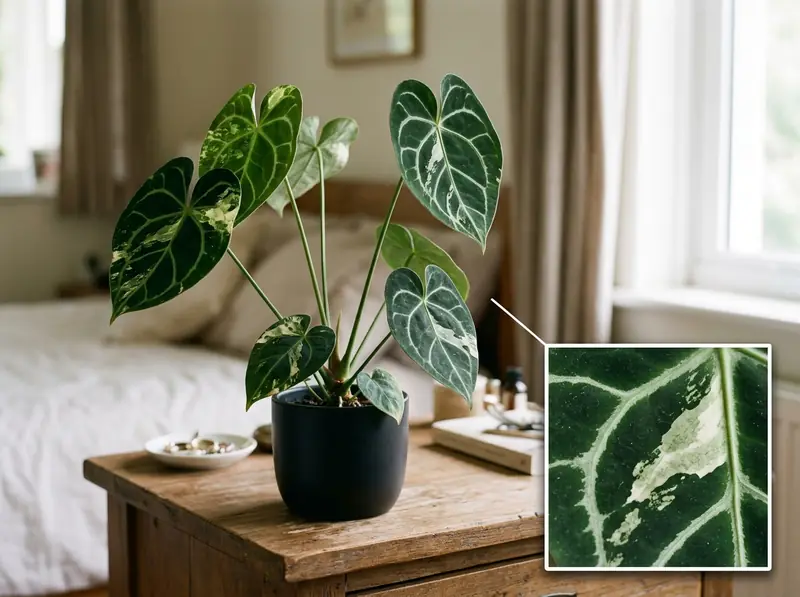
Variegated Clarinervium
Anthurium clarinervium 'Variegata'
Variegated Clarinervium is a rare, slow Anthurium with velvety heart-shaped leaves splashed with cream and white over green. It is more demanding than the plain form, needing bright but never direct light and high humidity.
Saving is free with a KinClub account, and it works here and in the KinClub app. Sign up free
Care profile
- Light
- Bright, indirect lightLow → direct sun
- Water
- Moderate wateringAbout every 8 days
- Difficulty
- ChallengingTricky → easy
- Coldest it tolerates
- 60°F
- Humidity
- High
- Mature size
- Small to mediumSmall → tree-size
- Growth rate
- Slow
- How common
- RareRare → everywhere
- Plant family
- Araceae
Pets and toxicity
Cats and dogs: not yet checked
Not yet checked against ASPCA — don't assume it's safe for pets.
No toxicity source on record for this plant yet. If a pet eats any houseplant, call your vet or an animal poison helpline.
How to care for Variegated Clarinervium
Light
Bright, indirect light, such as an east window or a spot well back from a south one. Variegated leaves scorch fast, so avoid direct sun.
Watering
Water when the top 1 to 2 inches of mix are dry, about every 8 days in summer and every 2 weeks in winter. It has less chlorophyll to use water, so avoid overwatering.
Soil
Airy aroid mix: orchid bark, perlite, and coco coir in about equal parts. Heavy soil rots the thick roots.
Feeding
Feed every 4 weeks in spring and summer with a balanced fertilizer at quarter to half strength.
Repotting
Repot every 2 years in spring, going up only one pot size. Refresh the mix and trim any rotted roots.
Propagation
Cut a stem section with a node and aerial root, and root it in damp sphagnum in a warm, humid spot. Variegated cuttings root slowly.
Common problems
- Dry air browns the leaf edges, which show on pale sectors first. Keep humidity at 60 percent or higher.
- Yellow leaves and soft roots mean overwatering. Repot into fresh airy mix and let it dry more between drinks.
- Thrips and spider mites stipple the leaves. Wipe them and treat weekly with insecticidal soap for 3 weeks.
Similar plants
Same light needs and difficulty.
 AI-generated
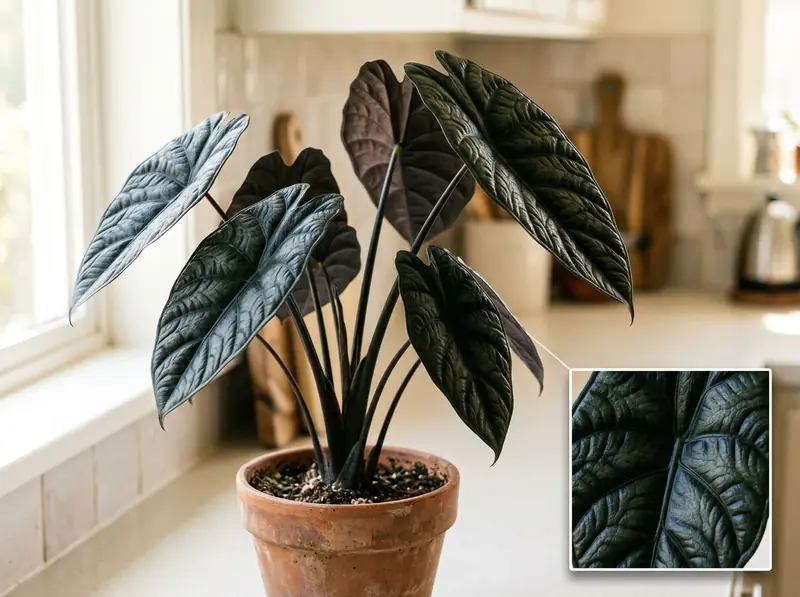
Infernalis Alocasia
Alocasia infernalis
- Bright, indirect light
- Moderate to moist watering
Toxic to cats and dogs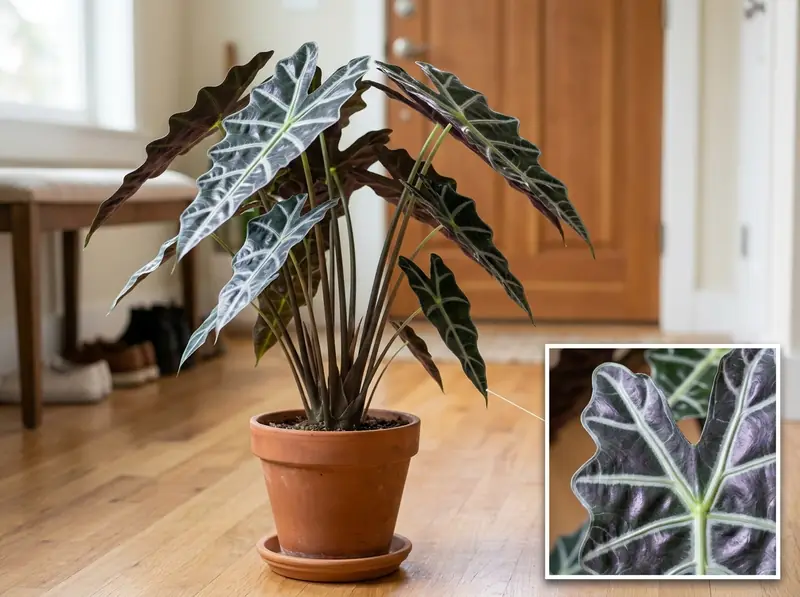 AI-generated
Kris Plant
Alocasia sanderiana
- Bright, indirect light
- Moderate to moist watering
Toxic to cats and dogs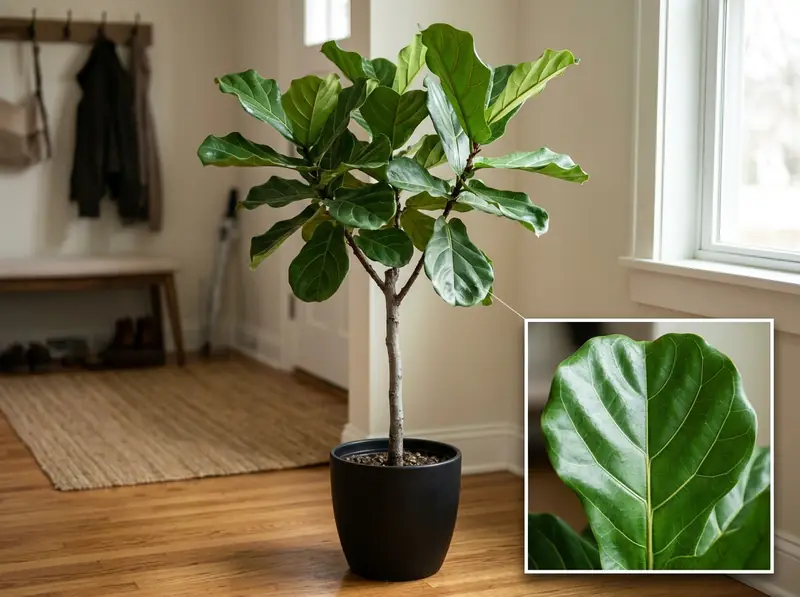 AI-generated
 AI-generated
Calathea Orbifolia
Goeppertia orbifolia
- Medium to bright, indirect light
- Keep moist
Pets: not yet checked