
 AI-generated
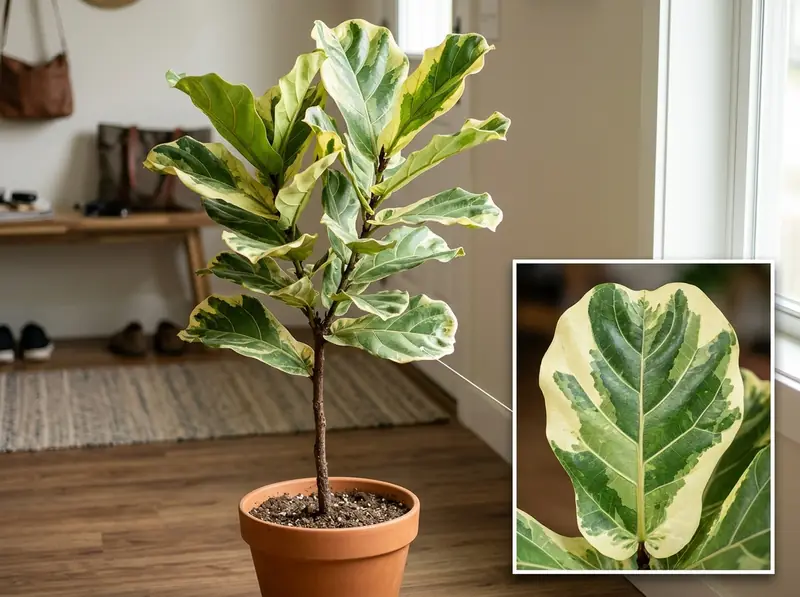
Variegated Fiddle-Leaf Fig
Ficus lyrata 'Variegata'
Variegated fiddle-leaf fig has large, violin-shaped leaves with cream and pale green marbling. It is rare, slow to grow, and fussy about light and watering, so it suits experienced plant owners.
Saving is free with a KinClub account, and it works here and in the KinClub app. Sign up free
Care profile
- Light
- Bright, indirect lightLow → direct sun
- Water
- Moderate wateringAbout every 10 days
- Difficulty
- ChallengingTricky → easy
- Coldest it tolerates
- 50°F
- Humidity
- Medium to high
- Mature size
- Tree-sizeSmall → tree-size
- Growth rate
- Slow
- How common
- EnthusiastRare → everywhere
- Plant family
- Moraceae
Pets and toxicity
Toxic to cats
Keep away from cats. Call your vet or a pet poison helpline if a cat chews it.
Toxic to dogs
Keep away from dogs. Call your vet or a pet poison helpline if a dog chews it.
Source: ASPCA toxic and non-toxic plants. If a pet eats any houseplant, call your vet or an animal poison helpline.
How to care for Variegated Fiddle-Leaf Fig
Light
Give it bright, indirect light near an east or south window. Variegated leaves need strong light for their pale patches but scorch easily in direct sun.
Watering
Water when the top 2 inches of soil are dry, about every 10 days in summer, less in winter. Always empty the saucer.
Soil
Use a chunky, well-draining potting mix with bark and perlite, in a pot with drainage holes.
Feeding
Feed monthly in spring and summer with a half-strength balanced fertilizer.
Repotting
Repot every 2 to 3 years in spring into a pot one size up. Wear gloves because the milky sap irritates skin.
Propagation
Cuttings and air layering work, but variegated tissue roots slowly and may revert, so it is best left to growers with patience.
Common problems
- Brown spots on leaves from overwatering or bacterial rot: cut back watering and improve drainage.
- Leaf drop after moving: keep it in a stable spot.
- Spider mites on dry air: wipe leaves and rinse regularly.
Similar plants
Same light needs and difficulty.
 AI-generated
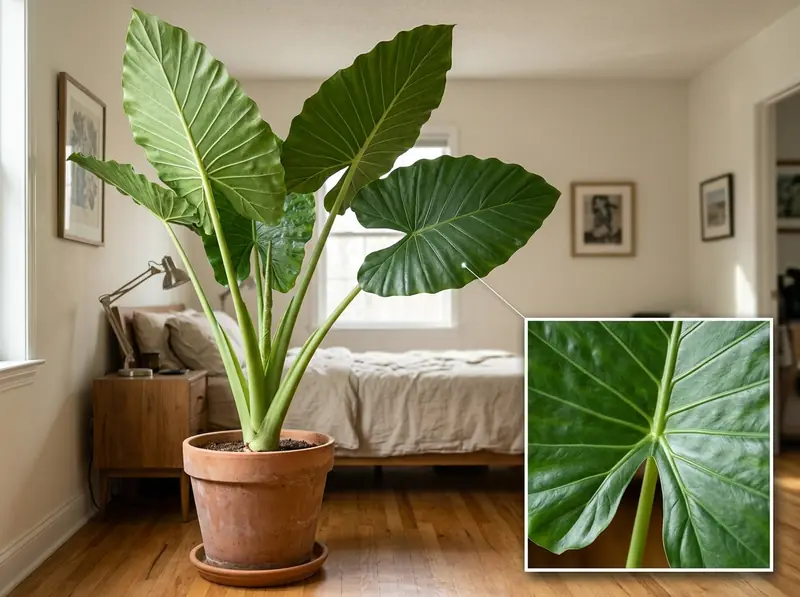
Robusta Alocasia
Alocasia robusta
- Bright, indirect light
- Moderate to moist watering
Toxic to cats and dogs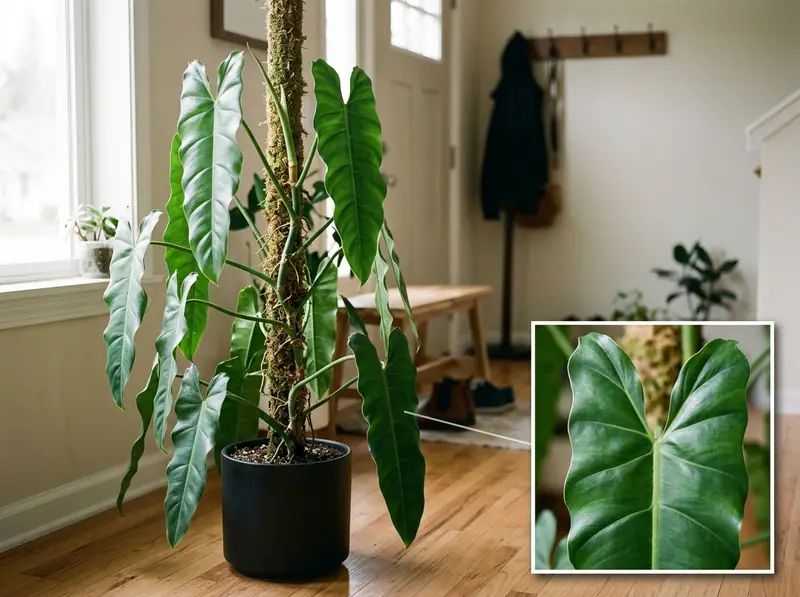 AI-generated
Spiritus Sancti Philodendron
Philodendron spiritus-sancti
- Bright, indirect light
- Moderate watering
Toxic to cats and dogs AI-generated
 AI-generated
Calathea Orbifolia
Goeppertia orbifolia
- Medium to bright, indirect light
- Keep moist
Pets: not yet checked