
 AI-generated
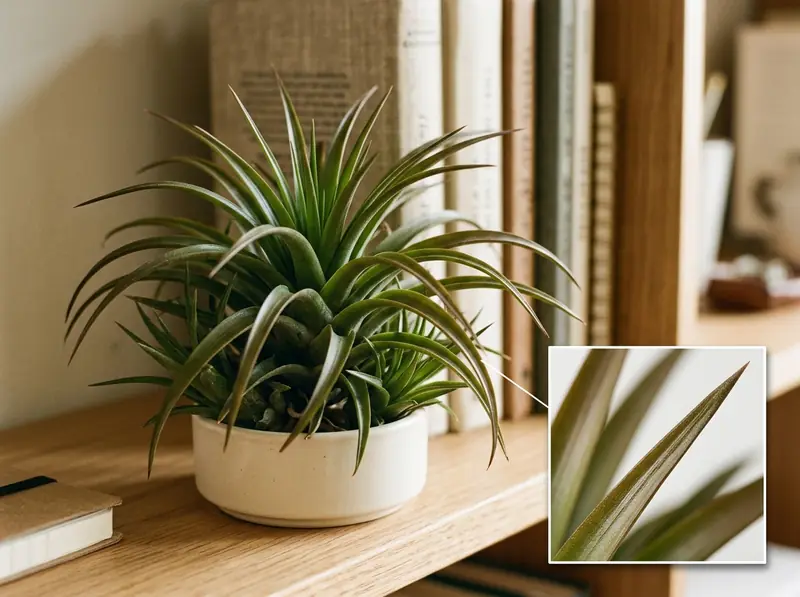
Vernicosa Air Plant
Tillandsia vernicosa
Tillandsia vernicosa is a small, slow-growing air plant with stiff, silvery-green leaves that forms a tight rosette and often clumps. It takes its moisture from the air and from regular soaking, so it needs no soil. It is easy to care for if you give it bright light and let it dry fully after watering.
Saving is free with a KinClub account, and it works here and in the KinClub app. Sign up free
Care profile
- Light
- Bright, indirect lightLow → direct sun
- Water
- Dry to moderate wateringAbout every 7 days
- Difficulty
- EasyTricky → easy
- Coldest it tolerates
- 45°F
- Humidity
- Medium
- Mature size
- SmallSmall → tree-size
- Growth rate
- Slow
- How common
- EnthusiastRare → everywhere
- Plant family
- Bromeliaceae
Pets and toxicity
Cats and dogs: not yet checked
Not yet checked against ASPCA — don't assume it's safe for pets.
No toxicity source on record for this plant yet. If a pet eats any houseplant, call your vet or an animal poison helpline.
How to care for Vernicosa Air Plant
Light
Give bright, indirect light, such as a spot near an east or south window with a sheer curtain. Some gentle morning sun is fine, but avoid hot midday sun through glass.
Watering
Soak in room-temperature water for 15 to 30 minutes about once a week, or mist lightly 2 to 3 times a week in dry homes. Shake out excess water and dry upright in good airflow within 4 hours.
Soil
It needs no soil, since it grows on its surface. Mount it on bark, driftwood, or a stone, or set it loosely in a dish. Do not plant it in potting mix, which stays wet and rots it.
Feeding
Feed once a month in spring and summer with a bromeliad or air plant fertilizer at quarter strength, added to the soaking water. Skip feeding in winter.
Repotting
It does not need repotting. When pups form at the base, you can leave them attached to make a clump or remove them to mount elsewhere. Use non-metal, untreated mounting materials and avoid copper.
Propagation
Separate pups when they reach about one-third to half the size of the parent, by gently twisting or cutting them free at the base. Mature plants bloom once, then produce pups. Growing from seed is slow.
Common problems
- Soft, dark center leaves mean rot. Dry the plant fully, water less often, and improve airflow; rot that has spread is usually fatal.
- Curled, dry leaves mean thirst. Soak for 1 hour and then water more regularly.
- Bleached or scorched leaves mean too much sun. Move the plant back from the window or filter the light.
- No pups after blooming is usually due to low light or poor feeding. Move it to brighter light and feed monthly.
Similar plants
Same light needs and difficulty.
 AI-generated
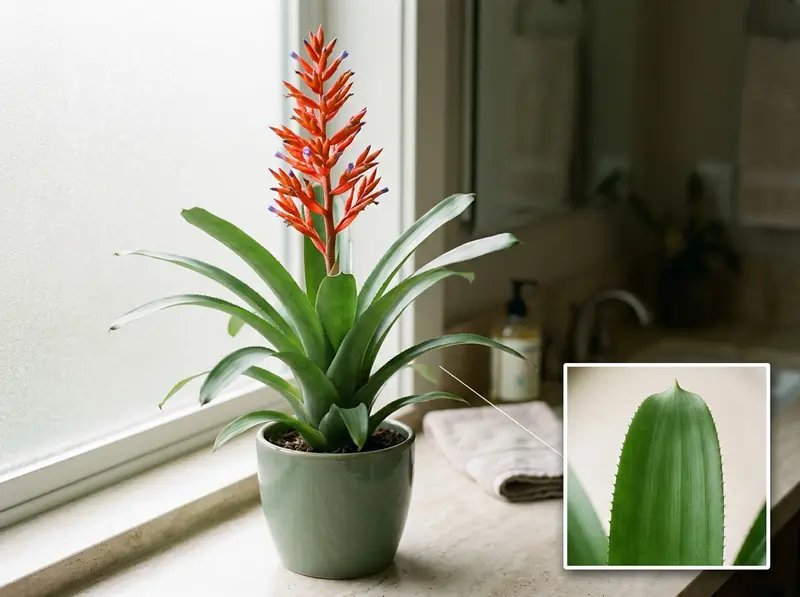
Miniata Bromeliad
Aechmea miniata
- Bright, indirect light
- Dry to moderate watering
Pets: not yet checked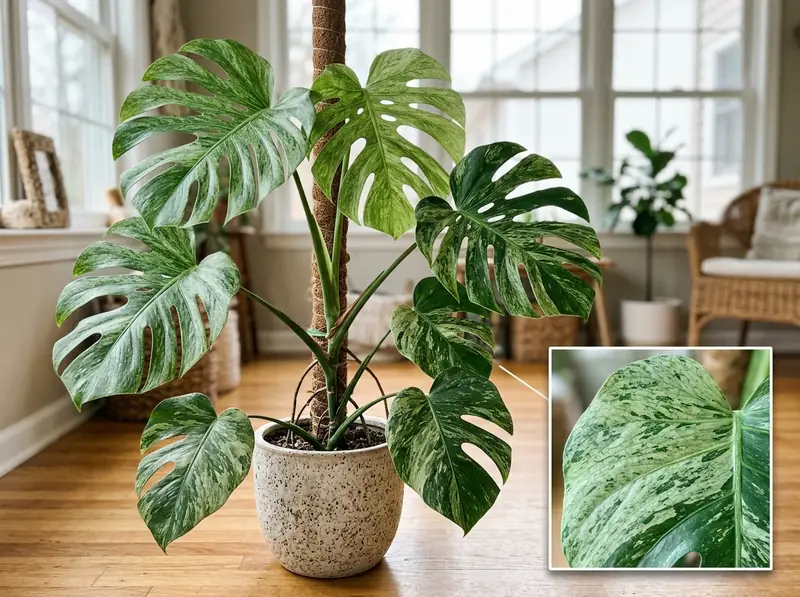 AI-generated
Mint Monstera
Monstera deliciosa 'Mint'
- Bright, indirect light
- Moderate watering
Toxic to cats and dogs AI-generated
Chinese Money Plant
Pilea peperomioides
- Bright, indirect light
- Dry to moderate watering
Pets: not yet checked AI-generated
Christmas Cactus
Schlumbergera × buckleyi
- Bright, indirect light
- Moderate watering
Pets: not yet checked