
 AI-generated
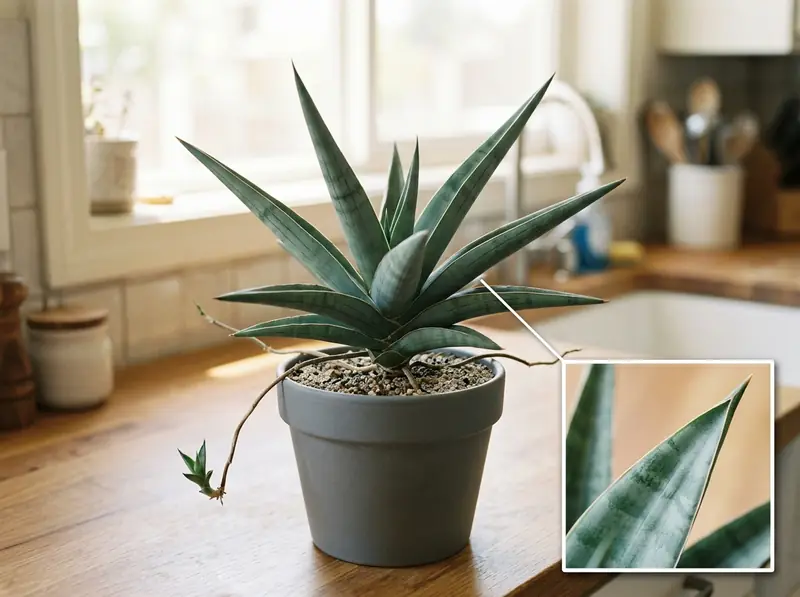
Walking Snake Plant
Dracaena pinguicula
Walking snake plant is a small, slow-growing succulent-like Dracaena. Its stiff, thick, upward-pointing leaves form a loose rosette, and it sends out stolons that grow plantlets, which is why it is called "walking." It is easy to grow if you give it bright light and a gritty soil, and let it dry out between waterings.
Saving is free with a KinClub account, and it works here and in the KinClub app. Sign up free
Care profile
- Light
- Bright, indirect lightLow → direct sun
- Water
- Let it dry outAbout every 21 days
- Difficulty
- EasyTricky → easy
- Coldest it tolerates
- 50°F
- Humidity
- Low
- Mature size
- SmallSmall → tree-size
- Growth rate
- Slow
- How common
- CommonRare → everywhere
- Plant family
- Asparagaceae
Pets and toxicity
Toxic to cats
Keep away from cats. Call your vet or a pet poison helpline if a cat chews it.
Toxic to dogs
Keep away from dogs. Call your vet or a pet poison helpline if a dog chews it.
Source: ASPCA toxic and non-toxic plants. If a pet eats any houseplant, call your vet or an animal poison helpline.
How to care for Walking Snake Plant
Light
Give it bright light, including a few hours of gentle morning or late-afternoon sun. It tolerates medium light but grows more slowly and less compactly there.
Watering
Water thoroughly, then let the soil dry out completely before watering again. This is usually every 2 to 4 weeks in the growing season, and every 5 to 8 weeks in winter.
Soil
Use a gritty cactus or succulent mix, or ordinary potting soil mixed about half and half with perlite or pumice. The pot must have drainage holes.
Feeding
Feed with a balanced houseplant fertilizer at half strength about once a month from spring to late summer. Do not feed in autumn or winter.
Repotting
Repot only every 2 to 3 years, when the plantlets crowd the pot. Move up just one size, into a shallow, stable pot, in spring.
Propagation
Separate the plantlets that form on the long stolons once they have a few leaves and roots. Pot them in gritty mix and keep them barely damp. Leaf cuttings also work but are slower.
Common problems
- Soft, yellowing leaf bases mean rot from overwatering. Unpot the plant, cut away mushy tissue, and repot in dry gritty mix.
- Cottony white clusters in the leaf bases are mealybugs. Dab them with rubbing alcohol on a cotton swab and repeat weekly.
- Wrinkled, limp leaves show long drought. Water deeply, then go back to a regular schedule.
- Leaves that flop or sprawl usually mean too little light. Move the plant to a brighter spot.
Similar plants
Same light needs and difficulty.
 AI-generated
 AI-generated
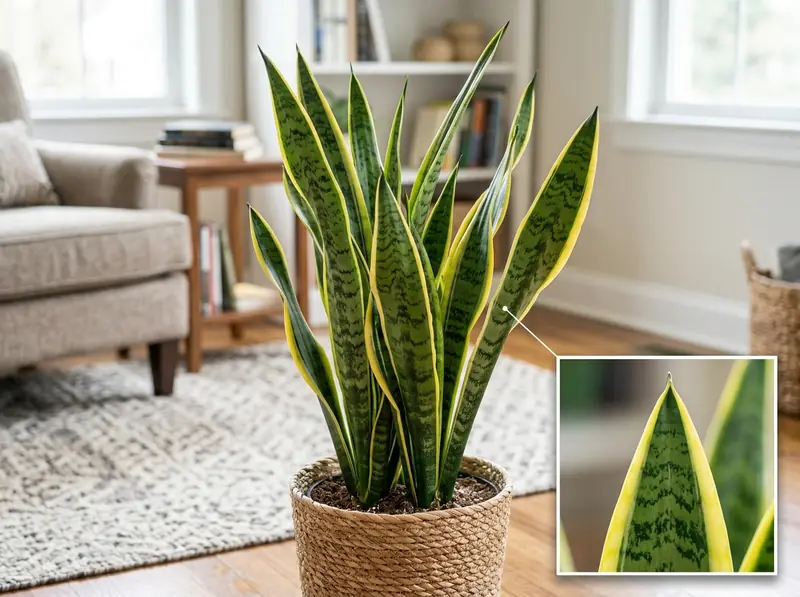
Laurentii Snake Plant
Dracaena trifasciata 'Laurentii'
- Medium to bright, indirect light
- Let it dry out
Toxic to cats and dogs AI-generated
Chinese Money Plant
Pilea peperomioides
- Bright, indirect light
- Dry to moderate watering
Pets: not yet checked AI-generated
Christmas Cactus
Schlumbergera × buckleyi
- Bright, indirect light
- Moderate watering
Pets: not yet checked