
 AI-generated
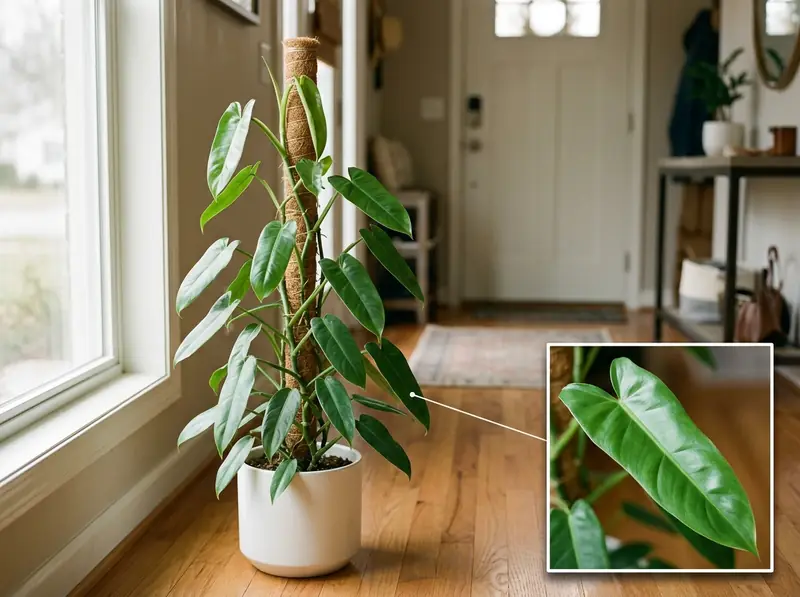
Whipple Way Philodendron
Philodendron 'Whipple Way'
Philodendron 'Whipple Way' is a hybrid with elongated, glossy leaves on a climbing vine. It is an easy, adaptable plant for a bright room, and it grows best with a pole to climb.
Saving is free with a KinClub account, and it works here and in the KinClub app. Sign up free
Care profile
- Light
- Bright, indirect lightLow → direct sun
- Water
- Moderate wateringAbout every 7 days
- Difficulty
- EasyTricky → easy
- Coldest it tolerates
- 55°F
- Humidity
- Medium to high
- Mature size
- Medium to largeSmall → tree-size
- Growth rate
- Slow to moderate
- How common
- RareRare → everywhere
Pets and toxicity
Toxic to cats
Keep away from cats. Call your vet or a pet poison helpline if a cat chews it.
Toxic to dogs
Keep away from dogs. Call your vet or a pet poison helpline if a dog chews it.
Source: ASPCA toxic and non-toxic plants. If a pet eats any houseplant, call your vet or an animal poison helpline.
How to care for Whipple Way Philodendron
Light
Bright indirect light is best, though it tolerates medium light. Direct midday sun scorches the leaves.
Watering
Water when the top 1 to 2 inches of soil are dry, about weekly in summer and every 10 to 14 days in winter.
Soil
Use a chunky, airy mix such as potting soil with orchid bark and perlite in equal parts, in a pot with drainage holes.
Feeding
Feed monthly in spring and summer with a balanced liquid houseplant fertilizer at half strength. Skip it in fall and winter.
Repotting
Repot every 1 to 2 years in spring when roots circle the pot, moving up 1 to 2 inches in pot diameter.
Propagation
Take a stem cutting with at least one node and one leaf and root it in water or damp sphagnum. Roots appear in 2 to 4 weeks in warm, bright conditions.
Common problems
- Leggy growth means low light or no support; add a moss pole and move to a brighter spot.
- Yellowing lower leaves come from wet soil; let it dry more between waterings.
- Mealybugs and spider mites hide in leaf axils; wipe and treat with insecticidal soap.
Similar plants
Same light needs and difficulty.
 AI-generated
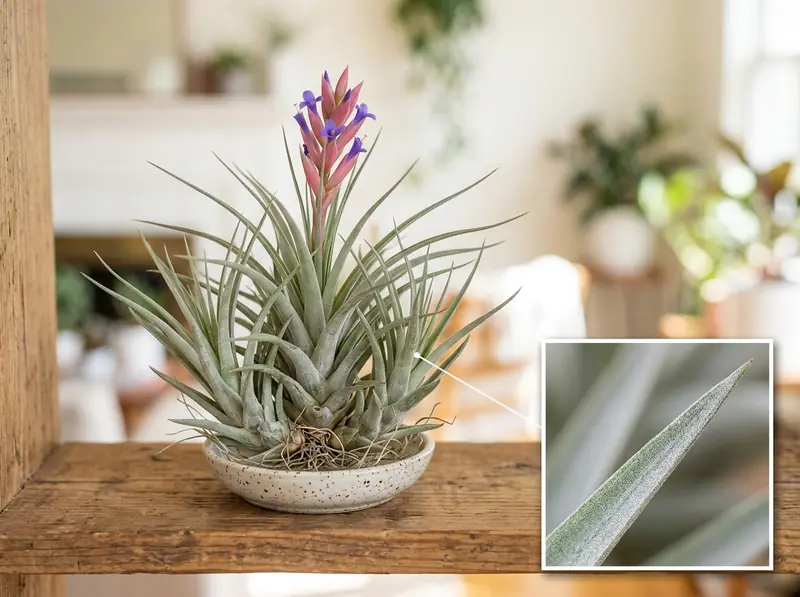
Aeranthos Air Plant
Tillandsia aeranthos
- Bright, indirect light
- Dry to moderate watering
Pets: not yet checked AI-generated
 AI-generated
Chinese Money Plant
Pilea peperomioides
- Bright, indirect light
- Dry to moderate watering
Pets: not yet checked AI-generated
Christmas Cactus
Schlumbergera × buckleyi
- Bright, indirect light
- Moderate watering
Pets: not yet checked