
 AI-generated
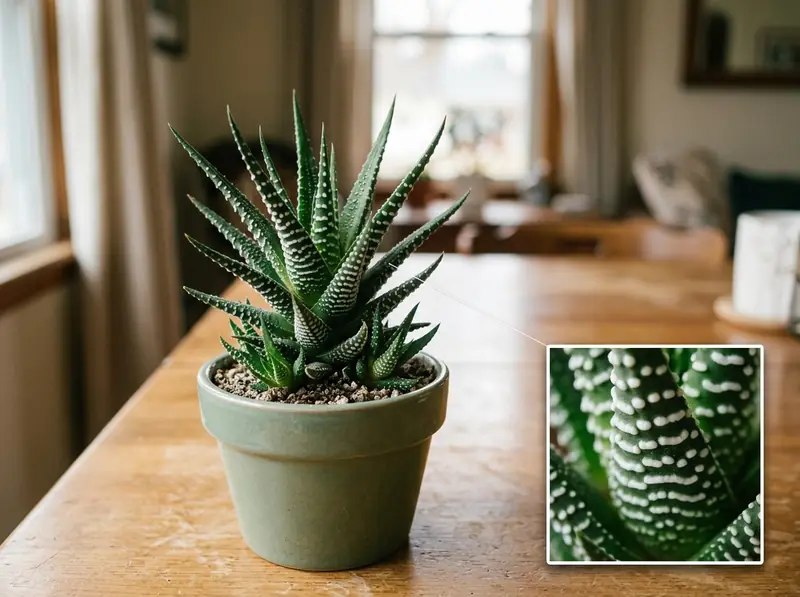
Zebra Plant
Haworthiopsis attenuata
Also known as Haworthia attenuata
Zebra Plant is a small, slow-growing succulent with dark green, pointed leaves banded with raised white stripes. It is very forgiving and suits a bright windowsill or desk. The main thing to get right is letting the soil dry fully between waterings.
Saving is free with a KinClub account, and it works here and in the KinClub app. Sign up free
Care profile
- Light
- Bright, indirect lightLow → direct sun
- Water
- Let it dry outAbout every 14 days
- Difficulty
- EasyTricky → easy
- Coldest it tolerates
- 40°F
- Humidity
- Low
- Mature size
- SmallSmall → tree-size
- Growth rate
- Slow
- How common
- Very commonRare → everywhere
- Plant family
- Asphodelaceae
Pets and toxicity
Cats and dogs: not yet checked
Not yet checked against ASPCA — don't assume it's safe for pets.
Source: ASPCA toxic and non-toxic plants. If a pet eats any houseplant, call your vet or an animal poison helpline.
How to care for Zebra Plant
Light
Give it bright light with no harsh midday sun, such as an east window or a few feet back from a south or west window. It tolerates some direct morning sun but can scorch in strong afternoon sun.
Watering
Soak the soil thoroughly, then wait until it is completely dry before watering again, usually every 2 to 3 weeks in summer. In winter, water only about once a month or less.
Soil
Use a gritty cactus or succulent mix, ideally with extra perlite or pumice added (about one-third by volume). Use a pot with drainage holes, and terracotta helps the soil dry faster.
Feeding
Feed in spring and summer only, using a cactus fertilizer or a balanced houseplant fertilizer diluted to half strength about once a month. Do not feed in fall and winter.
Repotting
Repot every 2 to 3 years, or when pups crowd the pot, in spring. Choose a shallow pot only slightly wider than the plant, as it has a fairly small root system.
Propagation
Gently separate offsets (pups) with some roots attached and pot them in gritty mix. Let any cut ends dry for a day or two first, and wait a week before watering lightly.
Common problems
- Mushy, collapsing leaves at the base: this is root or crown rot from overwatering. Remove the plant, cut away rotten tissue, let it dry for several days, and repot in fresh gritty mix.
- Shriveled, wrinkled leaves: the plant is too dry. Soak thoroughly and it should plump up within a week or so.
- White cottony clusters between leaves: mealybugs. Dab them with cotton swabs dipped in rubbing alcohol and repeat weekly until gone.
- Stretched, pale growth: not enough light. Move it to a brighter window gradually.
Similar plants
Same light needs and difficulty.
 AI-generated
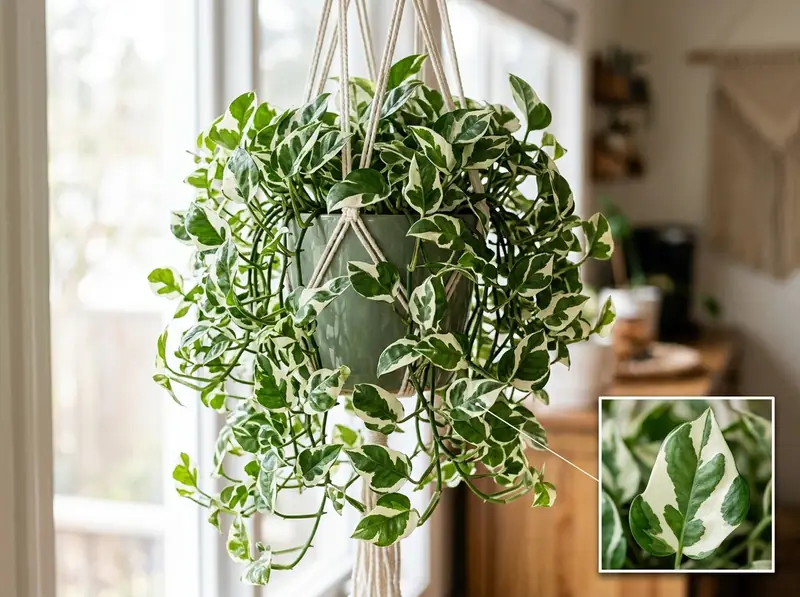
N'Joy Pothos
Epipremnum aureum 'N'Joy'
- Bright, indirect light
- Dry to moderate watering
Pets: not yet checked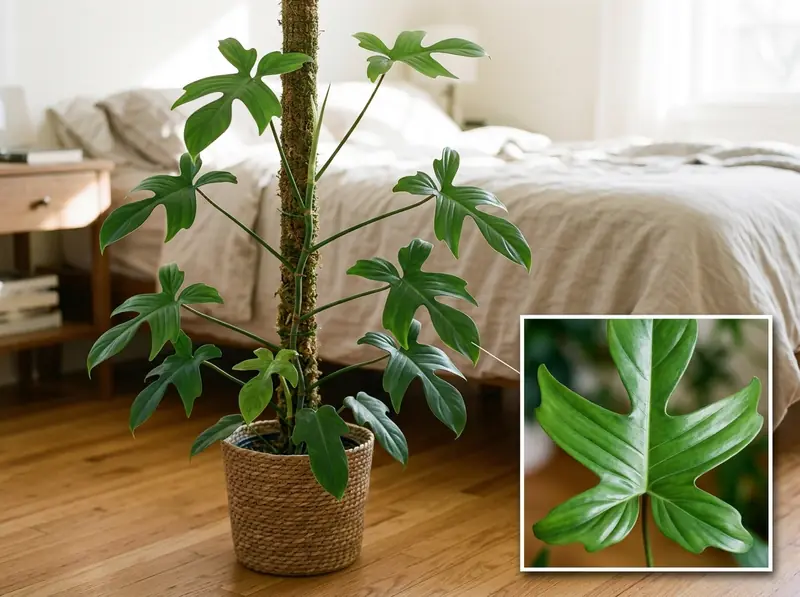 AI-generated
Oak Leaf Philodendron
Philodendron pedatum
- Bright, indirect light
- Moderate watering
Toxic to cats and dogs AI-generated
Chinese Money Plant
Pilea peperomioides
- Bright, indirect light
- Dry to moderate watering
Pets: not yet checked AI-generated
Christmas Cactus
Schlumbergera × buckleyi
- Bright, indirect light
- Moderate watering
Pets: not yet checked