
 AI-generated
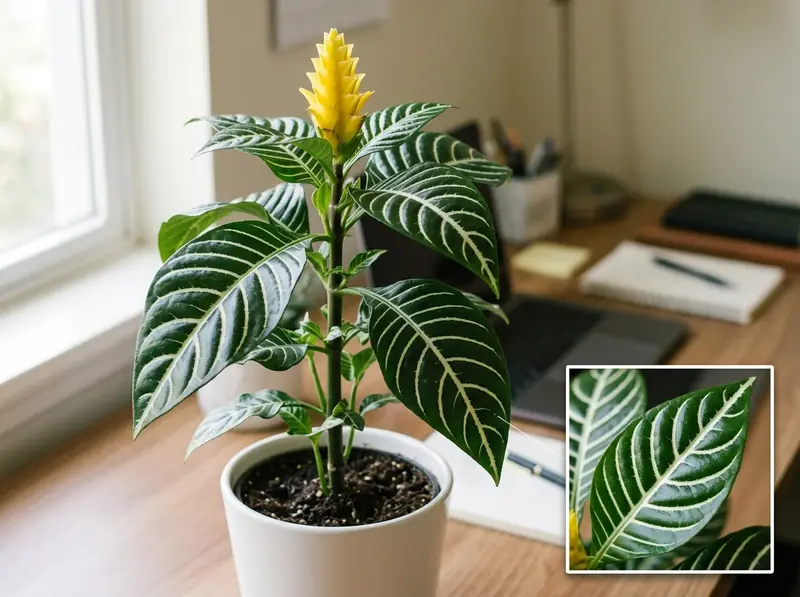
Zebra Plant (Aphelandra)
Aphelandra squarrosa
Also known as Saffron Spike Zebra
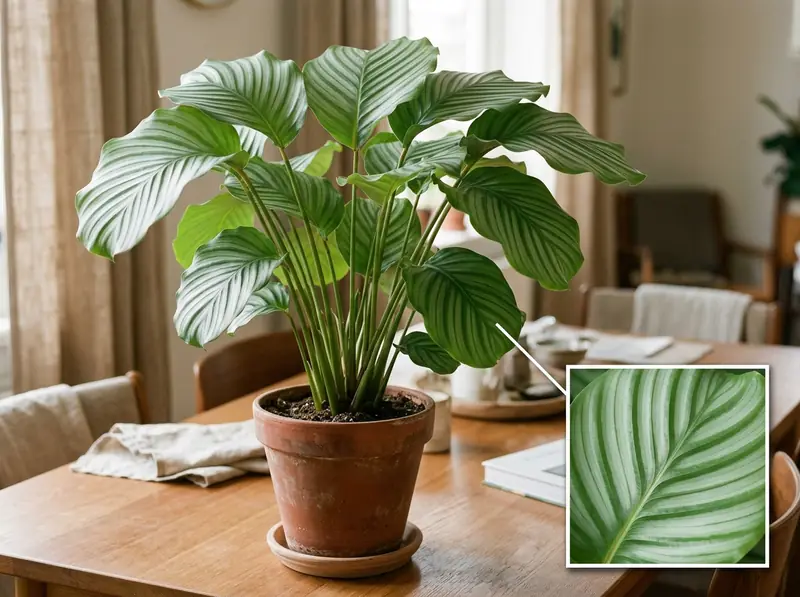
Zebra plant is grown for its glossy dark green leaves striped with bold white veins and, sometimes, a long-lasting yellow flower bract. It is fussy: it wants steady moisture, high humidity, warmth and bright indirect light. It does best with a consistent routine and is a rewarding choice for a more experienced owner.
Saving is free with a KinClub account, and it works here and in the KinClub app. Sign up free
Care profile
- Light
- Bright, indirect lightLow → direct sun
- Water
- Keep moistAbout every 7 days
- Difficulty
- ChallengingTricky → easy
- Coldest it tolerates
- 60°F
- Humidity
- High
- Mature size
- MediumSmall → tree-size
- Growth rate
- Moderate
- How common
- Very commonRare → everywhere
- Plant family
- Acanthaceae
Pets and toxicity
Non-toxic to cats
Listed as non-toxic to cats by the ASPCA.
Non-toxic to dogs
Listed as non-toxic to dogs by the ASPCA.
Source: ASPCA toxic and non-toxic plants. If a pet eats any houseplant, call your vet or an animal poison helpline.
How to care for Zebra Plant (Aphelandra)
Light
Give bright, indirect light, such as a spot a few feet from an east or lightly shaded south window. Avoid direct midday sun, which scorches the leaves.
Watering
Keep the soil evenly moist but never soggy, usually about once a week in the growing season. Use room-temperature water and empty the saucer; never let the root ball dry out completely. Water a little less in winter.
Soil
Use a peat-based or coco-based, well-draining potting mix that holds some moisture, for example with about 25% perlite added. The pot must have drainage holes.
Feeding
Feed every 2 weeks in spring and summer with a balanced liquid houseplant fertilizer at half strength. Stop or reduce to once every 6-8 weeks in winter.
Repotting
Repot every year or two in spring, when roots fill the pot, moving up only one size (1-2 inches wider). The plant has fairly small roots and dislikes an oversized pot.
Propagation
Take 4-6 inch tip cuttings with a pair of healthy leaves in spring or summer. Root them in moist mix with bottom heat and a clear bag for humidity; this takes 4-8 weeks.
Common problems
- Leaf drop: usually caused by dry soil, cold drafts or a sudden move. Keep soil evenly moist, keep the plant above 60°F, and avoid moving it often.
- Brown, crispy leaf edges: the air is too dry. Group it with other plants, use a humidifier or set the pot on a pebble tray.
- Yellowing lower leaves: often overwatering or poor drainage. Let the top of the soil barely dry and check the drainage holes.
- Leggy growth after flowering: cut back the plant in spring to just above a pair of healthy leaves to encourage branching.
- No flower bract: it needs bright light and regular feeding. Move it to a brighter spot and feed regularly in the growing season.
Similar plants
Same light needs and difficulty.
 AI-generated
 AI-generated
 AI-generated
 AI-generated
Calathea Orbifolia
Goeppertia orbifolia
- Medium to bright, indirect light
- Keep moist
Pets: not yet checked