
 AI-generated
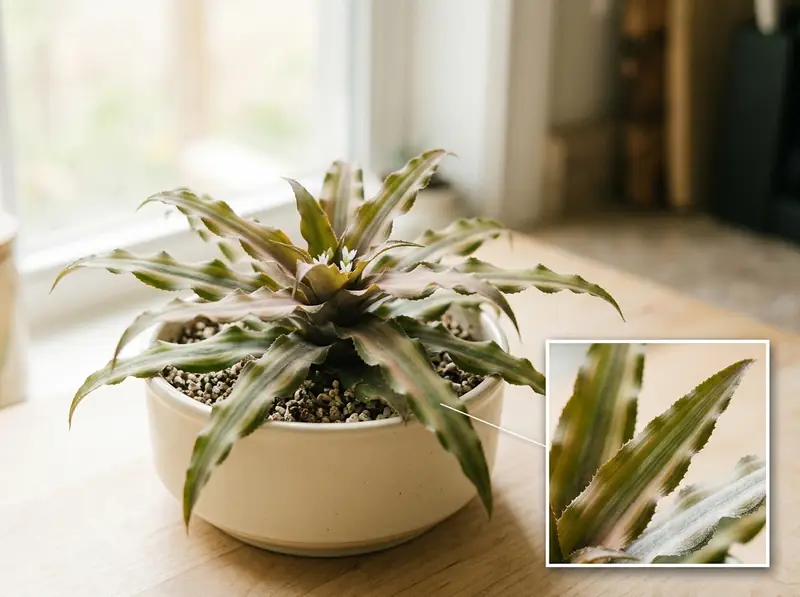
Acaulis Earth Star
Cryptanthus acaulis
A small, flat-growing earth star bromeliad whose stiff, wavy leaves form a low rosette, often tinted with green, copper or red. It grows on the ground rather than in trees, so it likes a shallow pot of light, airy mix. Pups appear at the base after about 2 years.
Saving is free with a KinClub account, and it works here and in the KinClub app. Sign up free
Care profile
- Light
- Bright, indirect lightLow → direct sun
- Water
- Moderate wateringAbout every 7 days
- Difficulty
- EasyTricky → easy
- Coldest it tolerates
- 55°F
- Humidity
- Medium to high
- Mature size
- SmallSmall → tree-size
- Growth rate
- Slow
- How common
- EnthusiastRare → everywhere
- Plant family
- Bromeliaceae
Pets and toxicity
Cats and dogs: not yet checked
Not yet checked against ASPCA — don't assume it's safe for pets.
No toxicity source on record for this plant yet. If a pet eats any houseplant, call your vet or an animal poison helpline.
How to care for Acaulis Earth Star
Light
Needs bright, indirect light for good color; a few hours of gentle morning sun is fine. Direct hot sun bleaches the leaves, while low light turns them dull green.
Watering
Water when the top inch of soil is dry, about weekly in the growing season. Use water at room temperature and let the pot drain; keep the center of the rosette from holding stagnant water.
Soil
Use a light, airy mix such as orchid bark blended with peat-free potting soil and perlite, in a shallow pot.
Feeding
Feed with a quarter-strength balanced fertilizer every month in spring and summer.
Repotting
Repot every 2 years in spring into a shallow pot, since the roots are small and shallow.
Propagation
Remove pups when they are about a third the size of the parent, and pot them in a light mix. They root in a few weeks.
Common problems
- Brown, mushy rosette centers come from overwatering. Let the mix dry between waterings and drain the center.
- Dry, brown leaf tips signal low humidity. Group it with other plants or use a pebble tray.
- Faded color means too little light. Move it to a brighter window.
Similar plants
Same light needs and difficulty.
 AI-generated
 AI-generated
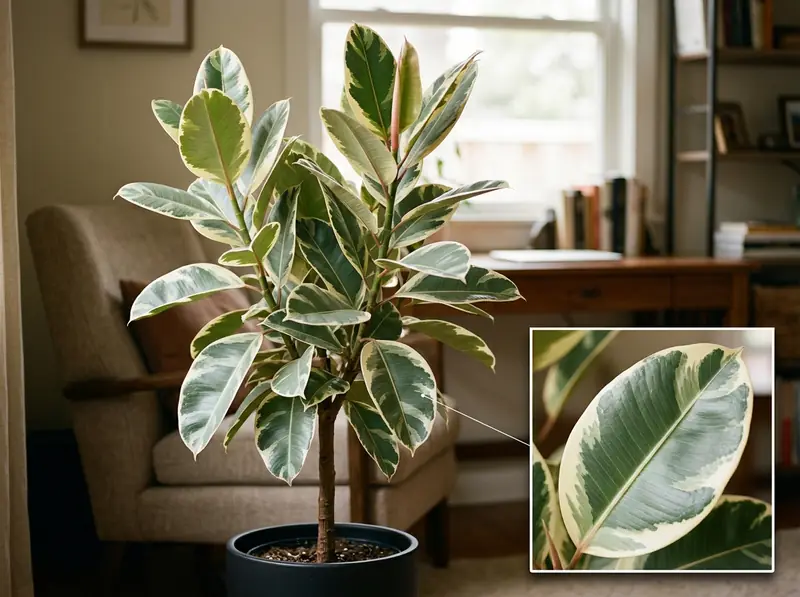
Tineke Rubber Plant
Ficus elastica 'Tineke'
- Bright, indirect light
- Moderate watering
Toxic to cats and dogs AI-generated
Chinese Money Plant
Pilea peperomioides
- Bright, indirect light
- Dry to moderate watering
Pets: not yet checked AI-generated
Christmas Cactus
Schlumbergera × buckleyi
- Bright, indirect light
- Moderate watering
Pets: not yet checked