
 AI-generated
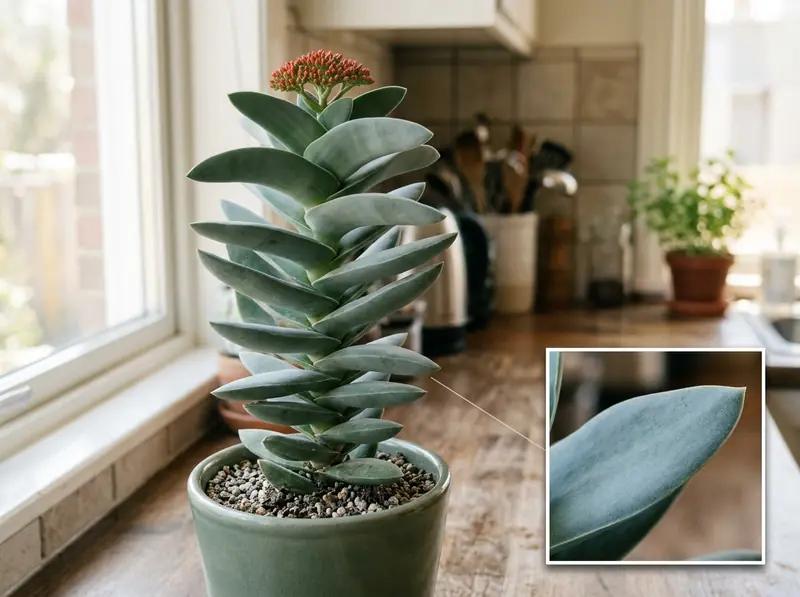
Airplane Plant
Crassula falcata
The Airplane Plant is a tough succulent with stacked, sickle-shaped gray-green leaves that resemble propeller blades. It likes bright light and gritty, fast-draining soil, and it does best when allowed to dry out between waterings. Mature plants may bear clusters of small red flowers in summer.
Saving is free with a KinClub account, and it works here and in the KinClub app. Sign up free
Care profile
- Light
- Bright, indirect to direct sunLow → direct sun
- Water
- Let it dry outAbout every 14 days
- Difficulty
- EasyTricky → easy
- Coldest it tolerates
- 40°F
- Humidity
- Low
- Mature size
- Small to mediumSmall → tree-size
- Growth rate
- Slow to moderate
- How common
- CommonRare → everywhere
- Plant family
- Crassulaceae
Pets and toxicity
Cats and dogs: not yet checked
Not yet checked against ASPCA — don't assume it's safe for pets.
No toxicity source on record for this plant yet. If a pet eats any houseplant, call your vet or an animal poison helpline.
How to care for Airplane Plant
Light
Give it bright light, including a few hours of gentle morning or late-afternoon sun from an east or west window. Protect it from hot midday sun through glass.
Watering
Soak the soil thoroughly, then let it dry out almost completely before watering again, usually every 2 to 3 weeks in summer. In winter water only about once a month.
Soil
Use a gritty cactus or succulent mix, or regular potting mix with about one-third perlite or coarse sand. Use a pot with drainage holes.
Feeding
Feed with a half-strength balanced fertilizer or cactus fertilizer once a month in spring and summer. Do not feed in fall and winter.
Repotting
Repot every 2 to 3 years in spring, only when roots fill the pot or the plant is top-heavy. Choose a pot just 1 to 2 inches wider, preferably heavy terracotta.
Propagation
Take a stem cutting or a single leaf, let the cut end callus for 2 to 3 days, then set it on barely damp gritty mix. It roots in a few weeks.
Common problems
- Leggy, stretched stems from low light: move to a brighter window and trim back to encourage branching.
- Soft, mushy base from overwatering: cut off healthy tops, let them callus, and replant in fresh dry gritty mix.
- White cottony mealybugs between leaf pairs: dab with rubbing alcohol on a cotton swab and repeat weekly until gone.
- Shriveled, curled leaves from long drought: give a deep soak and resume a regular schedule.
Similar plants
Same light needs and difficulty.
 AI-generated
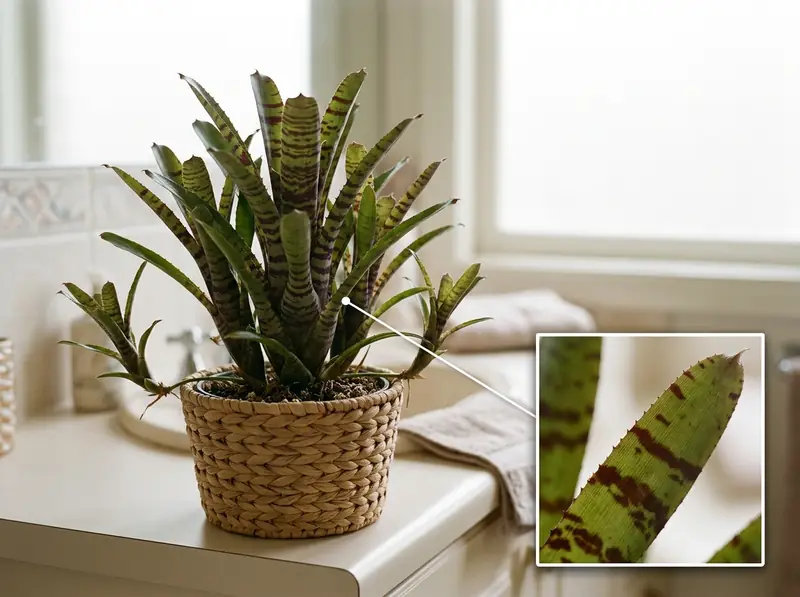
Ampullacea Bromeliad
Neoregelia ampullacea
- Bright, indirect light
- Dry to moderate watering
Pets: not yet checked AI-generated
 AI-generated
Chinese Money Plant
Pilea peperomioides
- Bright, indirect light
- Dry to moderate watering
Pets: not yet checked AI-generated
Christmas Cactus
Schlumbergera × buckleyi
- Bright, indirect light
- Moderate watering
Pets: not yet checked