
 AI-generated
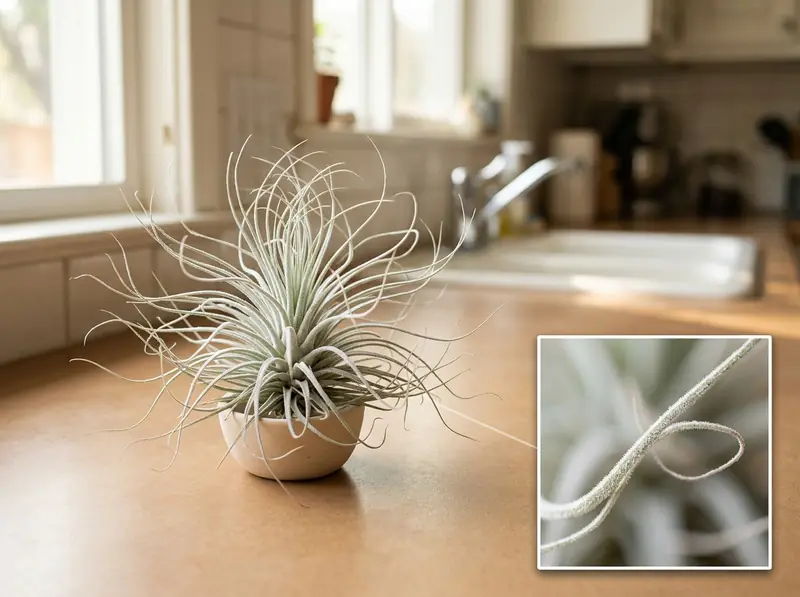
Argentea Air Plant
Tillandsia argentea
Tillandsia argentea is a small, wiry, silvery-grey air plant with a tufted rosette of thin, curving leaves. It needs no soil, only bright light, weekly soaking, and good airflow. It's forgiving for beginners as long as it dries quickly after watering.
Saving is free with a KinClub account, and it works here and in the KinClub app. Sign up free
Care profile
- Light
- Bright, indirect lightLow → direct sun
- Water
- Let it dry outAbout every 7 days
- Difficulty
- Easy to moderateTricky → easy
- Coldest it tolerates
- 45°F
- Humidity
- Low to medium
- Mature size
- SmallSmall → tree-size
- Growth rate
- Slow
- How common
- EnthusiastRare → everywhere
- Plant family
- Bromeliaceae
Pets and toxicity
Cats and dogs: not yet checked
Not yet checked against ASPCA — don't assume it's safe for pets.
No toxicity source on record for this plant yet. If a pet eats any houseplant, call your vet or an animal poison helpline.
How to care for Argentea Air Plant
Light
Give it bright, filtered light, such as a spot near an east or south window with a sheer curtain. A few hours of gentle morning sun is fine, but avoid hot midday sun through glass.
Watering
Soak in room-temperature water for 10 to 20 minutes, or rinse thoroughly, about once a week. Shake out water from the center and let it dry within 4 hours. Mist alone is usually not enough.
Soil
It needs no soil. Mount it loosely on driftwood, cork, or a shelf, or set it in an open holder. Don't pot it in regular soil, which holds too much moisture and rots it.
Feeding
Feed once a month in the growing season with a bromeliad or air plant fertilizer at quarter strength, added to the soaking water. Skip feeding in winter.
Repotting
It doesn't need repotting. If it has a mount, move it only when it outgrows the holder. Attach it loosely, without wire cutting into the base.
Propagation
Separate pups after they reach about one-third to half the size of the parent, by gently twisting them off. Pups are slow to form and mature plants seldom flower indoors.
Common problems
- Brown, mushy center: too much water trapped in the rosette. Soak less, shake it dry, and improve airflow.
- Curled, dry leaves: underwatered. Soak for 30 minutes and then water more regularly.
- Brown crispy tips: too much direct sun or low humidity. Move it to filtered light.
- White cottony bits in the leaf bases: mealybugs. Dab them off with rubbing alcohol on a cotton swab.
Similar plants
Same light needs and difficulty.
 AI-generated
 AI-generated
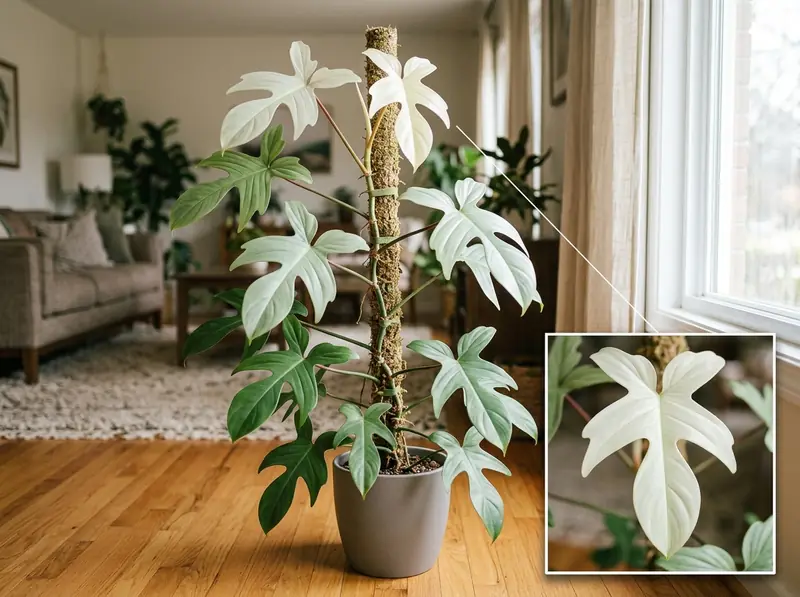
Florida Ghost Philodendron
Philodendron 'Florida Ghost'
- Bright, indirect light
- Moderate watering
Toxic to cats and dogs AI-generated
Chinese Money Plant
Pilea peperomioides
- Bright, indirect light
- Dry to moderate watering
Pets: not yet checked AI-generated
Christmas Cactus
Schlumbergera × buckleyi
- Bright, indirect light
- Moderate watering
Pets: not yet checked