
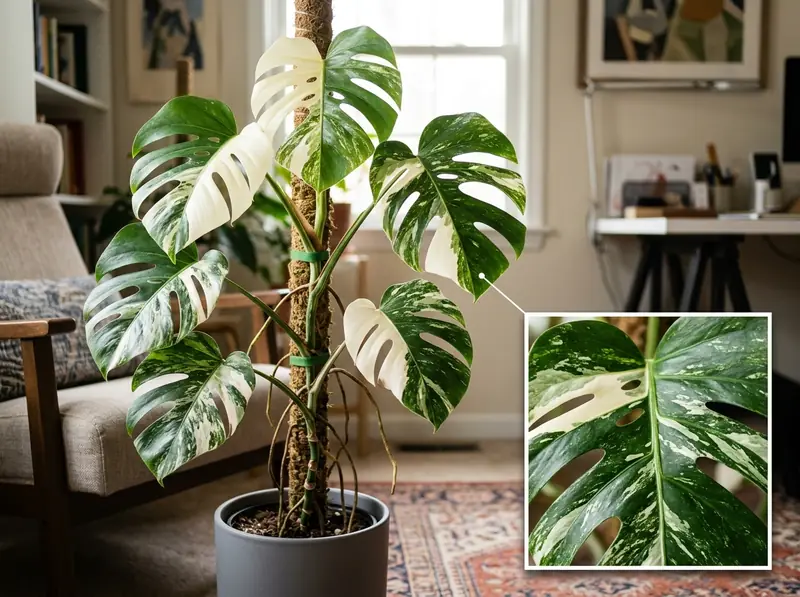
 AI-generated
Albo Borsigiana Monstera
Monstera deliciosa 'Albo Borsigiana'
Albo borsigiana is a variegated Monstera deliciosa with white marbled and sectored leaves, which gives it a dramatic look on a pole. It grows slower than the plain green plant and needs brighter, steadier light and careful watering.
Saving is free with a KinClub account, and it works here and in the KinClub app. Sign up free
Care profile
- Light
- Bright, indirect lightLow → direct sun
- Water
- Moderate wateringAbout every 10 days
- Difficulty
- ModerateTricky → easy
- Coldest it tolerates
- 55°F
- Humidity
- Medium to high
- Mature size
- Large to tree-sizeSmall → tree-size
- Growth rate
- Moderate
- How common
- RareRare → everywhere
- Plant family
- Araceae
Pets and toxicity
Toxic to cats
Keep away from cats. Call your vet or a pet poison helpline if a cat chews it.
Toxic to dogs
Keep away from dogs. Call your vet or a pet poison helpline if a dog chews it.
Source: ASPCA toxic and non-toxic plants. If a pet eats any houseplant, call your vet or an animal poison helpline.
How to care for Albo Borsigiana Monstera
Light
Prefers bright, indirect light, such as an east window or a few feet from a south window. White sections cannot photosynthesize, so it needs brighter light than plain Monstera deliciosa, but direct sun burns the white.
Watering
Water when the top 2 in of soil are dry, about every 10 days in the growing season and every 2 to 3 weeks in winter. Variegated plants grow slower and are more sensitive to soggy soil.
Soil
Use a chunky aroid mix of 2 parts potting soil, 1 part orchid bark and 1 part perlite, in a pot with drainage holes.
Feeding
Feed every 4 to 6 weeks in spring and summer with a balanced fertilizer at half strength. Hold back in fall and winter.
Repotting
Repot every 2 years in spring into a pot 2 in wider, and give it a moss pole; it needs a sturdy support to carry big leaves.
Propagation
Cut below a node with an aerial root and a leaf that has both green and white, and root in water or moss in 4 to 6 weeks. All-white nodes won't survive.
Common problems
- Reverting to all green is common; prune back to the last variegated node.
- Brown crisp white areas mean sun scorch or dry air; move away from the window and mist the area with a humidifier.
- Spider mites and thrips can attack stressed plants; wipe the leaves and spray with insecticidal soap.
- Yellowing lower leaves with wet soil mean overwatering; let it dry between waterings.
Similar plants
Same light needs and difficulty.
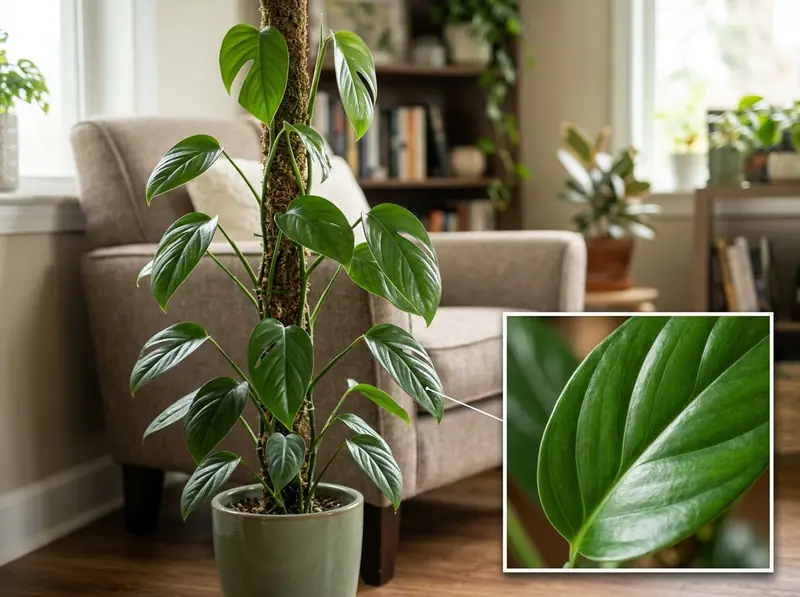 AI-generated
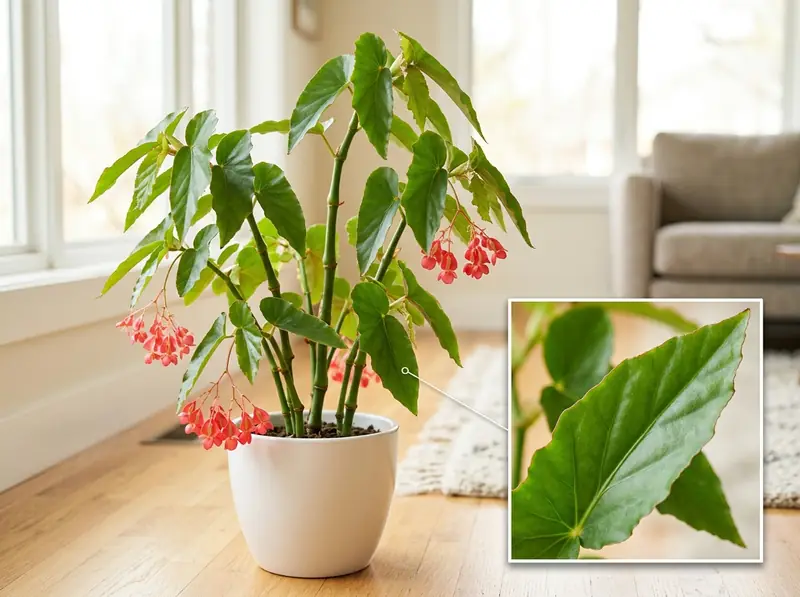 AI-generated
 AI-generated
 AI-generated