
 AI-generated
African Violet
Saintpaulia ionantha
Also known as Saintpaulia kewensis, Saintpaulia tongwensis
African violet is a compact, fuzzy-leaved rosette plant that blooms on and off all year when it gets bright, indirect light. It is easy to keep on a windowsill or shelf if you water with room-temperature water and avoid wetting the leaves. Its small size and easy leaf propagation make it a popular choice for beginners and collectors.
Saving is free with a KinClub account, and it works here and in the KinClub app. Sign up free
Care profile
- Light
- Bright, indirect lightLow → direct sun
- Water
- Moderate wateringAbout every 7 days
- Difficulty
- ModerateTricky → easy
- Coldest it tolerates
- 60°F
- Humidity
- Medium
- Mature size
- SmallSmall → tree-size
- Growth rate
- Slow to moderate
- How common
- EverywhereRare → everywhere
- Plant family
- Gesneriaceae
Pets and toxicity
Cats and dogs: not yet checked
Not yet checked against ASPCA — don't assume it's safe for pets.
Source: ASPCA toxic and non-toxic plants. If a pet eats any houseplant, call your vet or an animal poison helpline.
How to care for African Violet
Light
Give bright, indirect light, such as an east window or a few feet back from a south or west window. Keep it out of direct midday sun; about 12 hours of light a day helps it bloom, and a grow light works well in winter.
Watering
Water when the top half inch of soil feels dry, roughly once a week, using room-temperature water. Pour into a saucer for 15-20 minutes and discard what is left, or water carefully at the soil level, and never leave the pot standing in water.
Soil
Use a light, airy African violet mix, or a peat-based potting mix with about one-third perlite added. The pot must have drainage holes.
Feeding
Feed every 2-4 weeks while growing with a fertilizer made for African violets, diluted to the label's rate. Some growers use a quarter-strength dose at every watering. Skip or reduce feeding in winter.
Repotting
Repot about once a year into fresh mix, in a pot about one-third the width of the plant's leaf spread. Plants bloom best slightly pot-bound, so a 4-inch pot is usually enough.
Propagation
Take a healthy leaf with a 1-2 inch stem, and insert it at an angle into moist, light mix. Keep it warm and humid, and plantlets appear at the base in 4-8 weeks.
Common problems
- Ring spots or pale patches on leaves: cold water splashed on foliage; use room-temperature water and dry any drops.
- No flowers: usually too little light; move closer to a bright window or add a grow light for about 12 hours a day.
- Crown or stem rot: soil too wet or too cold; let the mix dry slightly, use fresh mix, and propagate healthy leaves if rot is severe.
- Powdery white coating on leaves: powdery mildew from stagnant, humid air; improve airflow and remove affected leaves.
- Cottony white bits in leaf axils or crown: mealybugs; dab them with rubbing alcohol on a cotton swab and repeat weekly.
Similar plants
Same light needs and difficulty.
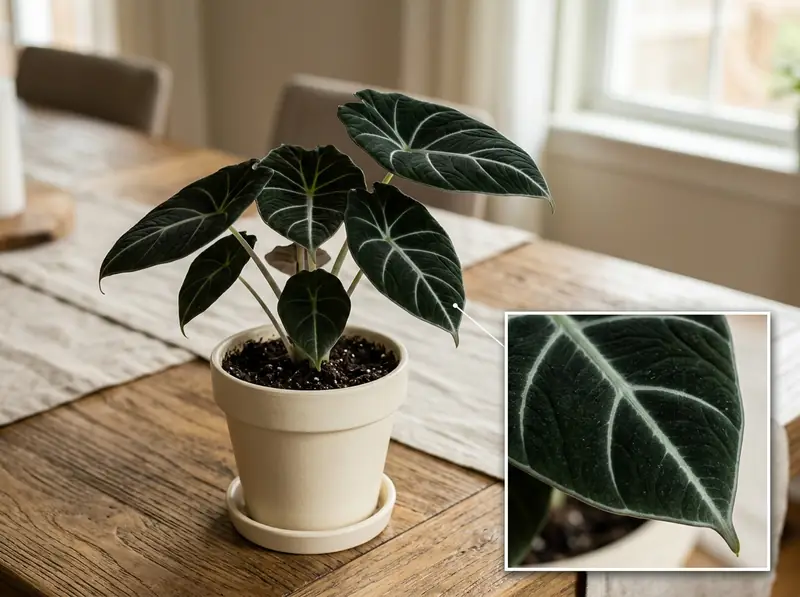 AI-generated
Black Velvet Alocasia
Alocasia reginula 'Black Velvet'
- Bright, indirect light
- Moderate watering
Toxic to cats and dogs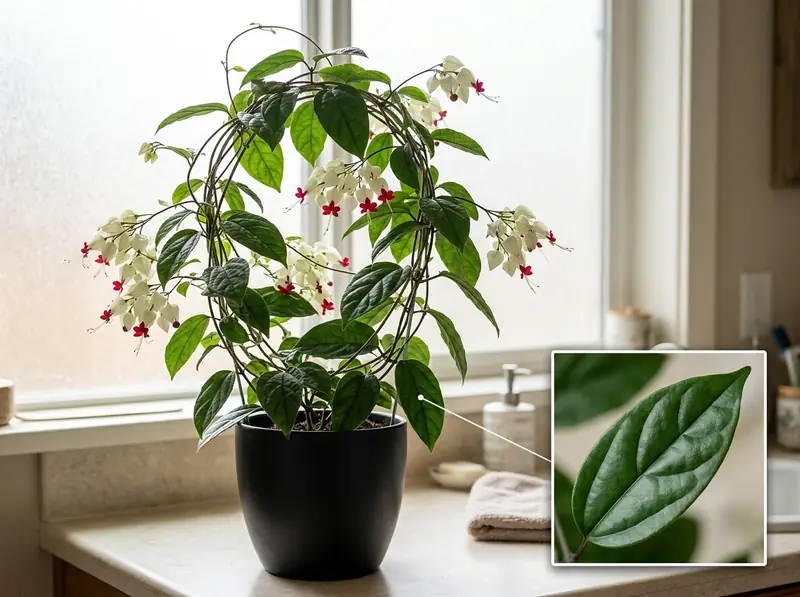 AI-generated
Bleeding Heart Vine
Clerodendrum thomsoniae
- Bright, indirect light
- Moderate watering
Pets: not yet checked AI-generated
 AI-generated