
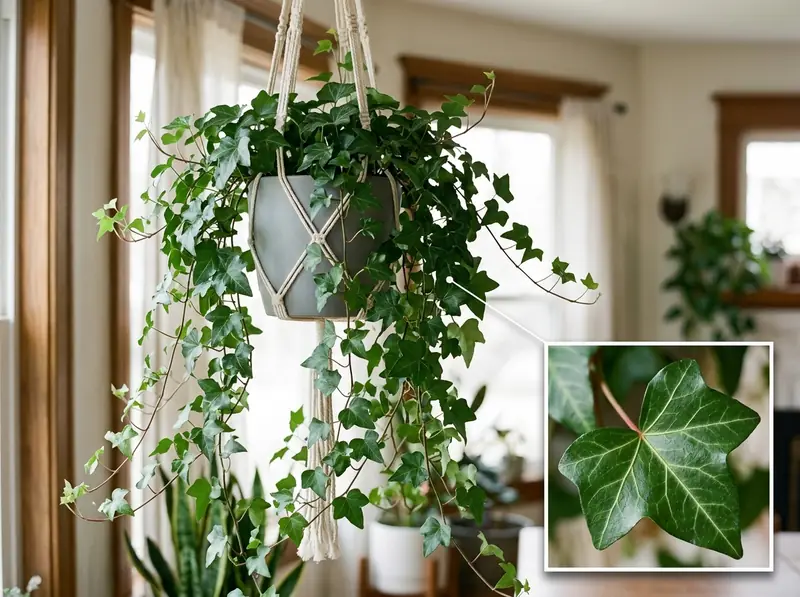
 AI-generated
English Ivy
Hedera helix
Also known as Branching Ivy, Glacier Ivy, Needlepoint Ivy, Sweetheart Ivy, California Ivy, Hahn's Self Branching English Ivy
English ivy is a fast-growing trailing vine that looks best in a hanging basket or on a shelf, where its stems can spill over the edge. It likes bright indirect light, cool room temperatures and even moisture. It dislikes hot, dry air, which is the main cause of its problems indoors.
Saving is free with a KinClub account, and it works here and in the KinClub app. Sign up free
Care profile
- Light
- Bright, indirect lightLow → direct sun
- Water
- Moderate wateringAbout every 7 days
- Difficulty
- ModerateTricky → easy
- Coldest it tolerates
- 35°F
- Humidity
- Medium
- Mature size
- LargeSmall → tree-size
- Growth rate
- Fast
- How common
- EverywhereRare → everywhere
- Plant family
- Araliaceae
Pets and toxicity
Toxic to cats
Keep away from cats. Call your vet or a pet poison helpline if a cat chews it.
Toxic to dogs
Keep away from dogs. Call your vet or a pet poison helpline if a dog chews it.
Source: ASPCA toxic and non-toxic plants. If a pet eats any houseplant, call your vet or an animal poison helpline.
How to care for English Ivy
Light
Give it bright indirect light, such as a spot near an east or north window, or a few feet back from a south or west window. Plain green types tolerate somewhat less light than variegated ones.
Watering
Water when the top inch of soil feels dry, roughly every 7 days in the growing season and less often in winter. Water thoroughly until it drains out, then empty the saucer.
Soil
Use an ordinary well-draining potting mix, ideally with a handful of perlite added. The pot must have drainage holes.
Feeding
Feed every 4 weeks in spring and summer with a balanced houseplant fertilizer diluted to half strength. Skip feeding in fall and winter.
Repotting
Repot every 1 to 2 years in spring, going up only 1 to 2 inches in pot diameter. Ivy is happy slightly root-bound.
Propagation
Take 4 to 6 inch stem cuttings with at least 2 nodes and remove the lowest leaf. Root them in water or moist potting mix in 2 to 4 weeks.
Common problems
- Spider mites cause fine webbing and speckled, dull leaves; rinse the plant well and treat with insecticidal soap every 5 to 7 days for a few weeks.
- Brown crispy leaf edges usually mean dry air or irregular watering; move away from heaters and water more consistently.
- Leggy, sparse growth means too little light; move to a brighter spot and trim the long stems back.
- Yellow leaves and mushy stems point to overwatering or poor drainage; let the soil dry out and check the drainage holes.
- Scale or mealybugs show as bumps or white fluff on stems; wipe them off with rubbing alcohol on a cotton swab.
Similar plants
Same light needs and difficulty.
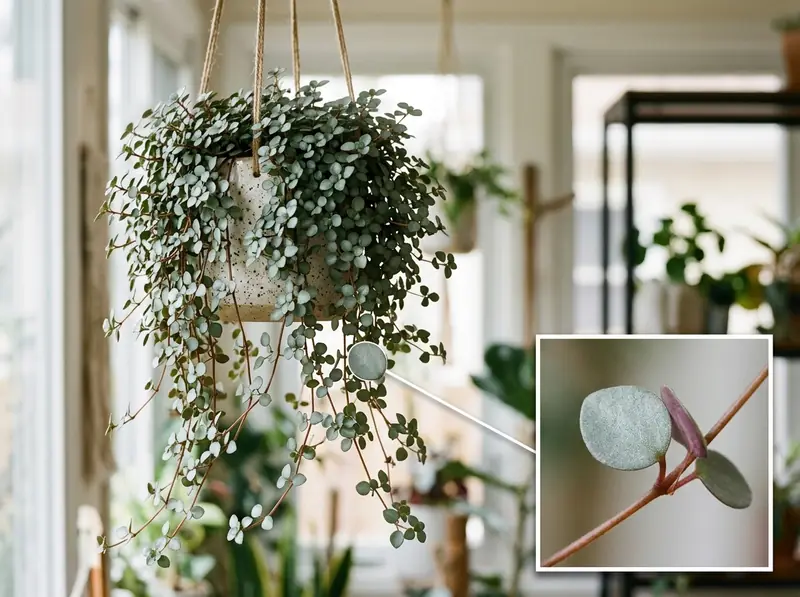 AI-generated
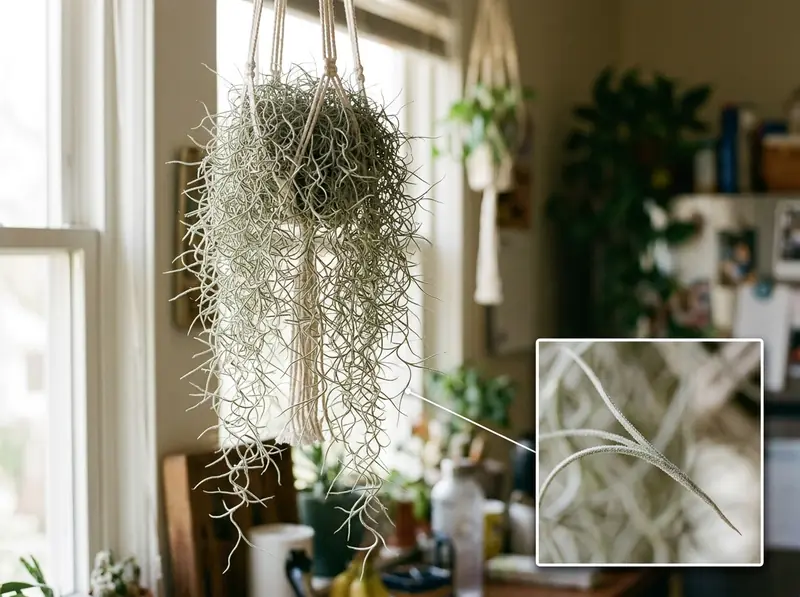 AI-generated
Spanish Moss
Tillandsia usneoides
- Bright, indirect light
- Moderate to moist watering
Pets: not yet checked AI-generated
 AI-generated